

Facebook, Instagram often fail to moderate homophobic hate speech in Zimbabwe
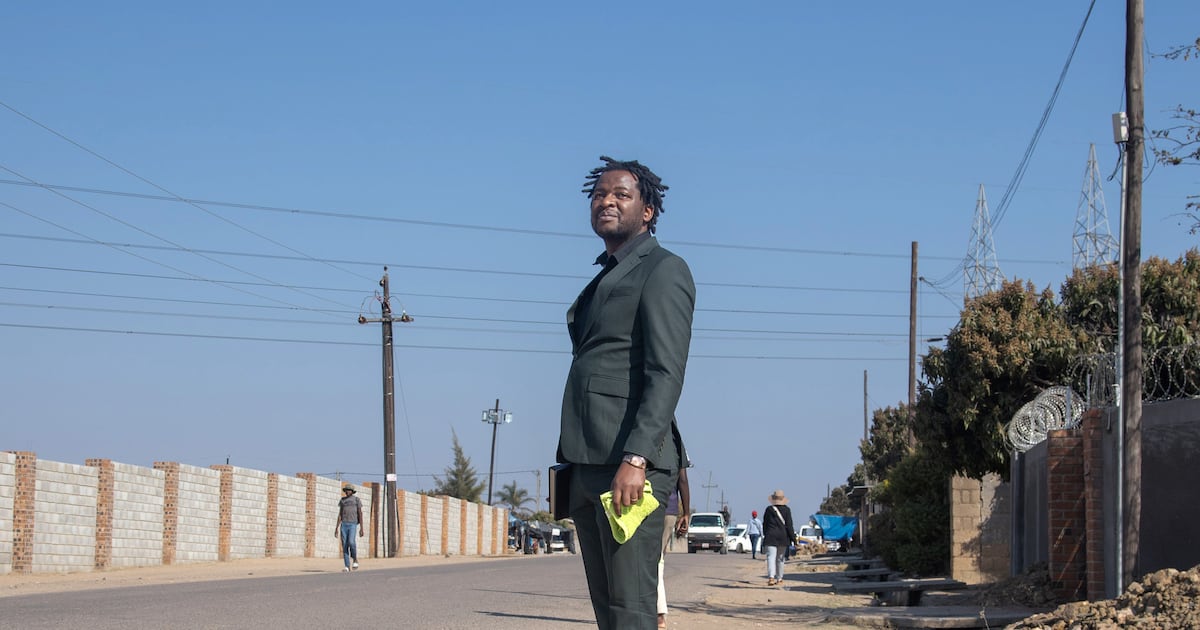
In 2022, Ronald Madongwe, an openly queer Zimbabwean pastor preaching for acceptance of the LGBTQI+ community in a country where homosexuality is outlawed, stumbled across a picture of himself on Facebook alongside a post appearing to call for his murder. The post appeared under the Facebook account of Alphonsus Makanga, a digital creator with about 5,000 followers.
Madongwe was shocked, but not unused to abuse and threats online. He reported the post to Meta’s Reporting Abuse function. Four years later the post still remains publicly visible on Facebook.
Madongwe leads God Adores You, a church-based organisation that works with LGBTQI+ Christians and seeks to challenge religious interpretations commonly used in Zimbabwe to justify discrimination against queer people.
He says online abuse, of the type he was subjected to by Makanga’s post, can easily spill into the real world.
“This harassment from online can result in loss of life, being arrested and being bullied, and not having peace even when you go around because people know you. It kind of mobilises people against the work that I do or against myself,” said Madongwe in a recent interview.
The failure of Meta’s online moderation systems to remove Makanga’s post points to a wider concern that gay Zimbabweans have with homophobic and abusive content circulated on platforms such as Facebook and Instagram.
This reporter reviewed 11 cases of homophobic content posted on Meta’s platforms by users in Zimbabwe. In each of these cases, complaints were filed through Meta’s Reporting Abuse function. Five complaints were filed directly by the reporter during the course of this investigation. Six other complaints had previously been filed by other people, who shared their experiences.
In each of these cases Meta confirmed receipt of the complaints. In response to nine of the 11 complaints, Meta issued an automated response which said that the reported content had been reviewed. Meta’s response added that it had declined to remove it, because Facebook’s automated review had determined the content did not violate the platform’s Community Standards.
While acknowledging the material “may be offensive or hurtful”, the company said it “only take[s] down content that goes against our standards” and invited the user to request a further review if they believed the decision was a mistake.
Instagram generated a similar message in response to users’ reports.
The posts and comments reported included death threats, doxing of gay individuals, calls for violence, AI-generated videos of assault and homophobic slurs in Shona and Ndebele. Based on Meta’s published Community Standards, all of those categories would likely fall within content that is prohibited or, at minimum, subject to enforcement.
Tinashe Kurapa is a fashion designer based in Harare. Despite living and working in a country where being openly queer carries significant social and legal risk, he has still sought to build his career and brand in public view. He relies on social media to display his collections and connect with a client base. For Kurapa, Facebook and Instagram are essential business tools. But it is also where much of the abuse he experiences as a queer professional begins.

On July 20 2025, Kurapa posted photographs from the Dream House Academy Awards in Harare on his Instagram page. Instead of celebrating Kurapa’s work, the comment section quickly turned hostile.
One user, under the username itz.meegah, wrote, “Ngochani iyo… dai akaenda kugehena (That gay person … he should just go to hell).”
Another user, under the username unclaytontravi, added: “Batai murove kani (He needs a beating).”
During an interview, Kurapa confirmed he reported the comments to Meta. In this instance, he said, he did not even receive a response. He eventually deleted the comments himself. For him, this was about protecting his business and brand, and his integrity.
“I’m not achieving my full potential as a professional fashion designer because of this online harm and suffering brand damage as a result,” he said.
“My livelihood is affected.”
The risk of real world violence emanating from the abuse he suffers online is also ever present, he believes.
In April 2025, a Zimbabwean comedian named Chamakuvanga, who has more than 58,000 Facebook followers, posted an AI-generated video depicting himself physically beating Kurapa and locking him in a jail cell, captioned “Ngobhi tinorova” Translated, “we beat up the gays.”

The AI video Facebook post collected 655 likes and 223 comments.
Kurapa reported it on May 21 2026, shortly after being interviewed for this investigation. Meta responded on the same day with its stock standard response: “Our technology reviewed your report and, ultimately, we decided not to take the content down.”
When checked on June 17, a month after it was posted, the video was still active. But it appears that the video has since been removed or the link has been otherwise corrupted.
On March 1, Zim Stories 24, a public Facebook group with 774,823 members, posted a photo of Kurapa in costume at an event.
“So muZim tatove nengochani dzisingahwande, inga times change umm (So in Zimbabwe we now have gays who don’t hide, times have really changed),” read the accompanying post.
A comment posted by user Taurai Kandishaya said that anyone who organises events attended by LGBTQ+ people should be “punished for promoting” homosexuality.
This reporter filed a complaint on Kurapa’s behalf on June 9. Meta acknowledged it twice, on June 9 and 14. But, as of time of publication, the post was still online.
Enock “Nox” Guni, a multi-award-winning musician with a verified Facebook page and another massive 668,000 followers, posted in Shona calling for the arrest of LGBTQI+ people who had attended the NAMA Awards. The post drew 1,300 reactions and 381 comments.
In the comments, a user named Tinashe Mugwira escalated the call for arrests into explicit vigilante violence. Translated from Shona, his comment read in part: “Give us the strength to grab them when we meet them and beat them. And everyone caught should just go to jail.”
This reporter reported Guni’s post on May 19, and five days later, Meta issued its stock response, explaining that the post would not be removed. As of the date of publication, it remained online.
Similarly, Meta declined to act on several other reports submitted as part of this investigation, including a post by Harare podcaster prominent DJ Sparks ZW threatening to “expose” prominent gay Zimbabweans, which garnered comments that gay people “must be wiped out”.
This reporter flagged three more pieces of homophobic content with Meta: a video by the creator K. Loopsy argued that gay people should be imprisoned for life because of their “troublesome spirit”; a Pachopisa TV video post purporting to show a gay person being assaulted and encouraging followers to “tag someone”; and homophobic comments on an Instagram reel featuring an LGBTQI+ charity from the outlet Openly.
As of the date of publication, these posts and comments remained online.
Mkokeli Moyo is a Bulawayo community activist who uses Facebook to amplify the voices of gay and other marginalised people afraid to speak out, describing his work as filling a gap left by the formal media. But that visibility has also made him a daily target.
“My main challenge is that people flood my page with comments, and many of the slurs are in the vernacular Shona or Ndebele. I try to block them, but it is difficult to block (so many) people. If I keep blocking accounts, I could end up getting my own account banned.”
Meta has long faced criticism for failing to adequately moderate content in so-called “low-resource” languages, where its automated systems and human review capacity are less developed than for English and other widely spoken languages.
In Zimbabwe, this appears to create an additional blindspot: homophobic abuse written in Shona and Ndebele can more easily evade Meta’s automated moderation, allowing slurs and harassment to remain online despite the platform’s rules against hate speech.
In one such apparent instance, Prince Ryanne Chidzvondo was photographed at the 2023 NAMA Awards by zimcelebs_official, which used the derogatory Shona term “ngochani” to mock him on Instagram. He reported the post to Meta on March 2 2023, but says he never received a response.
“People have figured out that Shona gives them cover. You can say things in Shona that would (otherwise) be removed. So they use Shona deliberately, not just out of habit, but because they know they will get away with it,” he said during an interview.
Between April and July, this reporter made repeated attempts to obtain Meta’s response to the investigation, sending multiple enquiries to the company’s press offices, communications staff and other official media contacts. The queries detailed evidence that Meta had failed to remove reported homophobic content targeting LGBTQ+ Zimbabweans, particularly abusive posts in Shona and Ndebele.
As of publication, Meta had not substantively responded to any of the enquiries.
Meanwhile, a number of people interviewed for this article say they live in constant fear for the day that online threats spill over into real world violence.
Mkokeli Moyo, the activist in Bulawayo whose account is regularly inundated with hate and threats, said that the hate he has suffered online has put a target on his back.
“I am not free to move around in Bulawayo,” he said.
#This report has been produced by the Southern Africa Accountability Journalism Project (SA | AJP), an initiative of the Henry Nxumalo Foundation with the financial assistance of the European Union. It can under no circumstances be regarded as reflecting the position of the EU.
Credit: Source link