

Eni Commits $8 Billion to Egypt, Targets 230 New Oil and Gas Wells
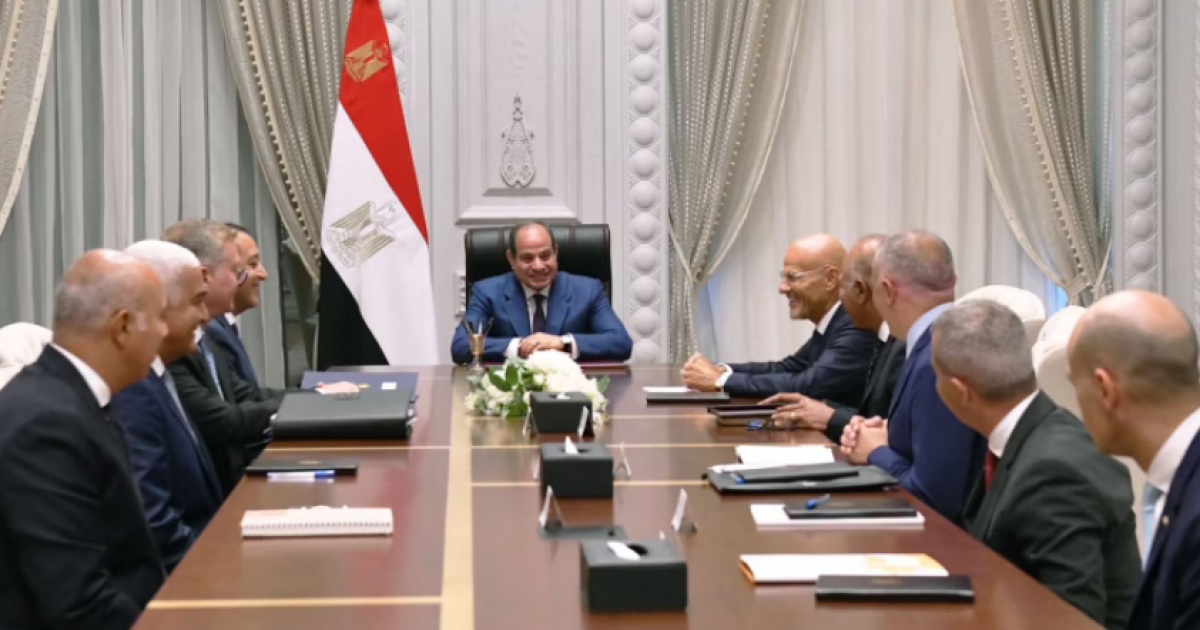
As Egypt’s largest oil and gas investor, with cumulative capital investments of $8.5 billion since 1954, Eni is now poised to deploy another $8 billion over the next 5 years, starting with a campaign to drill 30 new exploration wells and 200 new development wells in 2026/2027 in the Mediterranean offshore, Nile Delta, Western Desert, and offshore Sinai.
Eni CEO Claudio Descalzi discussed the company’s efforts to boost Egypt’s gas production during a meeting with President Abdel Fattah el-Sisi on 25 August in Alamein City, Egypt’s Mediterranean resort destination that is rapidly evolving into an industrial, logistics, and energy hub.
Over the past 72 years, Eni has invested $8.5 billion in Egypt’s oil and gas industry, developing upstream assets along with extensive pipeline and processing infrastructure, including the Damietta LNG plant.
Denise West Helps Offset Zohr Decline
The latest result of this long-term investment is the Denise West gas discovery in the Temsah Concession, where Eni confirmed an estimated 2 Tcf of gas and 130 million bbl of condensate in place earlier this year. The Denise W-1 exploration well was drilled as part of Eni’s ongoing Mediterranean offshore campaign, which began in October 2025, according to Eni’s 7 April announcement of the discovery.
Because Denise West can be fast-tracked using underutilized onshore facilities serving the nearby Zohr for initial gas treatment and processing, operator Eni and its partners BP and the Egyptian General Petroleum Company (EGPC) expect to take a final investment decision (FID) in the coming months, with first gas targeted within 2 years, Eni has noted.
Eni also operates Zohr, Egypt’s flagship gas field. Production has declined from its peak level of about 2.8 Bcf/D in 2021, largely due to reservoir depletion and water encroachment. By routing Denise West production through existing Zohr infrastructure, Eni expects to help offset part of that decline while pursuing measures to sustain Zohr’s output.
With estimated reserves of 30 Tcf (about 850 Bcm), Zohr remains Egypt’s largest natural gas field and the largest gas discovery to date in the Eastern Mediterranean.
Although Denise West is located in a different reservoir within the Temsah Concession, its proximity to Zohr allows production to be processed and marketed through existing Zohr facilities.
Eni operates the Denise Development Lease with a 50% working interest, alongside BP, which holds the remaining 50%. Day-to-day operations are managed by Petrobel, the joint venture between Eni and EGPC.
In July 2025, Eni signed a binding agreement with EGPC and the Egyptian Natural Gas Holding Company to renew the Temsah Concession for another 20 years.
Eni To Add $8 Billion More to the Pot
By focusing investments on short-cycle, infrastructure-led opportunities and extending the life of legacy assets, Eni has increased production by about 50% offshore Sinai while making new discoveries in the Western Desert and the Nile Delta offshore, according to Eni.
This strategy lays the foundation Eni’s next investment phase: a $8 billion capital program Descalzi discussed with el-Sisi at the 25 August meeting in Alamein City.
Planned over the next 5 years, the investment includes the 230-well drilling campaign, initiatives aimed at slowing Zohr’s production decline, and projects required to monetize gas from Eni’s Cronos discovery offshore Cyprus through Egypt’s gas transmission and LNG export infrastructure.
At Zohr, the Saipem 10000 drillship, currently completing Eni’s Gemini-1 development well offshore Sicily, is expected to return to deepwater Egypt in late 2026 to begin a two-well intervention campaign designed to address water breakthrough and support field performance. The project is estimated to cost about $360 million.
Cronos Project To Supply Egypt
Descalzi also updated el-Sisi on the status of the Cronos project following the recent FID declaration. According to Egypt’s State Information Service, he emphasized the importance of connecting the Cronos gas field to Egypt’s infrastructure as a model for regional cooperation and a means of strengthening the country’s position as a regional gas trading and hub.
The meeting also covered Eni’s commitment under a memorandum of intent signed in March to support Egypt’s healthcare sector by helping build capabilities and manage complex healthcare infrastructure.
In 2025, Eni’s net share of Egypt’s oil and gas production averaged approximately 242,000 BOED through its subsidiary, the International Egyptian Oil Company.
Credit: Source link