

End the Cuba blockade: Father Michael Lapsley’s urgent plea to Trump
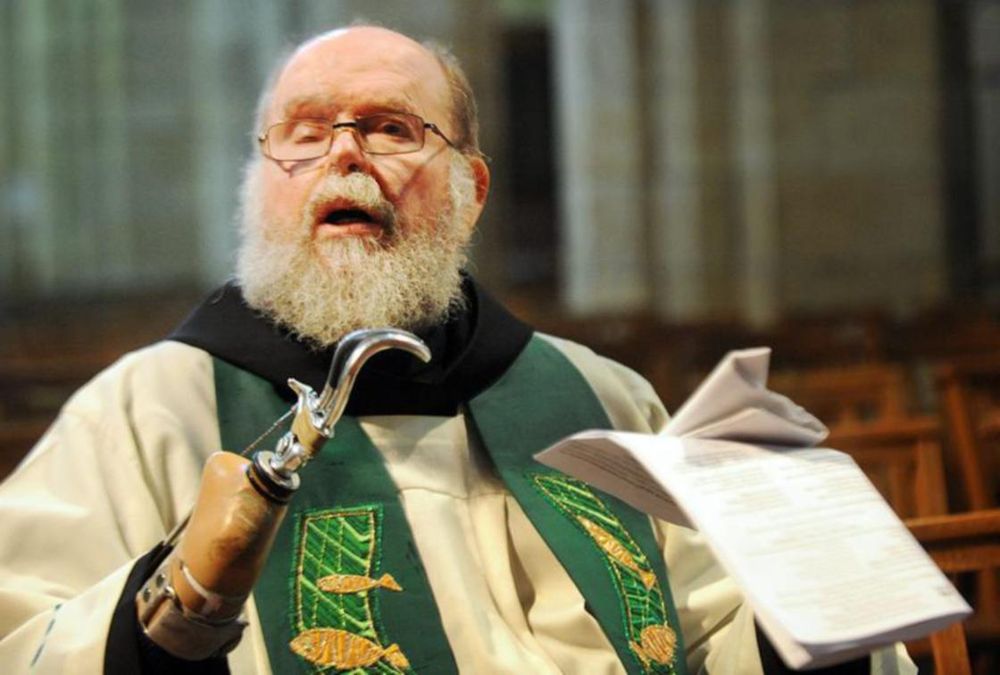
Father Michael Lapsley, the Cape Town priest who lost both hands to an apartheid-era letter bomb, has called on the US to end its blockade of Cuba, where a shortage of oil is causing severe power cuts.
Lapsley leaves on Sunday for Havana to address a colloquium marking 100 years since the birth of Fidel Castro, who led the Cuban revolution of 1959 and ruled the island for almost half a century.
Castro died in 2016.
His call to end the blockade is contained in the text of the address, titled “I Am a Fidelist”, which he sent to IOL before leaving.
“We say no to a US war against Cuba,” said Lapsley, who travelled with medical supplies donated by the Friends of Cuba Society.
“End the blockade now.”
Lapsley is canon for healing and reconciliation at St George’s Cathedral and honorary life president of the Friends of Cuba Society, which he helped set up ahead of SA’s first democratic election in 1994.
Washington has run an embargo on Cuba since 1962.
In January, US President Donald Trump declared a national emergency over Cuba and moved to choke off its fuel, blocking oil tankers bound for the island and threatening tariffs against any country that kept supplying it.
In May, Cuba’s energy and mines minister, Vicente de la O Levy, said the country had run out of diesel and fuel oil, leaving only gas from its own wells. Blackouts have hit the whole island since March.
UN human rights experts called the fuel blockade a serious violation of international law and said it amounted to energy starvation.
The General Assembly voted 165 to seven, with 12 abstentions, to end the embargo.
Havana puts the damage to its economy over the year to February at $8bn.
Trump and Secretary of State Marco Rubio both raised the prospect of military action in May, with Rubio calling Cuba a national security threat and Trump saying he was likely to be the president to act.
“Now with the US policy of seeking to starve and strangle the nation, some of the achievements like infant mortality are beginning to go backwards,” Lapsley said.
Cuba trained SA doctors under an agreement between Castro and the late former president Nelson Mandela, and sent its Henry Reeve Brigade of medics to SA during the Covid-19 pandemic.
“Never in human history has there been a country who has trained doctors as a principal export,” Lapsley said.
“I have no doubt that what the revolution achieved in the area of healthcare makes God smile.”
Cuban troops fought the apartheid army alongside Angolan forces for more than a decade, in a war that culminated in the battle of Cuito Cuanavale, which Lapsley called a turning point on the road to Namibian independence and the end of apartheid.
“We do not forget that, unlike our colonisers who plundered our resources, Cuba only took back to Cuba their dead comrades,” he said.
The names of the Cuban dead are recorded at Freedom Park in Pretoria.
Lapsley said the apartheid state told him Cuba was a godless society.
“At the time the apartheid army fought Cuban internationalist forces in Angola, Sunday Times had a headline, ‘I killed Cubans for Christ’,” he said.
“SA soldiers were shocked to find that some dead Cuban soldiers were carrying bibles.”
Lapsley titled his address “I Am a Fidelist”, after a line Soviet leader Nikita Khrushchev used when he was asked whether Castro was a communist. Khrushchev said he did not know, but that Castro was a Fidelist.
Lapsley said Christians in the West had been arguing about the wrong thing for decades.
“Sometimes in the West the question is asked whether it is possible for a Christian to be a socialist,” he said.
“I think it is the wrong question. We should rather be asking if it is possible for a Christian to be a capitalist.”
He said the church began to lose its way in 325, the year of the Council of Nicaea, when Christian values started being replaced by imperial ones.
“Bishops become lords and princes living in palaces,” he said.
“From 325, the Church became the empire at prayer.”
In April 1990, weeks after returning from a visit to Havana, Lapsley opened a letter bomb sent to him in Harare by the apartheid regime.
“Among my first visitors was the Palestinian Ambassador offering to pay my medical treatment and the Ambassador of Cuba inviting me to come to Cuba for medical treatment,” he said.
IOL News