

Direct presidential election puts Zimbabwe in a club of authoritarian states
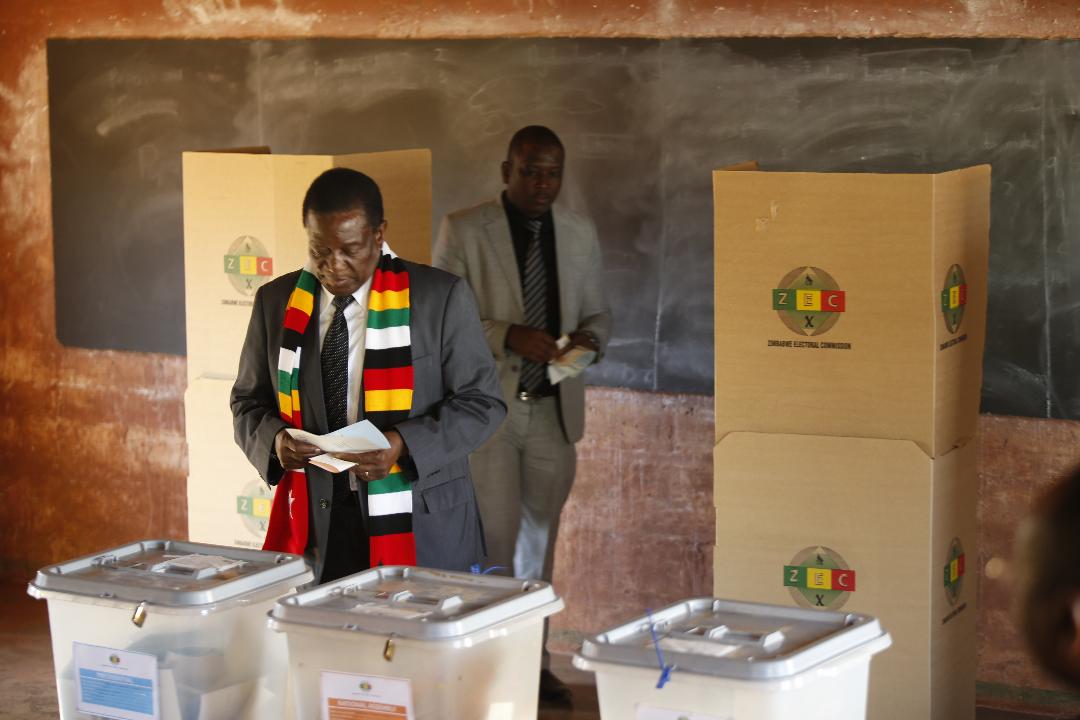
AS debate on Constitutional Amendment (No. 3) (CAB3) continues and heads to parliament after the just-ended public consultation process, one of the central battlefronts is whether the country should retain a direct presidential election model or shift to a parliamentary system where the president is elected by the legislature.
This debate has now moved beyond the question of whether a referendum should be held or whether Parliament has the legal authority to amend the Constitution. It is now about engaging reality as it is—whether right or wrong in terms of process.
The purpose of this debate should not be to win arguments, but to shed light on public discourse so that citizens, voters and legislators can make informed decisions.
The architecture of executive election systems is not a neutral administrative matter. It is one of the most consequential decisions in constitutional design, shaping the legitimacy of executive power, executive-legislative relations, and the long-term trajectory of democratic consolidation.
When states choose between direct and indirect election systems, they are making a foundational decision about how power is sourced, constrained and transferred.
In the current CAB3 debate, critics of reform—and those advocating retention of direct presidential elections—have relied on a numerical argument: that approximately 110 countries directly elect their president, compared to only 51 that use indirect systems.
Their claim is that this global majority validates direct elections as the democratic standard. By implication, moving away from this model would represent a retreat from democratic norms.
This opinion editorial interrogates that argument. While it accepts the 110/51 figure as methodologically defensible, it disaggregates the data to reveal what that “majority” actually represents. The evidence shows that most countries using direct presidential elections are, in fact, authoritarian states or have authoritarian histories.
Contemporary Zimbabwean history reflects this pattern. The current direct presidential election system is rooted in the 1987 Unity Accord between Zanu and Zapu, in the context of the Gukurahundi atrocities and Robert Mugabe’s one-party state ambitions.
Far from being an expression of popular democratic will, the system is a relic of power consolidation. The imperial presidency that emerged was designed to entrench authority, not distribute it.
Whether Zimbabwe ultimately retains or abandons the current system is not the immediate issue. The key point is that the mere fact that many countries use direct elections does not make the model democratic or representative of best practice.
When the 110 direct-election states are analysed by history, region and regime type, the overwhelming majority are former military regimes, one-party states, socialist systems, or current authoritarian governments.
The evidence is clear: direct presidential elections are not the hallmark of liberal democracy. Historically and statistically, they are often the institutional preference of dictatorships in transition.
Zimbabwe’s own experience fits this pattern. Mugabe introduced the system in 1987 through Constitutional Amendment No. 7 to consolidate power.
In 2013, Mugabe and MDC leader Morgan Tsvangirai retained this system through a negotiated constitutional process endorsed by referendum. However, this constitution was less a pure expression of popular will and more an elite political compromise.
Like the Lancaster House Constitution of 1979 and the 1987 amendments, the 2013 Constitution emerged from negotiations between competing political actors. It was a structured compromise balancing democratic aspirations with entrenched presidential authority.
Civil society organisations such as the National Constitutional Assembly pushed for deeper reforms, but the final outcome reflected elite bargaining. Citizens participated in a process that was heavily managed by political parties.
Any narrative that presents the 2013 Constitution as a flawless grassroots product is therefore misleading.
This article is structured in six parts: verification of the 110/51 count; disaggregation of direct-election systems; analysis of indirect systems; a focus on the Commonwealth; the Zimbabwean case; and a synthesis of findings against counterarguments.
The 110 versus 51 classification is based on a comprehensive analysis of all 193 UN member states. Three methodological choices underpin this classification.
First, only republics are included. Monarchies—whether constitutional or absolute—are excluded because they do not derive executive authority from presidential elections. Removing 41 monarchies leaves 155 relevant states.
Second, party-states such as China, Vietnam and Cuba are classified as indirect systems because their leaders are selected through legislative or party mechanisms rather than direct popular vote.
Third, countries like Angola and Guyana are categorised as indirect systems because their presidents emerge from parliamentary majorities rather than standalone national ballots.
These classifications produce a robust and internally consistent dataset.
However, opposition and civil society arguments treat the 110 countries as a uniform democratic bloc. This is incorrect. The group is dominated by states with authoritarian characteristics.
Latin America, with 19 direct-election systems, illustrates this clearly. These systems emerged largely from transitions away from military rule during the Cold War era. Direct elections were introduced not as ideal democratic designs, but as safeguards against military interference.
Africa represents the largest bloc, with 43 countries using direct elections. Most adopted this model during transitions from one-party states in the early 1990s. These transitions often preserved centralised presidential power while introducing multiparty elections.
The result has frequently been dominant-party systems rather than genuine democratic competition. Zimbabwe’s trajectory aligns with this pattern.
In Asia and Eastern Europe, similar dynamics are evident. Direct elections often followed authoritarian collapse but, in many cases, entrenched executive dominance rather than democratic accountability.
By contrast, indirect election systems are more strongly associated with stable democracies. Parliamentary systems dominate among OECD countries, G7 members and Commonwealth states.
Within the Commonwealth, 35 of 56 countries use indirect systems, forming a clear majority. Zimbabwe’s regional peers—South Africa and Botswana—both elect presidents through Parliament.
Zimbabwe’s current system places it within a minority group of states, many with histories of authoritarian governance.
The broader conclusion is that while direct elections are numerically widespread, they are disproportionately concentrated in authoritarian and transitional systems.
Direct elections can be—and often are—used to legitimise centralised power rather than to ensure accountability.
Ultimately, the democratic value of any electoral system depends not on whether voting is direct or indirect, but on the strength of institutions surrounding it.
Kelvin Jakachira is a Zimbabwean journalist
Credit: Source link