

Dioura falls as Mali’s security crisis spreads south while Kati tightens its grip
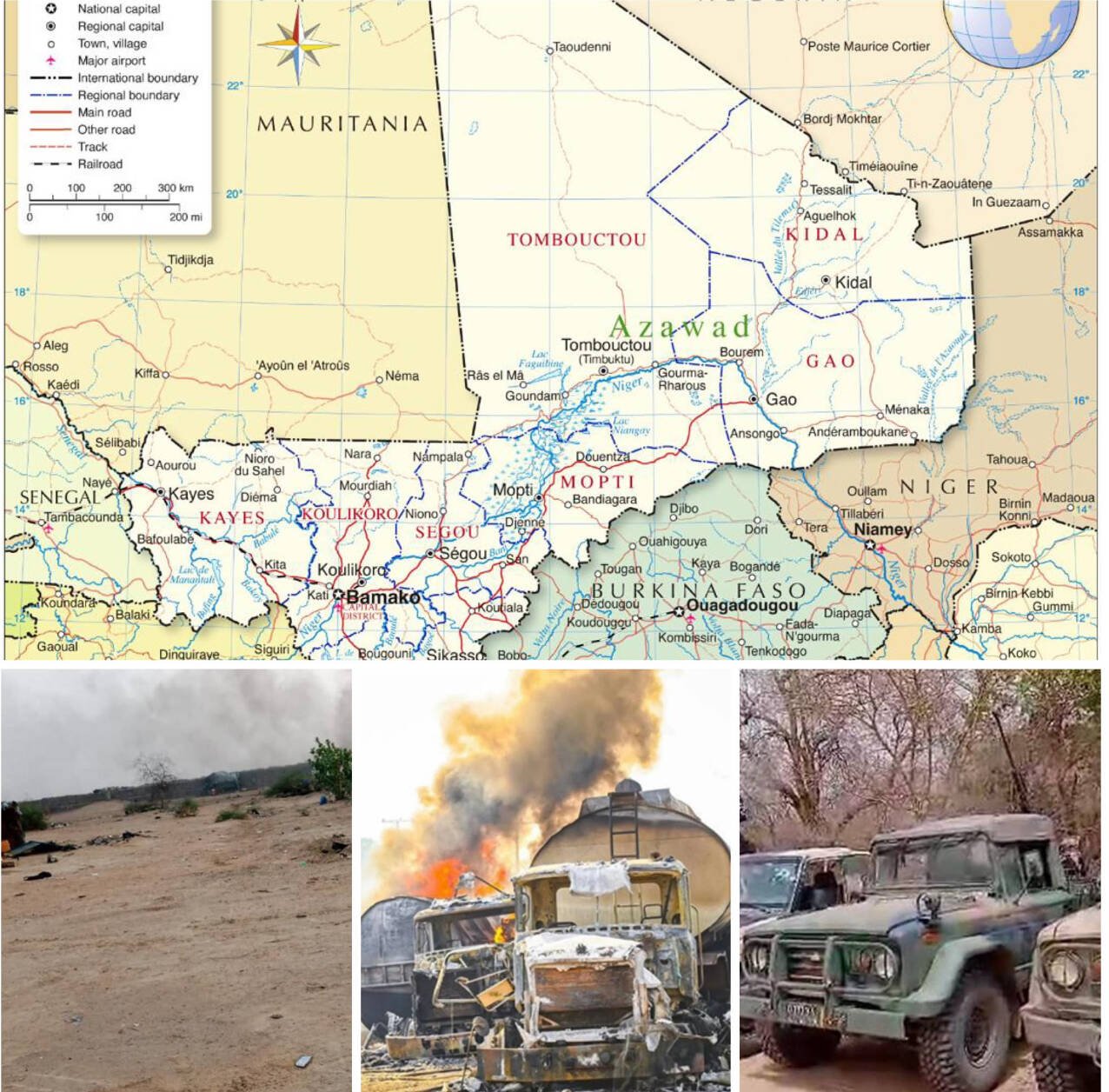
Dioura falls as Mali’s security crisis spreads south while Kati tightens its grip
By: Zagazola Makama
The reported fall of the military position at Dioura in Ténenkou Circle, Mopti Region, is more than another battlefield setback for Mali. It is a warning that the country’s security crisis is increasingly spreading beyond the traditional conflict zones and putting pressure on the military’s ability to maintain a permanent presence outside major garrisons.
According to the analysis, Jama’at Nusrat al-Islam wal-Muslimin (JNIM) has claimed control of the Dioura position through its media platform, Az-Zallaqa. No independent confirmation of the claim, casualty figures or the extent of the group’s control was immediately available. But Dioura’s strategic importance goes beyond the size of its military installation.
Dioura: a small post with a big strategic value
Dioura is positioned in a critical part of central Mali, linking areas around the Inner Niger Delta, Ténenkou and wider Mopti, with routes extending towards Niono and the Mauritanian frontier. The position therefore functions as a forward security point rather than simply another military barracks. Its repeated targeting is significant.
The post was attacked in March 2019, when dozens of soldiers were killed and military equipment seized. It was attacked again in May 2025, in another major assault that reportedly left about 40 soldiers dead and saw the military position overrun for an extended period.
If the latest reported capture is confirmed, the pattern raises a fundamental question about the ability of the Malian Armed Forces (FAMa) to hold isolated positions in contested territory.
The problem is not necessarily the loss of one military post. The problem is what happens when several such posts begin falling at the same time.
The JNIM strategy: weaken the network, not necessarily capture Bamako. JNIM does not need to seize Bamako to demonstrate that the state is losing control of its territory. It can achieve strategic effects by progressively attacking the network of forward military positions, disrupting roads, targeting supply convoys and forcing the army to concentrate its forces around major urban centres.
That creates a dangerous choice for FAMa.
They can reinforce remote positions and expose troops and supply convoys to ambushes, or withdraw from vulnerable locations and concentrate their forces in larger towns. Either way, the insurgents gain. If troops remain, they become isolated targets. If they withdraw, the insurgents gain greater freedom of movement.
The result is what could be described as territorial attrition a gradual erosion of effective state presence without the need for a conventional military offensive against major cities.
Mali’s security crisis is no longer confined to the north The wider concern is the geographical spread of violence. For years, Mali’s insecurity was largely associated with the northern and central regions. That picture has changed.
The JNIM threat has increasingly demonstrated the ability to operate around major transport corridors, agricultural areas and economically important zones. The southern regions are particularly important because they contain major agricultural production areas, mining operations and transport routes connecting Mali with neighbouring countries. Any sustained disruption in areas around Kayes, Koulikoro, Sikasso, Bougouni or along key commercial corridors would have consequences far beyond military security. It would affect food supplies, fuel distribution, mining revenues, commercial transport and government revenue.
When insecurity reaches the economic arteries of a country, it stops being merely a counter-insurgency problem. It becomes a state survival problem.
The developments therefore raise renewed questions about Mali’s reliance on Russian security assistance. The transition from Wagner to Africa Corps was presented as part of a broader strategic partnership intended to strengthen Mali’s sovereignty and military capacity. But the latest battlefield developments raise questions about how effectively that partnership is translating into sustained territorial security. The reported withdrawal of Russian personnel from Kidal, cited in the original analysis, has further fuelled debate about the limits of the Russian model.
The central issue is not whether Russia has military capabilities. It does. The question is whether those capabilities are being deployed as part of a coherent national strategy capable of securing Mali’s enormous territory.
A foreign force can provide specialised support, intelligence, aviation and protection for strategic locations. It cannot permanently substitute for a professional national army capable of holding territory, securing roads and maintaining relationships with local communities.
The Kati problem
The most troubling argument raised by the analysis concerns the growing distinction between protecting the regime and protecting the country. If the government’s most reliable security arrangements are concentrated around Bamako and Kati while peripheral military positions remain increasingly vulnerable, the security architecture risks becoming centred on regime protection rather than national territorial defence. That would be a serious strategic distortion.
Kati is important because it is closely associated with Mali’s military leadership and has become a major centre of political and military power.
But securing Kati does not secure Dioura.
Protecting the leadership does not secure the routes between Mali’s agricultural and commercial centres. And protecting the capital does not prevent JNIM from expanding its influence in remote communities.
A state can maintain political control over a capital while gradually losing effective control over its periphery. That is one of the most dangerous phases of an insurgency.
The government continues to function. The military continues to issue statements. The national flag continues to fly over administrative buildings. But outside major population centres, armed groups increasingly determine who moves, who trades and which roads can safely be used.
This is why Dioura matters. It is not because the position itself is large. It is because every abandoned or overrun forward position expands the space in which armed groups can operate.
Mali is also confronting several overlapping security challenges. The state is fighting JNIM and Islamic State-linked groups while dealing with the continuing northern conflict involving Tuareg-led armed movements, local militias and communal tensions. This creates a fragmented security environment in which the military cannot concentrate exclusively on one enemy.
At the same time, the reliance on civilian militias and local armed groups carries its own risks, particularly where communal tensions and allegations of abuses are involved.
A security strategy built around multiple armed actors can produce short-term tactical gains while creating longer-term problems of accountability and command cohesion.
The growing restrictions on independent reporting add another layer to the crisis.
When governments restrict journalists and control the flow of information, they may temporarily reduce politically damaging narratives. But censorship does not restore lost territory. In fact, prolonged information restrictions can make strategic decision-making harder by preventing uncomfortable realities from reaching policymakers and the public.
A government fighting an insurgency needs accurate information more than it needs flattering information.
The reported fall of Dioura should therefore be viewed as part of a wider strategic trend rather than an isolated tactical incident. If the Malian military continues to lose forward positions while concentrating increasingly around major urban centres, the country risks developing a security structure in which the state controls the cities while armed groups dominate the spaces between them. That is precisely the environment in which insurgencies thrive.
The real test for Bamako is not whether it can defend Kati. It is whether it can keep Dioura, secure the roads to it, protect the communities around it and maintain a credible military presence across the territory. If it cannot, then the question facing Mali is no longer simply how to defeat JNIM. It is how to prevent the gradual disappearance of effective state authority beyond the major cities.
Dioura may be a small military post. But strategically, it is a warning light. And if the warning is ignored, the next battlefield may not be another remote barracks. It may be the economic corridors, supply routes and southern regions that Mali depends on to keep the state functioning.
Credit: Source link