

Data could solve South Africa’s $21.5 billion SME funding gap
South Africa’s micro, small and medium enterprises (MSMEs) face an estimated R350 billion ($21.5 billion) financing gap. Yet the number of small business funders has doubled, from 148 in 2018 to over 300 in 2025, according to the Organisation for Economic Co-operation and Development (OECD), a global economic policy research organisation.
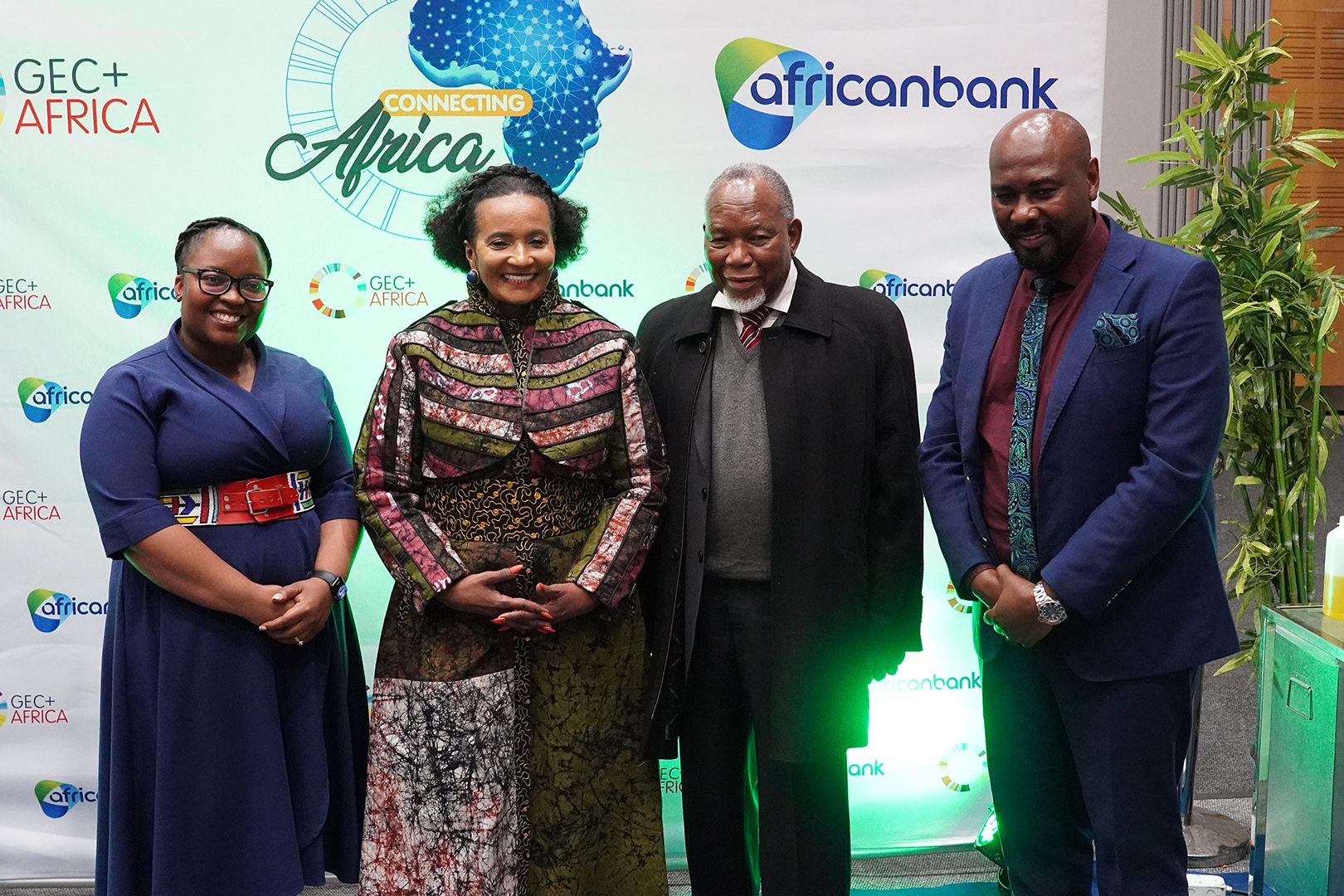
Edna Sathekga-Montse, Group Chief Transformation and Sustainability Officer at African Bank, a South African lender focused on financial inclusion, believes that contradiction points to a problem that cannot be solved simply by putting more money into the market.
Banks need to know the businesses asking for assistance better. “When we understand them better, it allows us to assess their affordability and assess their credit status a lot better and a lot differently,” Sathekga-Montse told TechCabal on the sidelines of the Global Entrepreneurship Congress Africa (GEC+Africa) in Cape Town.
The technology problem underneath South Africa’s small and medium-sized enterprises (SMEs) funding gap is that too many businesses remain difficult to read through the data systems banks use to assess risk. Without that data, even willing lenders struggle to know who to fund.
The OECD’s Financing SMEs and Entrepreneurs 2026 report found that 56% of South Africa’s MSMEs are unregistered, while only 7% used a formal financial-services provider business loan to start their business. The sector employs about 80% of the country’s workforce.
Sathekga-Montse says African Bank is responding by moving beyond the traditional model of simply assessing an application and deciding whether to approve a loan. “Without the data that we require, we are unable to, as organisations, understand whether or not any type of risk falls within our risk appetite,” she said.
For a small business, that data can be scattered across invoices, bank transactions, payroll records, tax filings, accounting software and purchase orders. A business might have customers and revenue, but if those signals aren’t captured in a way that a lender can verify and analyse, they don’t necessarily translate into a stronger credit profile.
The OECD found that close to 80% of South African MSMEs use digital financial services. But only 50% have internet access, 49% have a social-media presence and 32% have a website. The result is a growing pool of digital activity that lenders could potentially use alongside traditional credit information.
Sathekga-Montse says African Bank is trying to understand entrepreneurs and their businesses more deeply, while providing services that can help them become more structured. The bank offers payroll, tax and human-resources assistance alongside its banking services, she said.
“We furthermore are able to really link our enterprise and supply development efforts a lot closer to our business and commercial efforts,” Sathekga-Montse said.
That approach is also reflected in the bank’s efforts to bring enterprise-development support closer to commercial deals and help entrepreneurs strengthen their businesses.
The September 2026 SA MSME Access to Finance Report 2025, produced by Finfind, an SME finance access platform, in partnership with African Bank, found that 85.6% of finance applicants had annual turnover below R1 million ($61,538). These formal micro-enterprises account for more than 80% of jobs created by MSMEs and more than 85% of funding demand, yet remain among the least served by lenders.
The report also found that 50.9% of owners of businesses turning over less than R1 million ($61,538) have poor or below-average credit scores, making alternative sources of business data increasingly relevant to lending.
Invoices can provide evidence of expected cash flow. Purchase orders can show demand. Digital payments can reveal transaction patterns. These signals can give lenders a broader view of a business than a traditional credit score alone.
African Bank is already using some financial products that fit this model. Sathekga-Montse pointed to invoice discounting and purchase-order financing as ways the bank is serving entrepreneurs beyond conventional lending.
But she argues that technology and banking products will not be enough. “We need development finance institutions as well, who help to de-risk through schemes such as credit guarantee schemes and so forth,” she said.
Large companies also need to pay smaller suppliers on time, she added, because delayed payments can put enormous pressure on an SME’s cash flow and working capital. For Sathekga-Montse, the goal is not simply to give entrepreneurs access to a loan.
“Tell us about your business, tell us about what you need, and let’s figure out a way for us to work the journey with you,” she stated.
True scale demands moving beyond surface-level integrations to robust execution. We’ve filtered the noise out of Moonshot 2026, optimising the conference strictly for high-calibre connections between startup founders, global financial operators, enterprise leaders and individuals rewiring Africa’s technical frameworks. Get 20% off Early Bird tickets for a limited time.
Crédito: Link de origem