

Cuba’s Lawyers -Capital Research Center
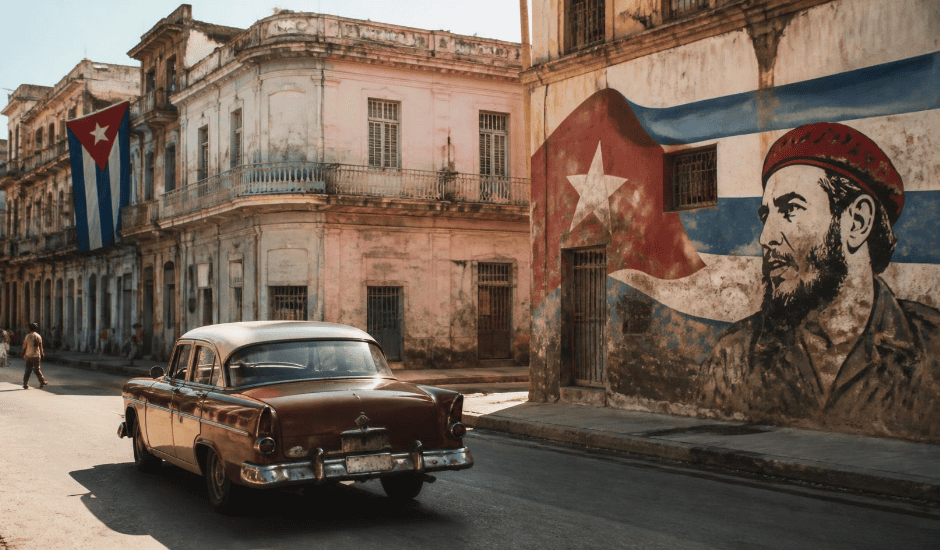
In June 2026, the U.S. Supreme Court decided Exxon Mobil Corp. v. Corporación Cimex, S.A., a case which ultimately arose from the expropriation of American-owned property by Cuba’s nascent revolutionary communist government all the way back in 1960. The counsel of record representing Cuba in the case was Michael Krinsky, of the law firm Rabinowitz, Boudin, Standard, Krinsky, & Lieberman, P.C. (RBSKL). Two-thirds of a century later, federal litigation is just one manifestation of the continuing fallout which the Cuban Revolution has produced in the United States, and RBSKL has been in the courtroom every step of the way.
A new InfluenceWatch profile details the remarkable history of RBSKL, and in the process offers a uniquely legal lens through which to view the broader American Left during the middle decades of the 20th century. Cuba is one important chapter in this story, but it also winds its way from the radical labor unions of the 1940s, through the anticommunism of the 1950s, to the anti-Vietnam War activism of the 1960s and the extremism of New Left hardliners in the 1970s, all the way to the nonprofit activism of today.
What eventually became RBSKL—it has gone by multiple names over the years—was founded in 1944. Though always a small firm, for decades it was home to two of the Left’s most famous attorneys: Victor Rabinowitz and Leonard Boudin. Rabinowitz was a dedicated Marxist-Leninist in the Soviet sense, and a member of the Communist Party USA (CPUSA) for approximately 20 years. His 1996 memoir Unrepentant Leftist, in addition to offering the candid insights of a radical (and talented) attorney, is an accurate characterization of his lifelong politics. Leonard Boudin was well-known for representing controversial clients in civil liberties cases, though today his surname might more commonly be associated with his daughter, Weather Underground extremist Kathy Boudin, and his grandson, erstwhile San Francisco district attorney Chesa Boudin.
In its early years, RBSKL was chiefly known for its large New York City-based labor law practice. A series of legal and political developments related to the onset of the Cold War, combined with the substantial influence that communists exercised over several of the firm’s notable union clients, led RBSKL to become heavily involved in representing criminal defendants, legislative committee witnesses, and civil litigants during the period of heightened anti-communist sentiment (the “Second Red Scare”) from the late 1940s through the 1950s. Through this work, Rabinowitz and Boudin gained a certain measure of national prominence (or notoriety, depending on one’s perspective).
In 1960, immediately following the Cuban Revolution, Rabinowitz and Boudin repeatedly traveled to Cuba in what would ultimately prove to be a successful campaign to secure the country’s new revolutionary communist government as a client. Che Guevara was said to have personally offered Cuba’s business to the firm after winning a game of chess in Havana. Decades of complex (and as this year’s Exxon Mobil case illustrates, ongoing) litigation ensued, and to this day the firm’s website claims that it remains Cuba’s only U.S.-based counsel. RBSKL’s other foreign government clients have included post-revolutionary Iran, Sandinista-era Nicaragua, and Salvador Allende-era Chile.
On the domestic side, some of the most notable clients represented by RBSKL attorneys over the years included the accused Soviet spy Judith Coplon, pediatrician and anti-war activist Benjamin Spock, civil rights activist and Georgia state legislator Julian Bond, entertainer Paul Robeson, longtime International Brotherhood of Teamsters president Jimmy Hoffa, and Pentagon Papers leaker Daniel Ellsberg. RBSKL attorneys have also argued numerous cases before the U.S. Supreme Court—Rabinowitz singled out American Communications Association v. Douds (a 1950 case dealing with the Taft-Hartley Act’s anti-communist affidavit requirement) and Banco Nacional de Cuba v. Sabbatino (a 1964 Cuban expropriation case) for particular attention in his memoirs. Boudin was said to have considered the 1958 right-to-travel case of Kent v. Dulles to have been the most important of his career.
RBSKL has also always had close ties to the radical-left National Lawyers Guild. Boudin and Rabinowitz were founding-era members of the Guild, and Rabinowitz served as its president during the tumultuous period between 1967 and 1970. Krinsky is another prominent member who once represented the Guild in protracted litigation against the FBI, which had engaged in illegal surveillance.
Today, RBSKL’s website lists eight attorneys, including principals and “of counsel.” One of the of counsel lawyers is Craig Kaplan, a member of the pro-taxation Patriotic Millionaires, and a prominent Democratic Party donor/fundraiser. Kaplan has sat on the boards of multiple left-of-center voter registration and activist nonprofits, including previously at the Project Vote and Voting for America (now known as the Voter Registration Project). As of their respective most recent available tax filings, he remains on the boards of Citizens for Responsibility and Ethics in Washington (CREW) and America Votes.
To read the full InfluenceWatch profile on Rabinowitz, Boudin, Standard, Krinsky & Lieberman, P.C., click here.