

Could Kenya become Egypt’s gateway to a wider African market?
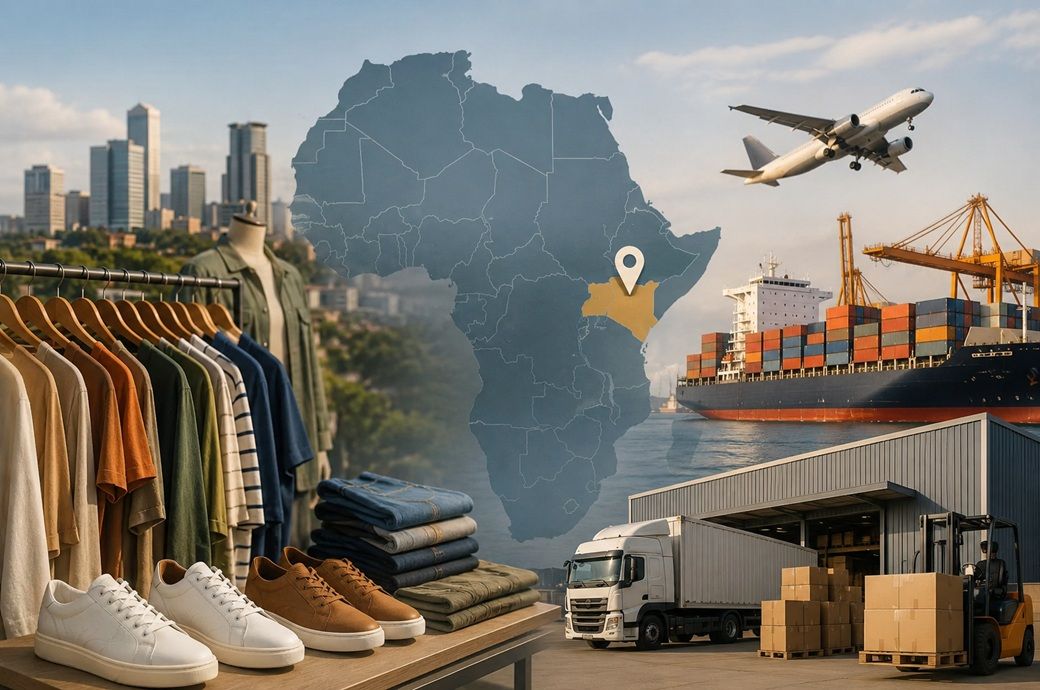
For businesses, the opportunity extends well beyond population size. Millions of young Africans are entering the workforce, forming households, and shaping new patterns of consumption, creating sustained demand for apparel and footwear, apart from food, housing, consumer electronics, beauty, financial services, entertainment, etc.
Africa’s young, urbanising consumer base is creating sustained demand for apparel and footwear.
Egypt’s ECAHT has agreed to set up a logistics hub in Kenya to reduce freight costs, delivery times and distributor access barriers.
The hub will cover shipping, warehousing and insurance, with shipments due in September and targeted garment exports estimated to rise by at least 20 per cent.
It is against this backdrop that Egypt is looking to use Kenya as a springboard for expanding its exports across Africa, with a new logistics hub aimed at reducing freight and distribution barriers.
Kenya combines a sizeable domestic market with established trade and logistics networks, making it a potentially important base for Egyptian exporters seeking to expand across the continent.
The recent agreement signed by Egypt’s Chamber of Apparel and Home Textile Industries (ECAHT) to establish a logistics hub in Kenya therefore assumes significance. According to media reports, the initiative, agreed with the Egyptian Industrial Exports Company, is designed to strengthen Egyptian exporters’ foothold in African markets while helping Egypt diversify its export destinations and reduce dependence on traditional markets.
The proposed hub is intended to address some of the key challenges that have constrained regular shipments to African markets, including freight costs, delivery times, and access to distributors.
By keeping Egyptian products closer to customers, the facility can enable faster order fulfilment and create a more reliable distribution channel. The hub will reportedly provide integrated services covering shipping, warehousing, and insurance.
To encourage participation, a senior ECAHT official reportedly said the chamber would cover shipping costs for goods sent to the hub for six months, even as Egyptian apparel entities are reportedly expected to begin shipments to Kenya in September, while the initiative is estimated to help increase garment exports to targeted African countries by at least 20 per cent.
Importantly, the model could also benefit smaller manufacturers and exporters, which often face disproportionately high logistics costs when entering unfamiliar markets. With products positioned closer to African consumers, Egyptian companies may be better placed to test demand, build distributor relationships, and scale operations, is what the stakeholders felt.
Kenya’s role as a regional gateway could thus ultimately make the logistics hub more than a warehousing facility. If the Nairobi model proves commercially viable, it could very well mark a shift in Egypt’s African export strategy—from shipping products into African markets to maintaining inventory, distribution and customer relationships within the region and connecting with a broader African consumer market.
Fibre2Fashion News Desk (DR)
Credit: Source link