

Colombian coffee boom fades as Brazil heads for record crop
The coffee boom that lifted growers’ incomes and helped support private consumption in Colombia between 2024 and 2025 has reversed in 2026, putting pressure on Colombian coffee exports and farm finances.
Lower production, a correction in international prices and the appreciation of the Colombian peso have reduced the value of the crop, according to Corficolombiana.
“As a result, according to our estimates, the real value of the coffee crop has accumulated a reduction of around 35% so far in 2026,” Corficolombiana said in a report.
The 2024-2025 crop was one of the strongest in three decades. Production reached 14.87 million bags, the highest level in 33 years, supported by favorable weather and historically high international prices.
In 2025, the value of Colombia’s coffee crop reached 24.4 trillion Colombian pesos, or about R$40.8 billion, up 52% from 2024 and the highest level on record. The combination of higher production and stronger prices boosted growers’ revenue.
That increase also had broader effects on consumption. According to Colombia’s central bank, higher household spending was partly driven by income from coffee activity.
But the factors behind that cycle began to shift in 2026. Coffee production fell 12.5% year to date through July, while international prices entered a correction phase after the highs seen in 2025.
The sector had already anticipated that reversal. Germán Bahamón, head of Colombia’s coffee growers federation FedeCafé, told El Colombiano that relentless rains this year led to the current situation.
“This change in weather patterns altered harvest cycles in Colombia,” he said.
Bahamón added that “from the beginning, we knew these rains would have this effect: a slowdown in the harvest in the first half of the year, mainly in the south of the country.”
Corficolombiana said the appreciation of the Colombian peso added further pressure by reducing the price received by growers in local currency. Together, these factors changed the outlook for the coffee sector.
Lower production
The first sign of the change in trend came from production. Between November 2025 and April 2026, Colombia’s coffee sector recorded consecutive double-digit declines.
That performance was shaped by biological and weather-related factors. After a record harvest, coffee plants allocate a significant share of their energy and nutrient reserves to fruit formation and maturation, temporarily reducing their ability to sustain the same level of flowering.
That natural variation was amplified by excessive rainfall in coffee-growing regions during the first quarter of 2026. The rains affected flowering, delayed bean development and shifted the harvest calendar.
Production increases in May and June did not amount to a structural recovery, according to Corficolombiana. Output rose 29% in May and 43% in June, mainly because the first harvest of the year had been delayed.
In July, production fell again, dropping 22.5%, reinforcing the interpretation that the previous two months’ recovery was largely a calendar effect.
Colombia’s National Federation of Coffee Growers projects production of around 12.5 million bags in 2026, equivalent to an annual decline of about 9%.
The weather outlook adds another source of uncertainty. For the fourth quarter of 2026, the U.S. National Oceanic and Atmospheric Administration (NOAA) forecasts a probability of more than 90% for a very strong El Niño event.
International prices and the exchange rate
The international market has also changed from the conditions that defined the period of prosperity. Year to date through July, arabica coffee prices fell 13%, from 363.2 cents to 317.2 cents per pound.
The decline is mainly linked to expectations of higher global supply, driven by the prospect of a record crop of around 70 million bags in Brazil.
Although prices rose in July, Corficolombiana said that increase was linked to rains in Minas Gerais, Brazil’s main coffee-producing state, and to lower certified arabica coffee stocks on the ICE exchange.
The World Bank estimates coffee prices will fall by about 13% over the course of 2026. Coffee terms of trade declined 7% between May 2025 and July 2026.
The appreciation of the Colombian peso has further squeezed growers’ income. The exchange rate has appreciated 16.5% since the start of the year.
The domestic coffee price fell from an average of 2.9 million pesos per carga during the first half of 2025 to 2.3 million pesos in the same period of 2026.
“Consequently, a coffee grower today receives around 700,000 pesos less for each carga sold,” Corficolombiana said.
Impact goes beyond coffee farms
The reversal of the boom is not limited to producers. Around 550,000 families depend directly on coffee activity, which is present in about 603 municipalities across Colombia.
In those regions, income generated by coffee farming also supports activities such as retail, transport and services through spending by producer families.
Coffee also carries significant weight in Colombian exports. It is the country’s fourth-largest export product. Year to date through June, export value fell 9.7%, while exported volume declined 18.5%.
The downturn comes alongside the effects of an earthquake that hit several coffee-growing regions in western Colombia. About 44% of the country’s coffee area is concentrated in Antioquia, Cauca, Caldas, Valle del Cauca and Quindío.
“The Federation is already on the ground identifying, family by family, damage to homes, farms and rural infrastructure,” Bahamón said after the earthquake. At the same time, he said that “after the emergency will come reconstruction, and in that phase the Federation will also be present, alongside our coffee growers.”
Although the economic impact of the earthquake on the sector has not yet been determined, several affected regions have a significant coffee presence. In Colombia’s Coffee Axis, around 57,000 families depend directly on the activity.
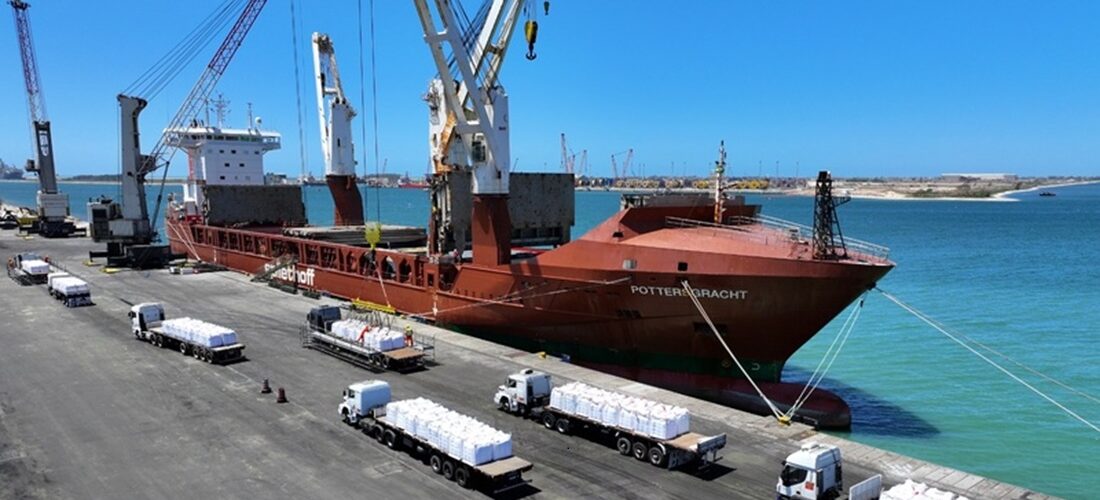
The sector has maintained export flows through alternative routes and the use of terminals on the Caribbean coast because of impacts on strategic transport corridors.
Under normal conditions, about two-thirds of Colombia’s coffee exports move through the Port of Buenaventura. Diverting cargo to Caribbean terminals could increase transport costs for exporters.
For Corficolombiana, the end of the boom highlights how sensitive the coffee sector is to weather, international prices and exchange-rate movements.
“The main challenge for the Colombian coffee sector is not only to recover the levels seen during the latest period of prosperity, but to strengthen its ability to sustain growth and income generation across different economic and climate cycles,” Corficolombiana said.
The report also stressed the importance of strengthening income-stabilization mechanisms, investing in rural infrastructure and connectivity, and promoting the development of higher-value-added products.
The 2024 and 2025 boom showed coffee’s ability to strengthen rural income and contribute to economic growth. Its reversal in 2026 once again puts production, international prices and the exchange rate at the center of the sector’s outlook.
For Colombian coffee exports, the coming months will depend not only on domestic production and logistics, but also on how Brazil’s expected record crop reshapes global supply and price dynamics.
Source: Bloomberg Linea