

China’s Soybean Buying Boost Gives US Farmers a Shot of Demand Ahead of Xi Visit
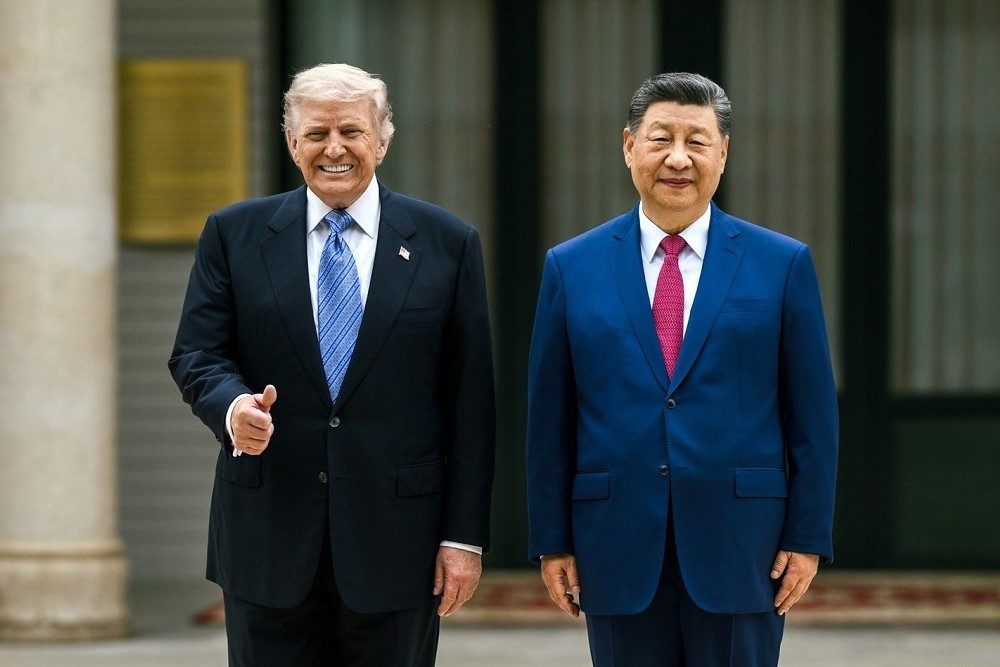
China is suddenly back in the U.S. soybean market in a big way—buying roughly 1 million metric tons of American soybeans this week as Washington and Beijing prepare for a potential summit later this month. For U.S. soybean growers heading into harvest, the purchases are providing a badly needed jolt of demand at a critical time, while tightening Brazilian supplies and growing weather concerns add another layer of support to the market.
The buying spree amounts to roughly 36.7 million bushels of soybeans, according to Reuters reports from four traders. Chinese buyers booked an estimated 14 to 15 cargoes for shipment from U.S. Gulf terminals between December and February.
The U.S. Department of Agriculture also confirmed the increased buying interest Wednesday, reporting 340,000 metric tons of U.S. soybeans sold to China and another 100,000 tons sold to undisclosed destinations.
For farmers watching soybean prices, the timing is significant.
China demand returns as harvest approaches
China’s latest purchases bring its reported U.S. soybean commitments to roughly 13 million metric tons, or nearly half of the 25 million metric tons annually that the White House says Beijing committed to purchase through 2028.
That is a dramatic change from the period following last year’s U.S.-China tariff fight, when Chinese tariffs largely pushed private crushers away from U.S. soybeans and toward competing supplies.
Karl Setzer, co-founder of Consus Ag Consulting, said the market is beginning to see evidence that new-crop soybean demand is strengthening.
“We started out two more flash sales on beans. Add them to the ones we’ve seen all week long and last week, and our soybean demand building quite a bit,” he said.
Setzer said the pace of soybean sales is particularly noteworthy.
“Our current sales pace twice last year’s volume. So that is giving us much needed support,” he added.
That demand is arriving just as U.S. farmers are preparing to move millions of bushels of new-crop soybeans into the marketplace.
The question now is whether China’s recent buying is the beginning of a sustained return to U.S. soybeans—or primarily a strategic move ahead of the expected meeting between President Donald Trump and Chinese President Xi Jinping.
Xi visit adds another layer of uncertainty—and opportunity
Trump said in July that Xi was expected to visit Washington on September 24, although China has not formally confirmed the date.
The soybean purchases are occurring against that diplomatic backdrop.
Reuters reports that Chinese state buyers, including Sinograin, have been particularly active in recent days.
“Sinograin has made more purchases over the past few days. They have been buying ahead of Xi’s visit to the United States,” one Asia-based trader told Reuters.
China continues to impose an additional 10% tariff on U.S. goods, including agricultural products. A reduction in that tariff could potentially bring private Chinese soybean crushers back into the U.S. market.
That would matter enormously to American farmers.
China is the world’s largest soybean importer and represents one of the most important sources of global soybean demand. When Chinese buyers step away from the United States, U.S. producers can quickly feel the impact through export demand, basis and futures prices.
When they return, the effect can move in the opposite direction.
Brazil supplies are tightening
The Chinese buying surge is not happening in isolation.
Global soybean supplies are also becoming more complicated as inventories tighten in Brazil, the world’s leading soybean exporter.
That makes the timing of China’s U.S. purchases particularly important. With Brazilian supplies becoming less readily available, Chinese crushers have more incentive to secure additional beans from the United States.
Setzer said the soybean complex received support Thursday not only from export demand, but also from broader commodity-market forces.
“The soy complex did lead us upwards here. We started out two more flash sales on beans, our soybean demand is building quite a bit,” he said.
Soybean meal has also been providing leadership within the complex.
“Meal has been leading that complex, the spread really favoring meal over oil. Today, we’re starting to see a little bit of strengthened both here,” said Setzer.
Weather could become the next market driver
While China is grabbing the headlines, Setzer says traders are increasingly turning their attention toward weather in South America.
U.S. drought conditions improved slightly this week, but attention is shifting toward the start of the South American planting season.
And that could become a much bigger market story in the months ahead.
Setzer says the latest El Niño outlook is raising questions about South American production—and potentially next year’s U.S. crop as well.
“The El Nino forecast came out today, a 90% chance that the El Nino will be intact through the winter of 2027. A 75% chance this is going to be the strongest El Nino ever seen.”
If that forecast holds, weather risk could become a significant source of volatility for grain markets.
“The combination of these two really starting to question not only South American production, but it could carry over into next year’s US production as well. We’re seeing a little bit of weather premium added into the market because of this,” said Setzer.
Corn follows soybeans higher
Soybeans were the clear leader Thursday, but corn also found some support as grain markets responded to the combination of export demand, geopolitical uncertainty and developing weather concerns.
Setzer characterizes corn as more of a follower for the day.
“Coming back to the corn, that was more of a follower today. Grains really were, but we are seeing more support there.”
Crude oil also posted a sharp gain amid escalating tensions involving the United States and Iran, along with attacks involving vessels in the Black Sea amid the Russia-Ukraine conflict.
Those geopolitical developments can ripple through agricultural markets by raising energy, transportation and input costs while adding volatility to commodity prices.
A critical window for U.S. soybean farmers
For farmers, the latest Chinese purchases are encouraging—but they do not eliminate the risks facing the soybean market.
The purchases provide evidence that China still needs U.S. soybeans. But the 10% tariff remains, the long-term trade relationship remains uncertain, and China’s buying pace could change depending on diplomatic developments and relative prices between U.S. and South American supplies.
Still, the immediate market signal is hard to ignore.
After months of trade uncertainty, China is buying U.S. soybeans again—and doing it by the shipload.
For American farmers approaching harvest with a massive new-crop supply coming to market, that demand could be arriving at precisely the right time.
And if the buying continues, combined with tightening Brazilian inventories and emerging South American weather risk, the soybean market may have found something it has been desperately looking for: a reason to bid higher for U.S. beans.
All eyes now turn to USDA’s monthly World Agricultural Supply and Demand Estimates (WASDE) report, due out at 12 p.m. ET Friday, Sept. 11. Traders will be looking closely for any changes to U.S. corn and soybean yield and production estimates, along with revisions to export demand and ending stocks.
With China suddenly accelerating soybean purchases, the market will be watching closely to see whether USDA accounts for any strengthening demand in its balance sheets—and whether the agency’s latest numbers confirm or challenge the bullish momentum developing in soybeans.
CLICK BELOW for market commentary and analysis from Karl Setzer with Consus Ag Consulting:
Comments are closed.