

Baghdad confirms attack on Saudi pipeline came from Iraq
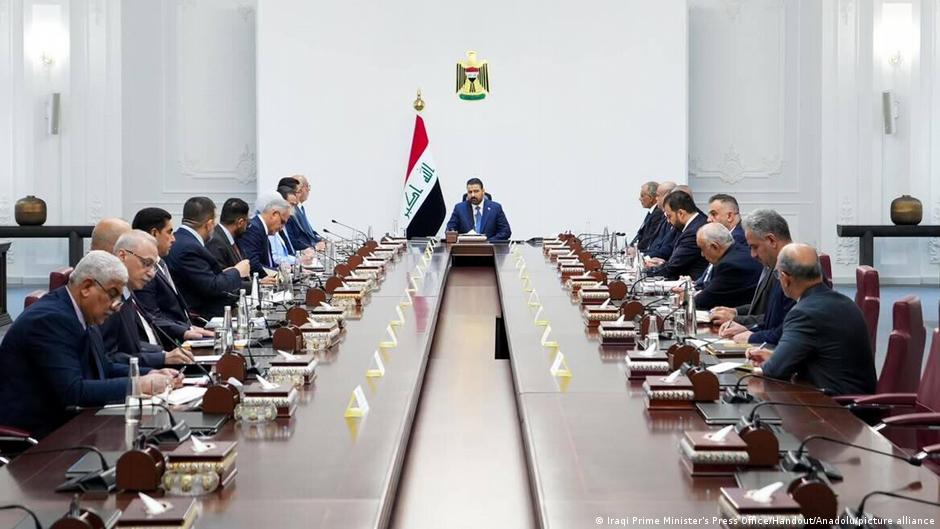
Iraq’s government confirmed on Saturday that Friday night attacks on a key Saudi oil pipeline had been launched from Iraqi territory.
Saudi Arabia said that it shut down the pipeline on Friday, calling it a “precautionary measure” over a drone attack that occurred the previous day.
Riyadh said that it would not retaliate, stressing that it wanted to give Baghdad “an opportunity to take the necessary measures.”
The Iraqi government dismissed the military commander and police chief in Maysan province, on the Iranian border, which has long been viewed as a area where Iran-backed Shiite militias operate.
Iraq also closed the main border crossing in Maysan.
Who is behind the attacks on the Saudi pipeline?
No group has claimed responsibility for the attacks.
The Popular Mobilization Forces (PMF), an alliance of Iran-backed Iraqi militias, denied any involvement.
The militias are formally part of Iraq’s security forces, but some of the groups occasionally act independently.
US President Donald Trump said Saturday that Iran was “probably” responsible for the pipeline attack, while also seemingly downplaying the US and Saudi Arabia’s conflict with the Houthis, an Iran-backed militia that controls swathes of Yemen.
“The Houthis called us, and they don’t want to fight with us,” Trump said. “They would much prefer not having us involved, and they’re letting most ships go through.”
The Houthis and some of the Iraqi Shiite armed groups are part of what Tehran dubs the “Axis of Resistance,” a group of Iran-backed militias in the Middle East that oppose the United States and Israel.
The Yemeni armed group has imposed a blockade on Saudi Arabia since July and seized the Red Sea port city of Mokha on Thursday. Thousands of people have fled the city.
The Houthis on Thursday also captured the island of Perim, after a weeklong offensive that has culminated in solidifying their hold of strategic points on the Bab el-Mandeb strait, one of the world’s most important shipping routes.
The Houthis have previously targeted international shipping in the Red Sea, citing solidarity with Palestinians in Gaza amid Israel’s offensive in the territory.
But the movement has said that maritime traffic remains safe for all shipping companies, except for Saudi vessels.
Iraq under pressure to disband Iran-backed militias
Iraq has been under pressure from Washington to rein in Iran-aligned Shiite armed groups, as some of the militias have hit US-linked targets in the region since the United States and Israel launched their war against Iran on February 28.
While Baghdad has set a September 30 deadline for their disarmament, several militias have said they will not comply with the order.
The deadline coincides with the date set for the withdrawal of the remaining US-led coalition forces from Iraq.
One of the most influential militias, Kataib Hezbollah, has heavily criticized the disarmament plan and called for guarantees that US forces would never return and measures would be implemented to rid Iraq of US influence on political or economic decision-making.
Edited by: Kieran Burke
Don’t let the algorithm hide the news. If you rely on our team for trusted reporting, please take a moment to select us as your Preferred Source on Google by clicking here and hitting the “star” or “preferred” button, so you’ll always see our verified news first.