

China’s ocean vessel upgraded to reach 32,000 feet deeper for sea ops
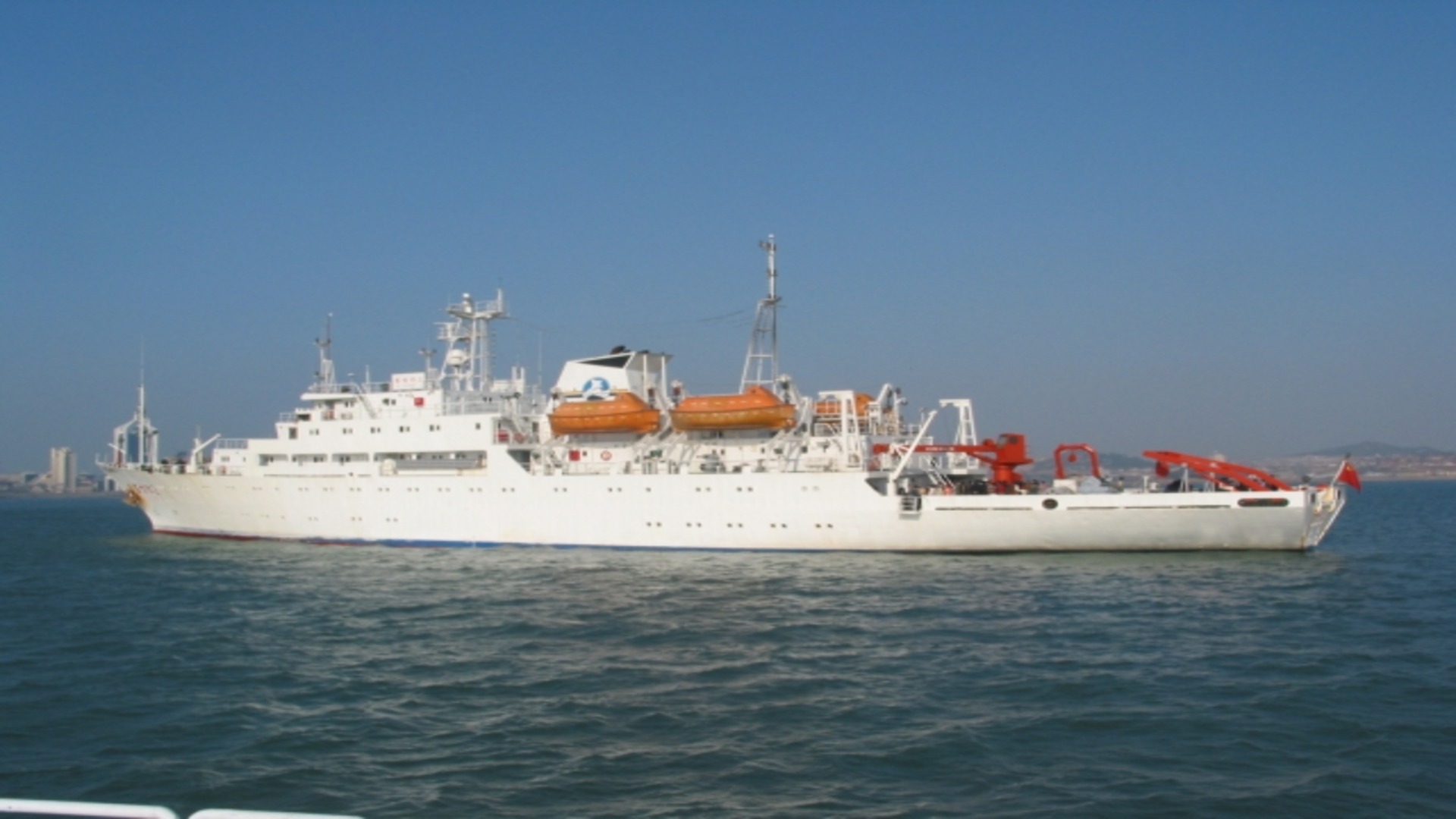
Just announced: China’s famous marine research vessel over 300 feet long, the “Dong Fang Hong 2,” just underwent a major upgrade, ushering in a new and improved era of cooperative ocean research.
Commissioned by the Ocean University of China in 1996, the Dong Fang Hong 2 is one of China’s most important comprehensive oceanographic research vessels, according to Baike.
In service for 27 years, the 314.96-foot-long and 49.21-foot-wide ship, weighing 3,000 tons, recently revamped, boasts over 600,000 nautical miles traveled and 160 major scientific expeditions across multiple disciplines, including hydrology, meteorology, physics, chemistry, geology, geophysics, and student fieldwork.
In 2025, the vessel updated its dynamic positioning, automated navigation, and labs, adding a folding crane that extends its operating depth to 10,000 meters.
Overall, the recent renovations improved the Dong Fang’s control and power, scientific research functions, workspace layout, and navigation performance, according to CGTN. However, the most notable adjustments focused on the bridge.
China’s premier research vessel gets major update
“The bridge now is very open, providing the crew a better view for navigation and scientific experiments. The key point is that we added a dynamic positioning system to this ship, allowing it to remain stationary at sea for extended periods, facilitating our scientific research experiments. Secondly, it features trajectory planning, enabling fully automated operation from point A to point B, reducing the operational burden on the crew at sea,” said Tong Yao, project manager of the Dong Fang Hong 2 in CGTN.
The ship’s laboratory experienced profound changes as well – including both its placement on the vessel and the actual space. Now, it’s located near the vessel’s stern deck to reduce the distance water samples travel once extracted from the sea.
Previously, the ship’s lab was comprised of a series of small, separate rooms, but now, they expanded the space to make room for the latest equipment.
“After the optimization, the laboratory can accommodate a wider variety of experimental equipment, and the types of experiments that can be conducted on a single voyage are more diverse. The layout has undergone a significant adjustment,” continued Tong in CGTN.
Furthermore, the ship installed a large crane to meet the demands of modern-day research.
“We equipped the vessel with a large crane. Its load-bearing capacity has been improved to accommodate the needs of larger scientific research equipment during expeditions. Secondly, its boom has been replaced with a folding type, which can effectively lower the ship’s center of gravity and improve stability during navigation. Our operating water depth has increased from 6,000 meters to 10,000 meters, and the equipment can support our operations in all sea areas more effectively,” said Tong in CGTN.
A Chinese vessel that symbolizes cooperation
The Ocean University of China stated on its website that it has conducted joint research with the U.S., Canada, France, Japan, and South Korea in the Yellow Sea, Bohai Sea, and East China Sea.
Some of the cooperative research programs include: “Joint Investigation for Sino-Japan Subtropical Circulation”, “Sino-German Research for Sustainable Development of Ecological System Dynamics and Biological Resources at Bohai Sea”, “Sino-British Joint Testing of Apparatus”, “Sino-American Cooperative Survey for Change of Some Routes at the Offshore in Shanghai”, and “Investigation of Environmental Geology in Northwest Pacific Ocean,” as per OUC’s website.