

Ceuta crisis showed EU gave too much power to Morocco – EUobserver
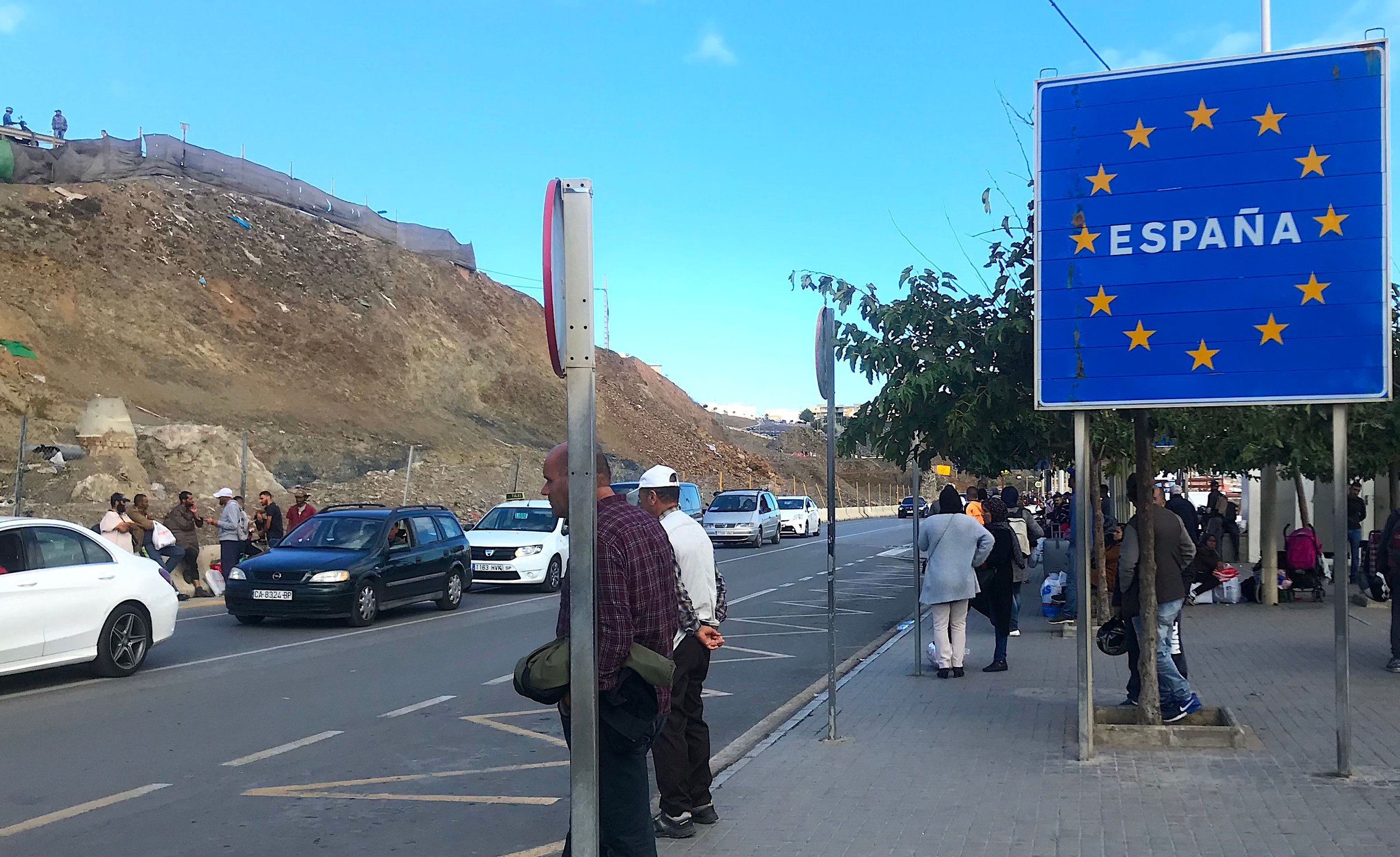
What happened in Ceuta at the end of July 2026 should not be treated simply as another migration crisis. The entry of tens of thousands of people from Morocco revealed something more troubling: the extent to which Europe has made the security of its borders and its political stability dependent on a state capable of turning that dependence into leverage.
In May 2021, nearly 10,000 people entered Ceuta, triggering a diplomatic crisis between Madrid and Rabat. The European Parliament’s response was immediate: it condemned “Morocco’s use of border controls and migration, and unaccompanied minors in particular, as political pressure against a Member State of the European Union.”
Five years later, Europe once again finds itself facing the same situation, but on a much larger scale.
Investigations into the events of July 2026 indicate that the mobilisation was not merely a spontaneous reaction.
An analysis conducted by Golden Owl, linked to the University of Alicante, identified an organised operation conducted through social media, involving coordinators, dissemination channels, recruitment structures and mechanisms designed to conceal the identities of those behind it.
There is also another element that deserves an independent European investigation: the events coincided with Morocco’s Throne Day, following a speech by the king on economic and social progress, while ceremonies of allegiance to the monarchy were taking place. That is not a coincidence.
The fundamental question is no longer who posted the first message on a social network. The question is who possesses the actual capacity to open or close a border, tighten its surveillance or relax it.
And also: why has fleeing Morocco become an attractive option for so many people when the European Union invests millions of euros of European taxpayers’ money for Morocco to curb migration towards Europe?
Morocco has understood the political value of large-scale human mobilisation for decades.
In 1975, it used a mobilisation of some 350,000 people, known as the Green March, to pressure Spain and alter the reality on the ground in Western Sahara, a territory whose decolonisation process remains unfinished.
The circumstances of 1975 and 2026 are different, but one element remains unchanged: the Moroccan regime continues to use large-scale population movements as an instrument of political pressure.
Today, migration is one of those tools.
Europe funds Morocco to control its borders, combat human-trafficking networks and contain migration flows. The problem begins when the actor tasked with preventing a crisis acquires, precisely because of that role, the ability to increase the political and economic cost of any reduction in its cooperation and to use that capacity as an instrument of pressure.
But migration is not the only lever.
Morocco also possesses significant intelligence concerning terrorism, radicalisation, drug trafficking and organised crime in environments linked to Moroccan citizens who have emigrated to Europe.
This gives Morocco leverage because Europe considers it indispensable to understanding criminal and extremist networks operating on its territory. As a result, cooperation ceases to be exclusively technical and also becomes a source of influence.
Then there is the Moroccogate case.
Investigations stemming from the 2022 corruption scandal in the European Parliament have revealed suspicions of Moroccan attempts to influence members of the European Parliament and individuals linked to European institutions through money, gifts and privileges.
If such attempts reached the European Parliament, the question is unavoidable: in what other institutions might similar operations exist?
The Pegasus affair and allegations of espionage against European politicians, journalists and public figures, particularly in Spain, remain an issue that continues to raise serious questions about institutional security and the protection of political and media actors within the European Union.
Cooperation or dependence?
It would be irresponsible for Europe to continue treating migration, intelligence, political influence, financing and espionage as entirely separate files because, taken together, they reveal a strategic problem: Europe has allowed too many levers of influence to accumulate in the hands of a single partner that has repeatedly demonstrated that it is neither serious nor reliable.
A migration crisis in Ceuta can generate social alarm, strengthen extremist and radical forces, create conflicts between European governments, weaken the arrangements underpinning the Schengen area and fuel disinformation campaigns.
During the latest crisis, various international actors took advantage of the events to exert pressure on European Union countries and contribute to internal tensions.
The question, therefore, is unavoidable: who, besides Morocco, benefits from the use of migration and security as instruments of pressure on Europe?
The vulnerabilities that Morocco can open or keep open can also be exploited by friendly countries, allies or third parties whose interests temporarily coincide with weakening, dividing or pressuring Europe.
A tool used to extract a concession from Spain may ultimately serve other actors interested in eroding European cohesion. A bilateral crisis can become a Schengen crisis, and migration pressure can become fuel for foreign disinformation campaigns.
Europe needs to cooperate with Morocco, not submit to it. Geography makes that relationship inevitable. But such cooperation cannot come at the expense of the security, interests and laws of European citizens.
It is also worth recalling the judgments concerning Western Sahara. The Court of Justice of the European Union has established that the territory has a status separate and distinct from that of Morocco and has restricted the application there of agreements between the European Union and Rabat.
Despite this, European institutions have sought ways to preserve their relations and agreements with Morocco.
A contradiction therefore emerges: a Europe that demands respect for the rule of law seeks to preserve a strategic relationship even when it clashes with decisions handed down by its own courts.
Europe has protected that relationship for years. Today, its costs appear greater than anticipated.
Cooperation must not become dependence.
No partner should accumulate the capacity to influence simultaneously Europe’s borders, part of its security intelligence, its economic interests and the internal political stability of any European state, much less that of the European Union as a whole.
The question Ceuta poses to Brussels today is not whether Morocco is Europe’s friend or enemy.
It is much simpler: Can a relationship truly be considered balanced when Europe fears the consequences of its partner ceasing to cooperate?
If the answer is No, Ceuta should become the turning point.
Credit: Source link