

Covenant takes its long-range missile from secrecy to a live-fire test in Morocco
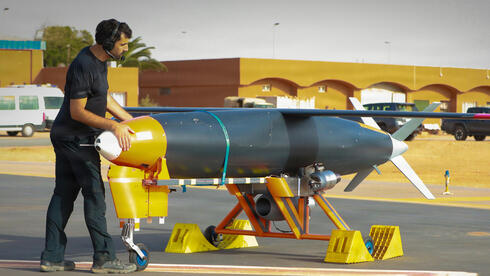
Covenant Industries, the American defense startup with subsidiaries in Israel and Germany, has conducted the first live-fire demonstration of its Anthem long-range cruise missile in Morocco, giving a rare public glimpse into a company that has operated largely out of view since its founding in 2024.
The missile was launched on Aug. 6 from an expeditionary testing site near Tan-Tan in southern Morocco. The test was also the first live-fire demonstration conducted at the Africa Multidomain Training and Experimentation Center, or AMTEC, a new U.S.-Moroccan military testing facility.
U.S. service members and Morocco’s Royal Armed Forces worked alongside Covenant engineers and technicians during the demonstration. The teams tested communications systems, evaluated the maneuverability of the missile’s wings, tires and launch trolley, and collected weather and targeting data.
The event is significant for Covenant, which has moved unusually quickly from a largely secretive startup to testing a long-range strike system in a military exercise involving the United States and Morocco.
Covenant has raised hundreds of millions of dollars, according to people familiar with the company, and has attracted prominent Silicon Valley investors including Founders Fund and Andreessen Horowitz. Its founder, Michael Kaufman, is a former investor at Thiel Capital.
The company has also attracted interest in Europe. In June, Politico reported that Germany’s defense ministry was evaluating Covenant as it searched for lower-cost, long-range strike capabilities and alternatives to relying heavily on U.S.-made systems such as Tomahawk cruise missiles.
At the center of that effort is Anthem. Covenant’s pitch is built around a relatively low-cost, long-range missile that could potentially be produced at scale.
The Morocco test did not amount to a full operational deployment of the system. Rather, it was designed to collect data and provide engineers and military personnel with information that can be used in further development and testing.
That distinction is important for a company at Covenant’s stage. The test demonstrated that the missile could be launched in a realistic environment, but the path from a successful demonstration to a weapon that can be produced in large numbers and integrated into military operations remains a substantial one.
The test also reflects a broader change in the way the U.S. military is attempting to work with defense startups.
The U.S. Army has launched an initiative intended to give private companies faster access to military testing ranges. Under the program, companies developing missiles, drones and other weapons can request access to five ranges in the United States and allied countries through an online system, with the Army aiming to provide access within 30 days.
Covenant was the first company to use the new program to conduct a test at the Moroccan range.
The company has so far disclosed little publicly about its technology, and the Morocco demonstration did not provide a detailed picture of its capabilities. But the test showed that Covenant has reached the stage at which its missile can be evaluated alongside military personnel and under real-world conditions.
The company’s international structure could also become important as European countries look to reduce their dependence on American weapons while seeking access to new defense technologies.
Credit: Source link