

Ceuta begins burial of dozens of migrants killed in mass border crossing
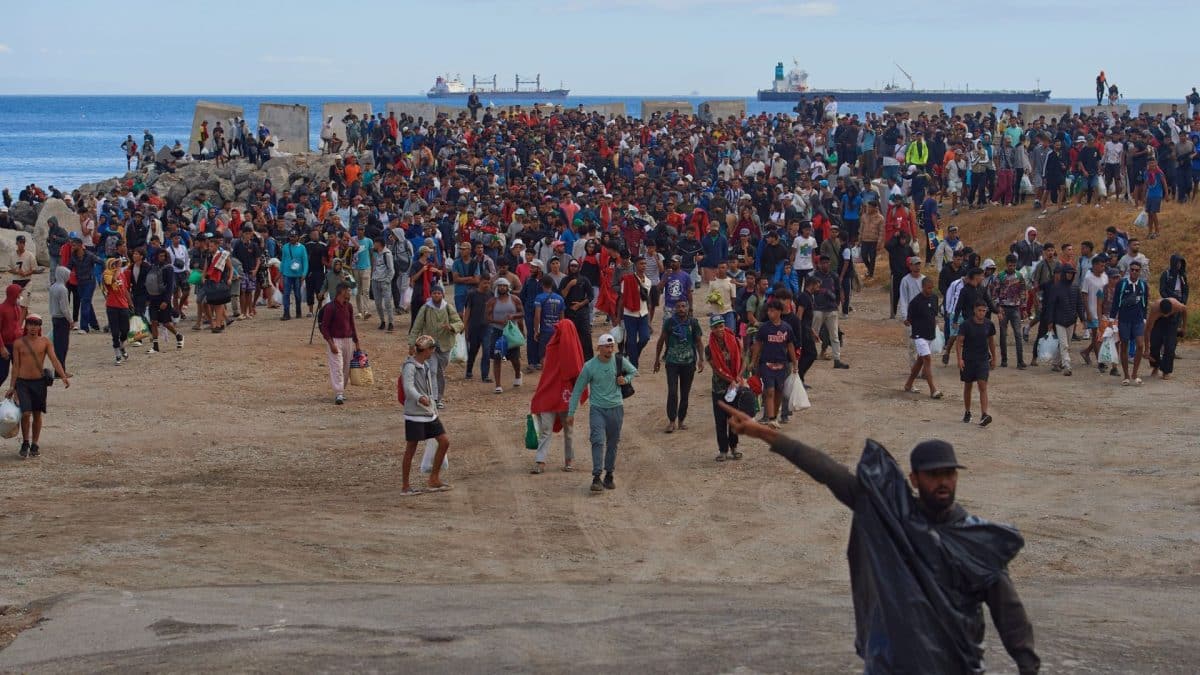
Nearly three weeks after a deadly mass crossing from Morocco into Spain’s Ceuta enclave, authorities have begun burying dozens of unidentified migrants as families continue searching for missing relatives.
Authorities in Spain’s North African enclave of Ceuta on Friday began burying dozens of migrants who died during a mass crossing from Morocco three weeks ago, with most of the victims still unidentified.
At the Muslim cemetery in Ceuta, gravediggers wearing protective suits and face masks lowered the first four victims into adjoining graves lined with cinderblocks. Each body was wrapped in a white body bag as a Muslim cleric recited a brief prayer. More bodies were being brought to the cemetery in hearses.
Said Mohammed, the acting manager of the cemetery, said around 70 bodies are expected to be buried over the coming days, at a rate of roughly 10 to 12 burials daily.
Around 95% of the victims awaiting burial have not been identified, Mohammed said. Authorities have placed numbered stones on the graves so that the remains can be located if relatives later identify the victims and arrange for their repatriation.
Most victims remain unidentified
The deaths occurred during a huge rush of migrants attempting to cross from Morocco into Ceuta on July 30. Authorities estimate that between 5,000 and 8,000 people remain in Ceuta, after at least 72,000 migrants crossed from Morocco during the mass movement.
Spanish authorities have confirmed 82 migrant deaths on the Spanish side of the border, while Morocco has confirmed another 14 deaths.
The victims being buried in Ceuta are receiving Muslim funeral rites. According to Mohammed, the bodies are placed facing Mecca before being covered with soil.
Ceuta’s court has so far been able to identify only six migrants, all of them adult Moroccan men.
The lack of identification has left families across Morocco desperate for information about relatives who remain missing. Some have turned to social media to appeal for information, while others have sought answers from officials at the border.
DNA checks hampered by border restrictions
Spanish authorities have been working to identify the victims by comparing their fingerprint records with databases maintained by both Spain and Morocco. DNA samples from the bodies are also being matched against samples provided by relatives who have come forward.
Guardia Civil Lieutenant Colonel Carlos Atoche, who heads the police crime division and led a nine-member team deployed to Ceuta, said the identification process has been severely hampered by difficulties faced by Moroccan relatives trying to enter the Spanish enclave legally.
Spanish authorities established an office near the border where relatives can provide DNA samples. However, Atoche said many Moroccan families have struggled to legally cross into Ceuta to reach the facility.
The result is that dozens of victims are now being buried without their identities being established, leaving families still waiting for confirmation of what happened to their missing relatives.
With inputs from agencies
Credit: Source link