

Cameroon’s Ebo forest protection debate puts biodiversity, communities and climate finance in focus
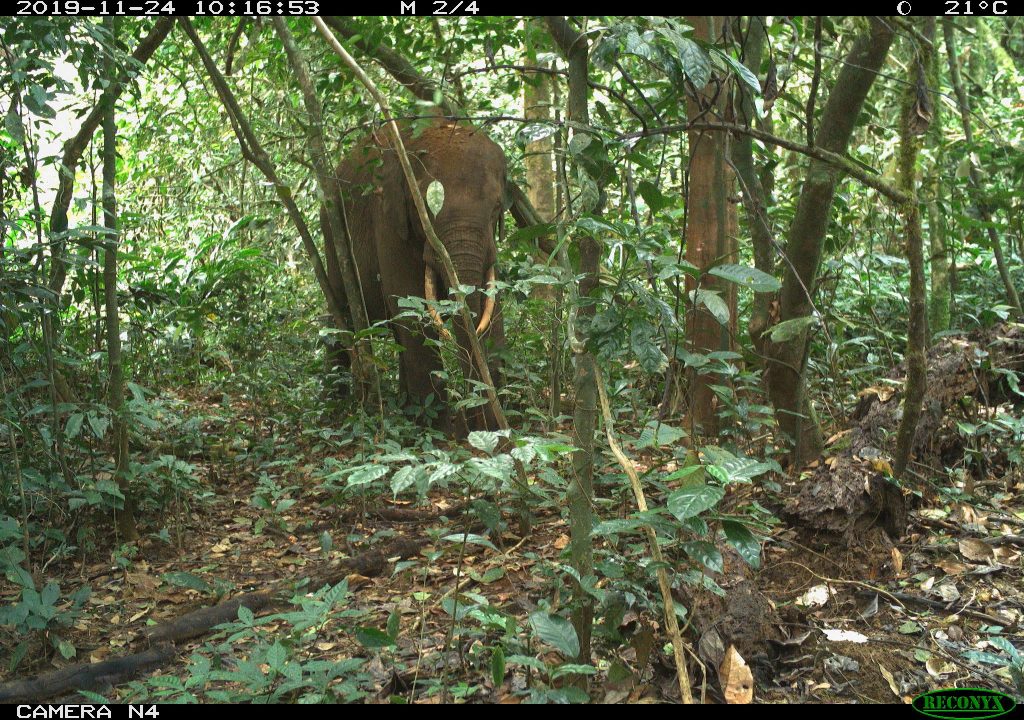
Greenpeace Africa has called on the Government of Cameroon to provide lasting legal protection for Ebo Forest, reviving a long-running debate over how the country can balance industrial development, forest governance, community heritage and the economic value of natural capital. The appeal, made in Yaoundé on August 14, 2026, came as Cameroon celebrated the Indomitable Lionesses’ progress to the Women’s Africa Cup of Nations final and qualification for the 2027 FIFA Women’s World Cup, with the environmental group using the national team’s resilience as a metaphor for renewed action to safeguard one of the country’s most important remaining forest landscapes.
Ebo Forest, in Cameroon’s Littoral Region, covers roughly 140,000 hectares and is regarded by researchers and conservation organisations as an important remaining block of intact forest in the Cross-Sanaga-Bioko coastal forest region. Scientific research has documented populations of Nigeria-Cameroon chimpanzees, gorillas, drills and other threatened mammals in the forest. A study published in Global Ecology and Conservation described Ebo, at about 1,400 square kilometres, as one of the largest remaining intact forest landscapes in its ecological region and identified several Red-Listed mammal species within it.
The ecological stakes extend beyond the forest’s boundaries. Ebo forms part of the wider Gulf of Guinea forest system, an area where habitat fragmentation, agricultural expansion, logging and hunting have placed pressure on biodiversity. Research into the forest’s Nigeria-Cameroon chimpanzee population has estimated that Ebo could hold at least 500 individuals of the subspecies, a significant concentration given the limited remaining wild population.
The forest is also significant because of the species it supports. The San Diego Zoo Wildlife Alliance has described Ebo as one of the strongest remaining populations of drills, an endangered primate found primarily in Cameroon and Nigeria. Conservation researchers have worked in and around the forest for more than two decades, with field monitoring showing that the rugged terrain has helped some wildlife populations withstand pressures that have affected other forests in the region.
For the Banen people, however, the debate is not principally about biodiversity statistics. Ebo is an ancestral landscape and part of the community’s cultural and historical identity. Traditional leader His Majesty Victor Yetina has described the forest as sacred heritage passed through generations, underscoring the extent to which decisions over land use can have consequences beyond forestry policy and commercial activity.
That cultural dimension places the Ebo question within a wider African debate over natural-resource governance. Across the continent, governments are under pressure to attract investment, expand agricultural production, develop infrastructure and generate employment while maintaining ecosystems that support rural economies. In forest regions, those competing priorities can become particularly difficult because the financial returns from timber, plantations or other land uses may be more immediate and easier to measure than the longer-term value of intact ecosystems.
Greenpeace Africa has specifically called for the cancellation of permits granted to Greenfield SA, an agri-industrial palm oil company, arguing that industrial pressure could undermine the ecological integrity of Ebo. The organisation’s position reflects concerns that land-use decisions made without adequate consideration of biodiversity, community interests and long-term ecosystem value can create costs that are transferred to future generations.
The issue is increasingly relevant to Cameroon’s climate and economic policy. The World Bank’s recent work on Congo Basin forest economies has placed greater emphasis on treating forests as natural assets capable of generating economic value through sustainable management, ecosystem services, climate finance and local value chains. A 2025 World Bank assessment estimated that the value of ecosystem services provided by the Congo Basin forests rose from about $590 billion in 2000 to $1.15 trillion in 2020, while the total value of forest assets increased from $11.4 trillion to $23.2 trillion over the same period.
Those figures illustrate why forest protection is increasingly becoming an economic policy question rather than a narrow conservation issue. For countries such as Cameroon, forests can support agricultural productivity, water regulation, tourism, non-timber forest products, carbon storage and rural livelihoods. Their degradation, meanwhile, can weaken ecosystem services and increase the cost of adaptation to climate shocks.
Cameroon is also developing a framework to capture some of this value through climate finance. The World Bank’s Strategic Roadmap for Carbon Market and Climate Finance in Cameroon’s forest sector identifies opportunities for the country to participate more effectively in carbon markets and results-based climate finance while improving forest governance and benefit-sharing. The roadmap is linked to the broader Congo Basin effort to integrate forest ecosystem accounts into national development planning.
In February 2026, the World Bank said six Congo Basin countries, including Cameroon, were working to unlock results-based payments and climate finance through country-specific forest-sector roadmaps. The initiative is intended to shift the economic narrative around forests from one centred primarily on extraction towards one in which forest assets can support climate-resilient growth, sustainable development and jobs.
This creates an important policy context for Ebo. If Cameroon is seeking to increase the financial value it derives from standing forests through carbon markets, ecosystem services and biodiversity finance, the credibility of such mechanisms will depend partly on the strength of domestic forest governance. Investors and climate-finance providers require evidence that protected landscapes are legally recognised, monitored and governed and that benefits reach affected communities.
The financial argument is particularly relevant as African governments confront constrained public budgets and competing development priorities. Conservation areas that depend entirely on external grants can struggle to secure long-term funding. The emerging focus on natural-capital accounting and results-based finance offers an alternative, but it also creates requirements for credible data, transparent institutions, measurable outcomes and clear rules for sharing financial benefits.
Cameroon is already part of wider efforts to strengthen forest governance in the Congo Basin. A World Bank-supported Sustainable Congo Basin Forest Economies Programme aims to improve forest management, strengthen forest value chains and create jobs in Cameroon, the Central African Republic and the Republic of Congo. The broader programme is expected to invest about $1 billion over 10 years across six Congo Basin countries, with an emphasis on sustainable forest management, local economic opportunities and community participation.
The Global Environment Facility is also supporting integrated management of Cameroon’s forest landscapes, with a project designed to protect biological integrity while increasing economic and livelihood opportunities for people dependent on forests. The project has a total co-financing value of more than $74 million, including a GEF grant of about $9.6 million.
For communities around Ebo, the challenge is therefore not simply whether conservation should happen, but how it should be financed and governed. Previous community-led conservation initiatives have sought to combine biodiversity protection with alternative livelihoods, recognising that conservation measures that impose costs on communities without providing viable economic options can be difficult to sustain. The IUCN-linked Ebo Forest Research Project has previously worked with communities around the forest on conservation strategies for gorillas and other primates and on alternative livelihood activities.
Government institutions remain central to determining how those competing interests are managed. Cameroon’s Ministry of Forestry and Wildlife, headed by Minister Jules Doret Ndongo, is responsible for national forest and wildlife policy, protected areas, forest management and oversight of forest and wildlife exploitation. The ministry also works with regional institutions such as the Central African Forest Commission, known as COMIFAC, on ecosystem conservation.
The Centre for Environment and Development, a Cameroonian organisation focused on natural-resource governance, has also worked for decades on forest, land and community rights issues. Its Secretary General, Samuel Nguiffo, is a prominent voice in Cameroon’s environmental governance debate.
The scientific case for careful management is similarly well established. Ekwoge Enang Abwe, associated with the Ebo Forest Research Project and San Diego Zoo Wildlife Alliance, has contributed to research documenting chimpanzees, gorillas and other wildlife in the forest. Research involving Abwe and other scientists has helped establish the ecological significance of Ebo and the pressures affecting its wildlife.
For Cameroon, the immediate issue is how the government responds to competing demands for land and natural resources while maintaining consistency with its wider climate and biodiversity commitments. For Africa more broadly, Ebo illustrates the growing economic significance of decisions over remaining high-integrity forests. The question is no longer only what can be extracted from a forest, but what economic value can be retained by keeping it intact.
The comparison with the Indomitable Lionesses may have been designed by Greenpeace Africa to capture public attention, but the underlying policy question is more concrete. Cameroon is being asked to determine whether one of its most significant forest landscapes should remain subject to competing industrial pressures or receive a more durable conservation framework. That decision will affect wildlife and communities directly, but it will also provide a measure of how effectively the country can translate its commitments on biodiversity, climate finance and natural capital into domestic land-use governance.
For the wider Congo Basin, the outcome matters because the region is increasingly being considered not simply as a global environmental asset but as an economic resource whose value needs to be recognised within African development strategies. The World Bank has argued that forest ecosystem accounts can help governments incorporate natural capital into macroeconomic planning, strengthen economic diversification and improve their ability to negotiate climate finance.
Ebo Forest therefore sits at the intersection of three increasingly connected policy questions: how Cameroon protects biodiversity, how it recognises the rights and interests of forest-dependent communities, and how it converts the economic value of natural capital into durable development finance. The government’s eventual approach will help determine whether conservation and development are treated as competing uses of land or as elements of a longer-term economic strategy for Cameroon’s forest regions.
Was this article helpful?
Credit: Source link