

Burkina Faso: Salifou Traoré focuses on inclusive insurance and digitalization to strengthen economic resilience
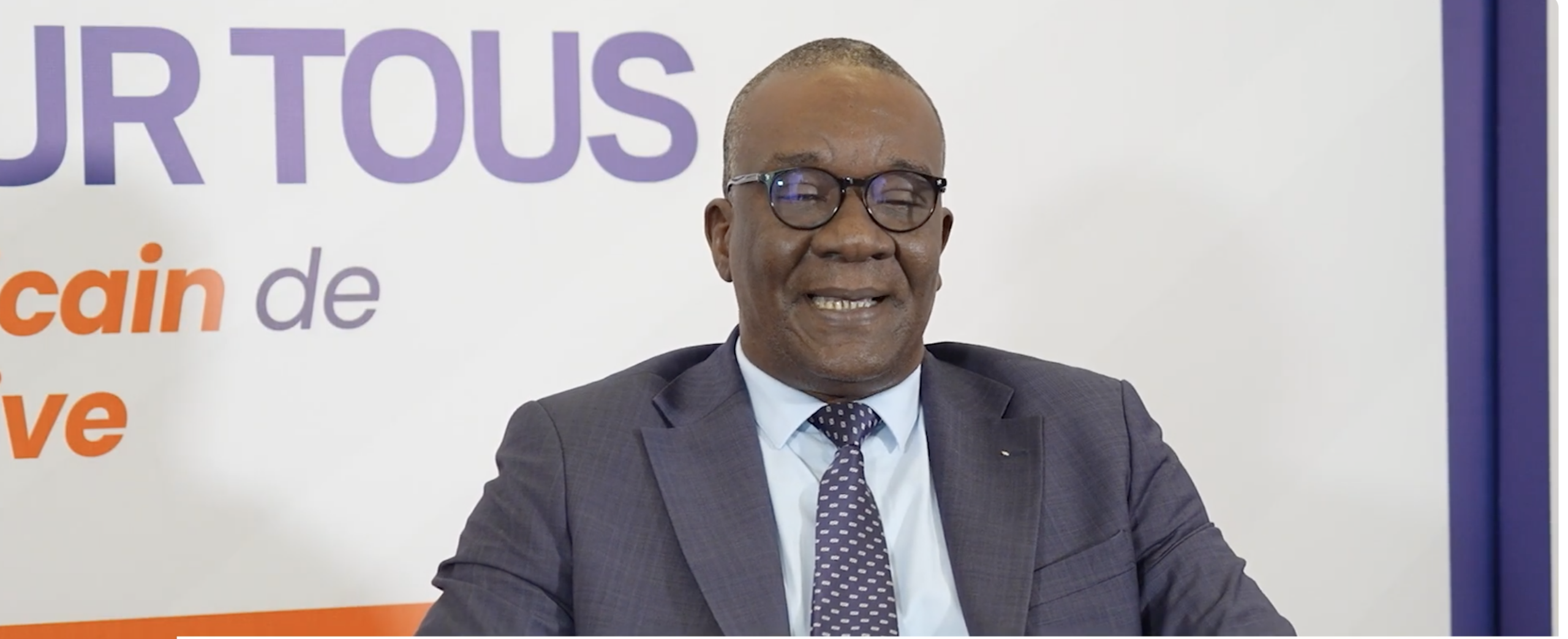
In a Burkina Faso facing a particularly demanding security and economic environment, the insurance sector is gradually adapting its model to continue protecting businesses, households, and investments. For Salifou Traoré, president of the Professional Association of Insurance Companies of Burkina (APSAB) and general manager of SanlamAllianz Burkina, the future of the industry lies in a combination of digitalization, innovation, and inclusive insurance.
As a guest on the Financial Afrik platform on the sidelines of the first General States of Insurance for All organized in Cotonou, the Burkinabe leader painted a picture of a sector called upon to play an increasingly important role in the country’s economic resilience.
The first lesson from the interview: the recent merger between Sanlam and Allianz is, according to him, much more than a mere capitalistic merger. The operation has combined Allianz’s international standards with the market proximity developed by Sanlam in Africa. This transformation experience, he explains, provides valuable feedback on process optimization, governance, and change management, which can now benefit the entire profession through APSAB.
But it is especially the Burkinabe security context that today requires a profound evolution of insurance practices. In some areas that have become difficult to access, traditional distribution networks show their limits. Companies are thus forced to review their marketing and customer support methods.
The response largely lies in digitalization. Mobile applications, remote services, and digital tools are becoming essential levers to maintain contact with policyholders and reach sometimes isolated populations. For Salifou Traoré, this evolution does not mean a distancing from the client relationship, but rather a way to bring insurance closer to consumers through new digital practices.
The leader acknowledges, however, that this transformation raises new challenges, particularly in terms of cybersecurity and personal data protection. These risks must be controlled so that trust accompanies the development of digital services. In return, digitization facilitates customer knowledge (Know Your Customer – KYC), improves the quality of available data, and allows for the design of products more suited to the real needs of policyholders.
The security environment also favors the emergence of new coverages. Salifou Traoré notably mentions guarantees against political violence and terrorism risks (Political Violence and Terrorism – PVT), whose demand is growing among businesses. These products help secure investments, reassure financial partners, and enable economic operators to continue their activities despite a difficult context. In this perspective, insurance appears as a factor of economic continuity as well as a classic risk transfer mechanism.
The president of APSAB also highlights the growing economic weight of the sector. According to the figures he presents, insurance companies operating in Burkina Faso injected 572 billion CFA francs into the national economy in 2024, notably through their financial investments, including subscriptions to public securities. This role as an institutional investor strengthens their contribution to financing the economy beyond their traditional compensation mission.
The challenge now is to extend insurance coverage to the “last mile.” To achieve this, Salifou Traoré relies on the high rate of mobile phone ownership, estimated at nearly 80% of the population, which he considers a powerful means of spreading inclusive insurance to populations farthest from urban centers.
Finally, the Burkinabe official has high expectations for the General States of Insurance for All organized by FANAF. Faced with common challenges expressed with varying intensities depending on the countries, he believes that sharing experiences, collective innovation, and the emergence of an African Pact for inclusive insurance will help identify solutions adapted to the realities of the continent. For him, insurance inclusion is now the main driver of growth in the African sector, provided that technological innovation, proximity to populations, and the ability to adapt to new risks are reconciled.
Credit: Source link