

Brazil, the new promised land for Cubans | International
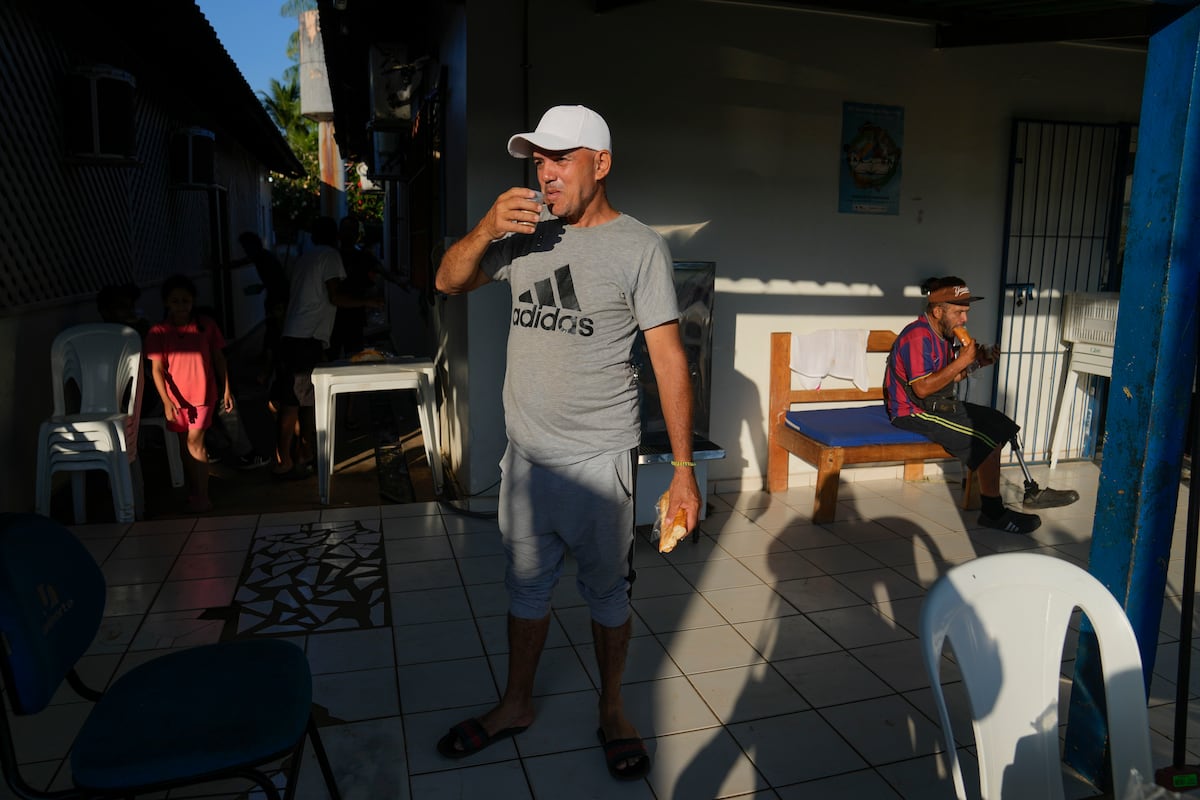
The presence of Cubans in Brazil surged starting in 2025, alongside the relentless deterioration of living conditions on the Caribbean island. What began as a trickle of arrivals via a harsh route through the Amazon has become a growing flow that has put them at the top of asylum claims, far surpassing Venezuelans. Brazilian authorities are processing more than 90,000 Cuban refugee applications, including 35,000 filed in the first seven months of 2026.
The drivers of this phenomenon lie in several countries: the catastrophic situation in Cuba itself, but also policies in the United States, Nicaragua and Guyana. Strikingly, the preferred destination for Cubans in this new promised land is the country’s south — the colder, whiter and less unequal Brazil. Many arrive with jobs already lined up.
After nearly a decade on the Amazonian border dominated by the Venezuelan exodus, Cubans now account for about 85% of those assisted by the Jesuit Service for Migrants and Refugees (SJMR). On Wednesday, 110 Cubans passed through the triage center in Boa Vista, the Brazilian city closest to the border crossing with Guyana. It is where representatives from the UN refugee agency (UNHCR) and the Jesuit organization hear their needs, explain their rights, outline the services available to them and provide employment guidance. “They arrive looking disoriented; all they know us that they want to get their paperwork,” Luis Hoyos, of the SJMR team, said by phone from Boa Vista.
“They are mainly merchants, professionals, accountants and employees of state-owned companies,” he added. But the profile is changing. At the start of the year, health workers proliferated. There was also a period when mainly women with children and older people arrived — the wives and parents of earlier migrants, who, once established, sent them plane tickets to join them in Brazil.
Cubans have turned to Brazil, a Portuguese-speaking country, pushed by President Trump’s offensive to turn the United States into a hostile fortress for almost any foreigner who is not a white South African. But also by Nicaragua’s decision, since last February, to require visas from Cubans; that move closed off one of the main exit routes from the island to the U.S. That increased interest in Guyana, which shares a land border with Brazil and remains one of the few countries in the world that does not require Cubans to hold a visa.
The most common route starts with a Havana–Georgetown flight. From Guyana’s capital, migrants travel overland through the Amazon jungle to the river that marks the border, the Tacutu, which they cross by boat before continuing by truck to Boa Vista.
Once the initial Brazilian paperwork is processed in Boa Vista, asylum seekers have virtually the same rights as a Brazilian national, except for voting or military service. “They have access to healthcare, education, the ability to open a bank account…,” Hoyos, SJMR’s regularization officer in Boa Vista, explained. This NGO plans to have, starting in September, a Spanish-speaking person at the police post on the border to ease that first language barrier newcomers face.
Often, Cubans show an initial reluctance to request refuge under the false assumption that it means being confined to a shelter.
The vast majority leave Boa Vista as soon as they can, headed for cities where there is greater demand for workers. “Many arrive with a job arranged by a relative,” Hoyos said, adding that they are highly sought-after workers. In addition to being the largest economy in Latin America, Brazil has the world’s largest free public healthcare system. Falling ill here is not a major risk to family finances.
The case of 47-year-old Yumara Bolaños is atypical because she came seeking medical treatment that Cuba’s overwhelmed health system could no longer provide for her daughter, who suffers from chronic kidney failure. She points to the language as the most difficult chapter of the adjustment process. Her life and that of her family have undergone “a dramatic change,” she said by phone. “The girl has improved a lot; she has the medications she needs,” she said from the southern city of Florianópolis, where they arrived because it has a reference hospital for kidney diseases.
After many years out of the workforce caring for her daughter, Bolaños has found a job as a supermarket cashier. Her husband handles loading and unloading at the same store. She is delighted, despite the climate and local temperament being very different from Cuba’s. “Although there are some brusque people, the welcome has been magnificent. I have not experienced any discrimination; they even gave us food bags when we needed them.”
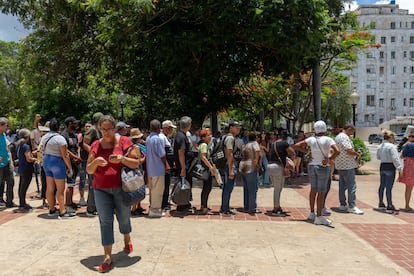
Curitiba, a southern city known for its quality of life and transportation system, has become the Cubans’ preferred destination — or “the new Miami,” as they jokingly call it.
What Bolaños cannot understand is why her asylum application can take years while those of her Venezuelan co-workers are processed in months.
Brazil is currently handling 157,000 asylum applications, more than 90,000 of which are from Cubans. These are processed through the ordinary channel, meaning each case is examined individually; they do not qualify for the faster lane available to arrivals from Venezuela, Syria or Afghanistan. That expedited route exists because Brazil considers that in those three countries “human rights violations are serious and widespread,” the Jesuit refugee service representative said. Cuba is not in that category. In any case, the paperwork allows them to work from day one.
Cubans must also organize their own travel to other states, which is not the case for Venezuelans, because the Brazilian government has an interior relocation program. In other words, it distributes migrants to other states to facilitate access to employment and social integration.
Sign up for our weekly newsletter to get more English-language news coverage from EL PAÍS USA Edition