

Brazil hits the road, taking its indie games to Gamescom and Tokyo Game Show | Patricia Sato interview
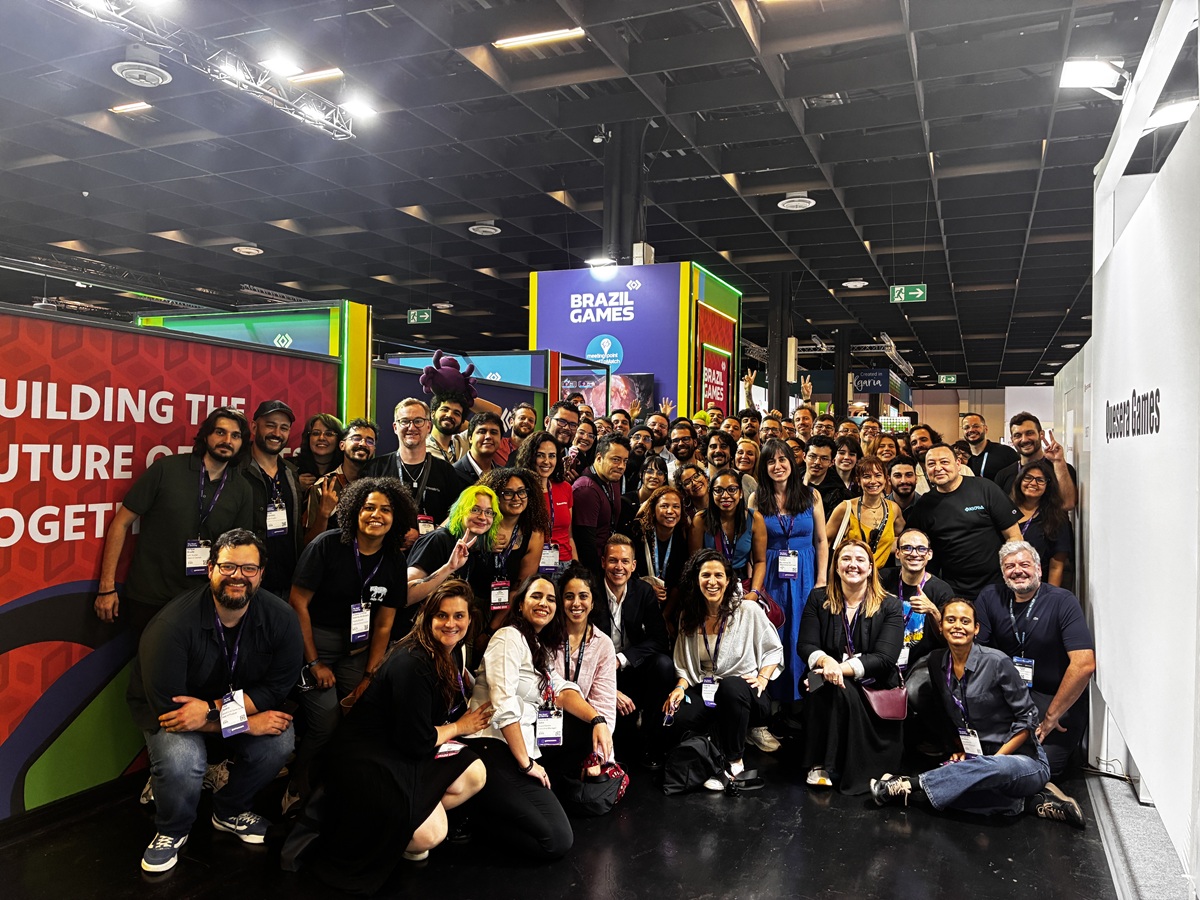
Brazil Games is taking 31 of its games made by Brazilian developers to the Tokyo Game Show, and it just came back from Gamescom where it showed off 35 titles.
Taking Brazilian games on the road is part of an export program created by the Brazilian Game Companies Association (Abragames) in partnership with the Brazilian Trade and Investment Promotion Agency (Apex Brasil). And it’s part of the company’s efforts to expand the reach of its games at a time when many game companies are reeling from layoffs and a loss of funding.
This TGS trip is the second trip to Tokyo for Brazil, which will show off a dozen playable games in its booth as the Tokyo Game Show gets under way next week. (Alex Lee of GamesBeat will be attending the event for us — and he’s hosting a dinner for mobile game leaders). The delegation from Brazil also includes 30 companies, with 21 studios and 55 people.
And the effort represents a significant step forward in the program’s strategy to connect Brazilian developers with publishers, investors, media, creators and players across Asia. Brazil also highlighted some of the games at the Game Developers Conference in San Francisco and the Gamescom Latam show in April in Sao Paulo, Brazil.
I sent some questions Patricia Sato, program executive manager at Brazil Games, about the efforts, particularly at Gamescom in Cologne, Germany, to get Brazil’s games in front of a global audience. At that event in August, Brazil sent 78 game companies.
Here’s an edited transcript of our interview.
GamesBeat: How was the result for Gamescom this year? Did you have improved results in terms of visitors or engagement? How productive was it?
Patricia Sato: We are still collecting and assessing this year’s results. However, we brought a record number of companies as part of the Brazilian delegation, so we expect the final figures to show an improvement over previous editions. Our preliminary qualitative feedback already indicates increased visibility and stronger engagement across both Brazilian booths.
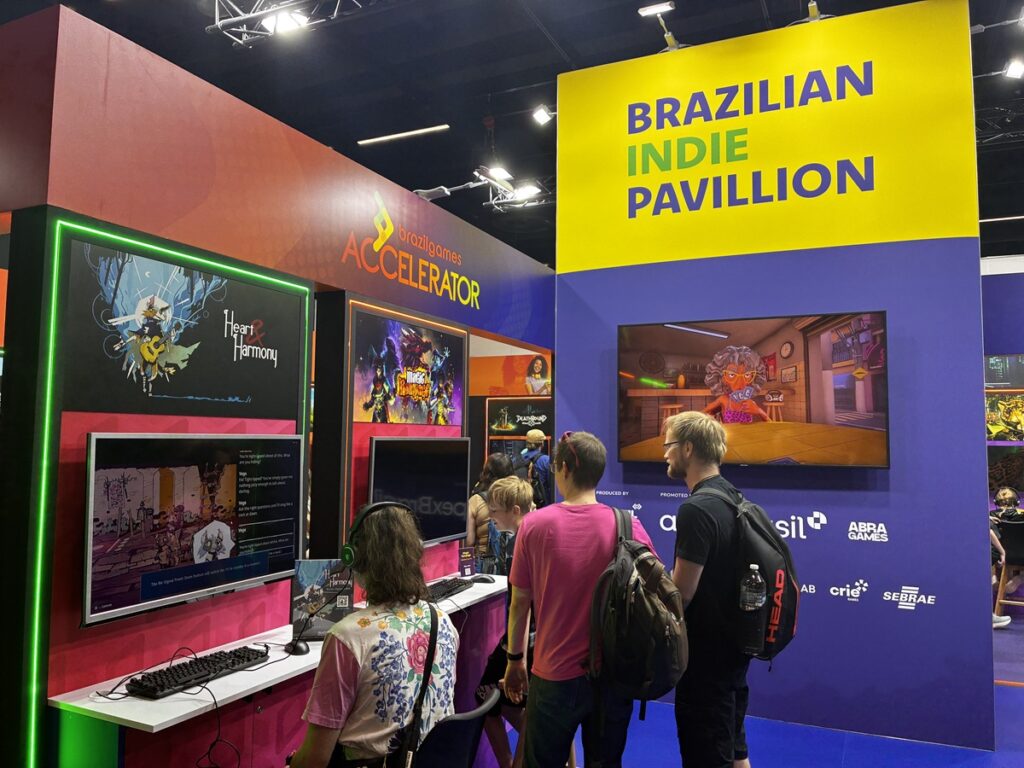
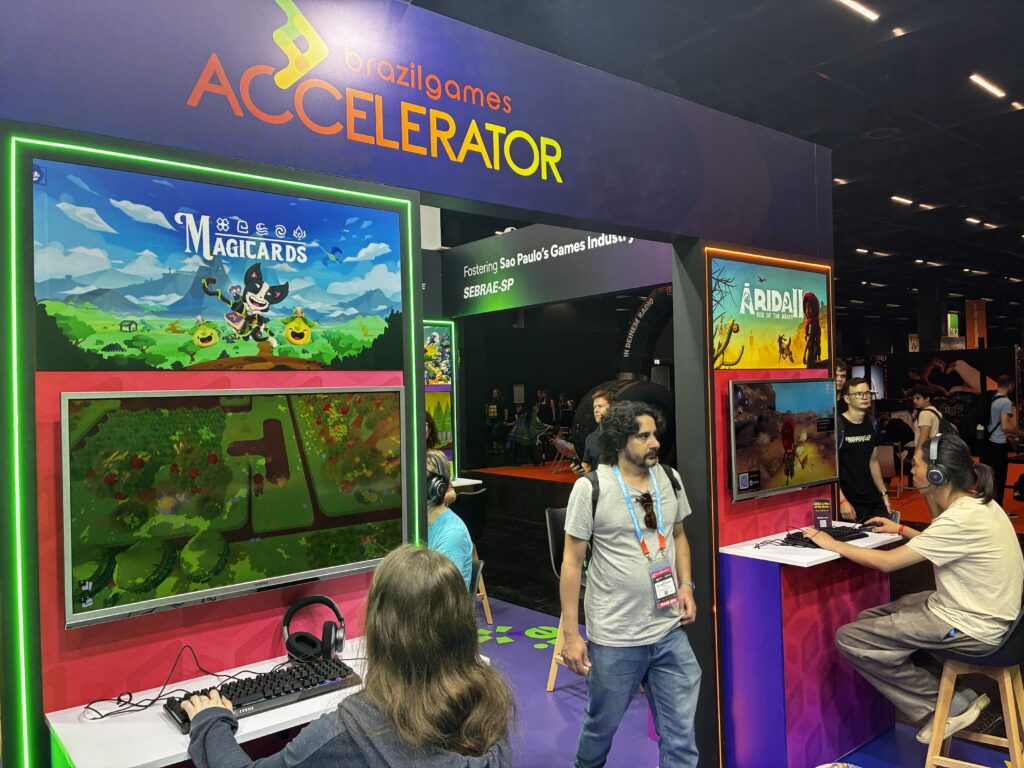
Based on these early results, we consider this year’s Gamescom to have been extremely productive. We are also analyzing the audience of our first B2C booth, the Brazilian Indie Pavilion with 35 games showcased from across the country. This was an initiative we worked many years to make it happen.
GamesBeat: What’s your view of how competitive Brazil is with the rest of the world when it comes to game developer preferences? Or costs?
Sato: Brazil remains highly competitive internationally, not only in terms of development costs and service delivery, but also because of the creative potential and technical capabilities of our studios. We have heard this consistently from international partners over the past year. Brazil can bring a great deal to the table, and we see considerable potential to build new bridges and establish closer cooperation with companies and markets around the world.
Brazilian studios and game businesses can bring fresh air to the global industry. New IP ideas, new formats, quality service providers, creativity on game design and new approaches to genres. We are a very online-intensive population, we know how to create communities and engage our gamers.
Of course there is the cost-effectiveness in developing in Brazil as well, I would say we are in a good midpoint: no so cheap as other markets, but definitely not high costly as north america our western europe.
GamesBeat: Are there signs Brazil’s game industry is getting stronger due to internal demand, or that it is suffering along with the rest of the industry when it comes to layoffs/slowdown? Is Brazil reflecting a global trend here or bucking the trend?
Sato: Brazil is not isolated from the pressures affecting the global games industry, but we are seeing encouraging signs of resilience and growth in some areas. This is particularly evident among Brazilian external development companies, which have been receiving more requests for proposals and new opportunities to pitch for international service contracts.
Immediately after Gamescom, we are also participating in XDS with our largest Brazilian service-provider delegation since we began attending the event, comprising 15 companies. At the same time, we expect to see a new wave of original Brazilian IPs reaching the market.
Together, these developments suggest that the Brazilian industry is active and gaining momentum, even within a challenging global environment. This growth is not necessarily being driven by domestic demand alone; international service contracts and export opportunities remain important factors.
We expect more companies looking for emerging markets to reposition themselves during the industry hard time, “winter” or “crash 2.0” we are facing. I see it slightly different. Maybe above the equator that’s the reality, but for Latin America, Middle East, Sub-Saharan Africa, Southeast Asia it isn’t a crash, it’s a growth opportunity. We hadn’t had that chance when the first industry crash happened in the 80s because there was no game industry at all in these regions.
In 2026, there is. Sure, with different development maturity levels from each region but with a ever-growing population and more adoption into videogaming habits, more welcoming places to open and operating businesses and attracking more national and international investiments, they can be the next chapter of videogame industry.
GamesBeat: Do you know how many Brazilians attended Gamescom? Or how many Brazilian companies including all the indies?

Sato: Our delegation included 78 Brazilian companies, making it the largest Brazilian delegation we have ever taken to Gamescom in terms of participating companies. More than 100 Brazilian entrepreneurs and industry professionals travelled as part of the delegation. These figures refer to the organized Brazilian delegation, rather than every Brazilian who may have attended the event independently.
But there were more. I spoke with some but the majority were working in Europe or North America for international companies.
GamesBeat: Did any single game emerge this year as the strongest Brazilian game worldwide?
Sato: I would not identify a single game as the definitive strongest Brazilian title worldwide this year. Brazil currently has a diverse portfolio of games at different stages of development, release and international recognition. Rather than one title representing the entire industry, we are seeing a broader group of Brazilian IPs gaining visibility in different markets and genres.
GamesBeat: Is the number of total Brazilian game companies growing?
Sato: Our latest assessments indicate that the number of Brazilian game companies continues to grow. However, we are currently conducting a new national industry survey to confirm the scale and profile of that growth. We expect to release the updated findings late this year.
GamesBeat: What are the plans for next year?
Sato: From the Brazil Games Export Program side, we intend to participate in more international events while expanding both the structure and scope of the Brazil Games export program. Our goal is to support more companies across different segments and at every stage of export maturity, from studios beginning their international journey to experienced exporters.
We also plan to maintain a strong presence in our established markets while exploring new events, territories and forms of cooperation. Brazil is more open than ever to new opportunities, partnerships and connections with the global games industry.
We will solidify what we have accomplished and diversity into new markets. That’s the mandate for next year. Invest more on programs and relations we have been building these years and go to markets we started to work with and markets that wants to work with Brazil too. We are receiving demand from Southeast Asian countries: South Korea, China, Japan, Canada, France, Germany, Finland, Portugal and from our neighbors in South America.