

Brazil heads into polarized presidential race
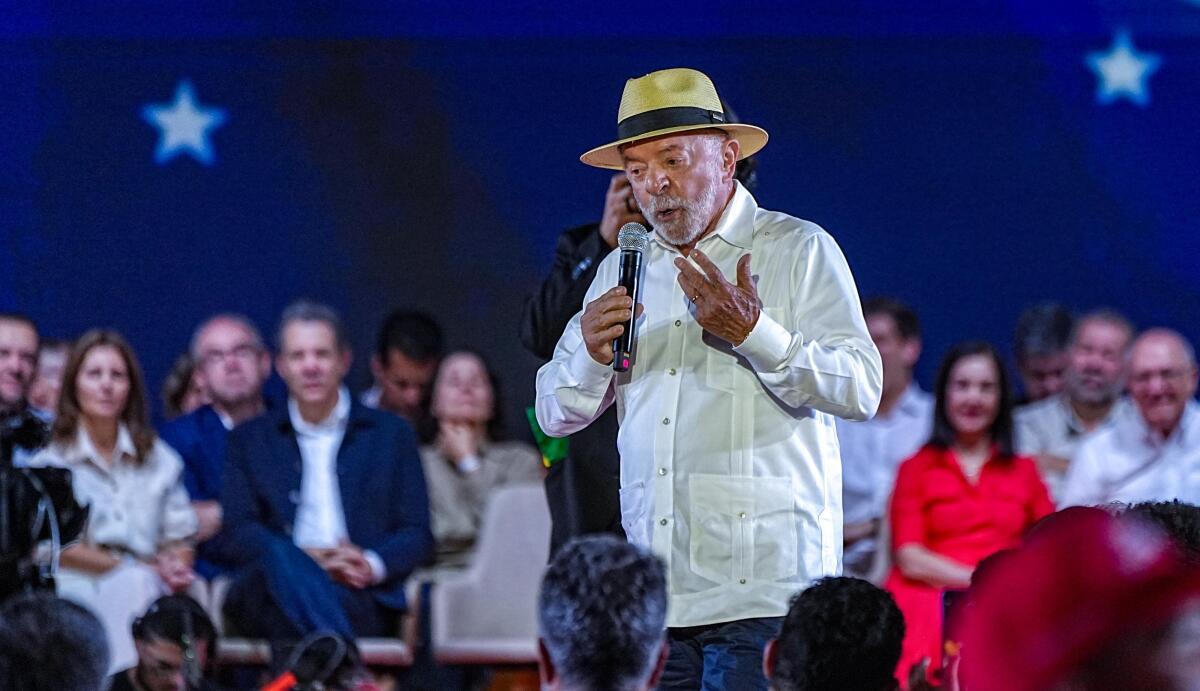
Brazil’s presidential race was set Aug. 2 ahead of the Oct. 4 first-round vote, with incumbent President Luiz Inácio Lula da Silva, 81, facing conservative Sen. Flávio Bolsonaro, 45. Few recent elections have featured such a stark divide. The two candidates stand on opposite sides of nearly every major issue, from ideology and policy priorities to their visions for Brazil’s future, with almost four decades separating them in age.
Lula, the nominee of the ruling Workers’ Party (PT), served as president from 2003 to 2010 before returning to office in January 2023 for a third term. During his first two administrations, he built strong support among low-income voters through the Bolsa Família welfare program. He is also widely seen as favoring closer ties with China while maintaining a more cautious stance toward the United States. In this election, he has pledged debt relief for low-income households and stronger protection of Brazil’s rare mineral resources.
Bolsonaro, the Liberal Party (PL) nominee, is the son and political heir of former President Jair Bolsonaro, who served from 2019 to 2022. Like his father, he has campaigned on a tougher approach to violent crime, restoring capital punishment and strengthening ties with the United States. If neither candidate secures a majority of the vote, a runoff election will be held on Oct. 25.
● ‘Healthier than ever’ vs. ‘Brazil’s Biden’
According to The Associated Press and other media outlets, Lula officially secured the Workers’ Party nomination at the party’s convention in São Paulo on Aug. 2. Defending his bid for a fourth term, he said Brazil needs “much bolder action” to achieve meaningful change.
The 81-year-old president recently underwent surgery for skin cancer and cataracts. Addressing renewed concerns about his health, Lula said, “I am very healthy. I have the energy of someone in his 30s,” adding that he is “healthier now than when I was first elected president in 2002.”
Bolsonaro quickly seized on the remarks, comparing Lula to former U.S. President Joe Biden and calling him “a risk to the nation.” He argued that, like Lula, Biden is elderly and has also battled cancer.
After losing the 2022 election, Jair Bolsonaro alleged that the vote had been fraudulent. He was later sentenced to 27 years in prison on charges including an attempt to overturn the election results and is now under house arrest. When Flávio Bolsonaro accepted the Liberal Party nomination, he used an AI-generated image of his father to appeal to conservative voters.
A July survey by AtlasIntel showed Lula with 49.2% support, compared with 42.9% for Bolsonaro. Lula’s support was unchanged from January, while Bolsonaro’s fell by 2 percentage points.
● Attention turns to the region’s ‘blue tide
The election’s outcome is expected to have implications far beyond Brazil, Latin America’s largest economy. Conservative candidates have recently won presidential elections in neighboring Peru, Chile and Colombia, strengthening what many analysts call a regional “blue tide.” With left-wing governments now remaining only in Brazil and Mexico among the region’s major economies, attention is focused on whether the conservative shift will continue.
Several prominent conservative leaders, including U.S. President Donald Trump, Argentine President Javier Milei and Israeli Prime Minister Benjamin Netanyahu, have expressed support for Flávio Bolsonaro. Trump hosted him at the White House on May 26 and has repeatedly urged Brazilian authorities to lift Jair Bolsonaro’s house arrest, calling it unjustified. He has also imposed a 50% tariff on Brazilian imports, deepening tensions with Lula’s administration.
Lula’s government has responded with its own diplomatic countermeasures. Last month, it denied a visa to Riley Barnes, a U.S. assistant secretary of state who had planned to visit Brazil, citing concerns that his visit could raise questions about the credibility of the country’s electronic voting system. Lula has also visited China several times during his presidency and recently held a phone call with Chinese President Xi Jinping, highlighting the close ties between the two governments.
안규영 기자 kyu0@donga.com