

Brazil Advances 25-Year Santos Port Channel Concession With Deepening to 17 Meters
According to ANTAQ, representatives from society, research centers, the productive sector, users, and other market participants attended. The session was led by Ygor Costa, the Special Secretary for Concession Bidding at the agency.
Two Meters That Mean a Generation of Ships
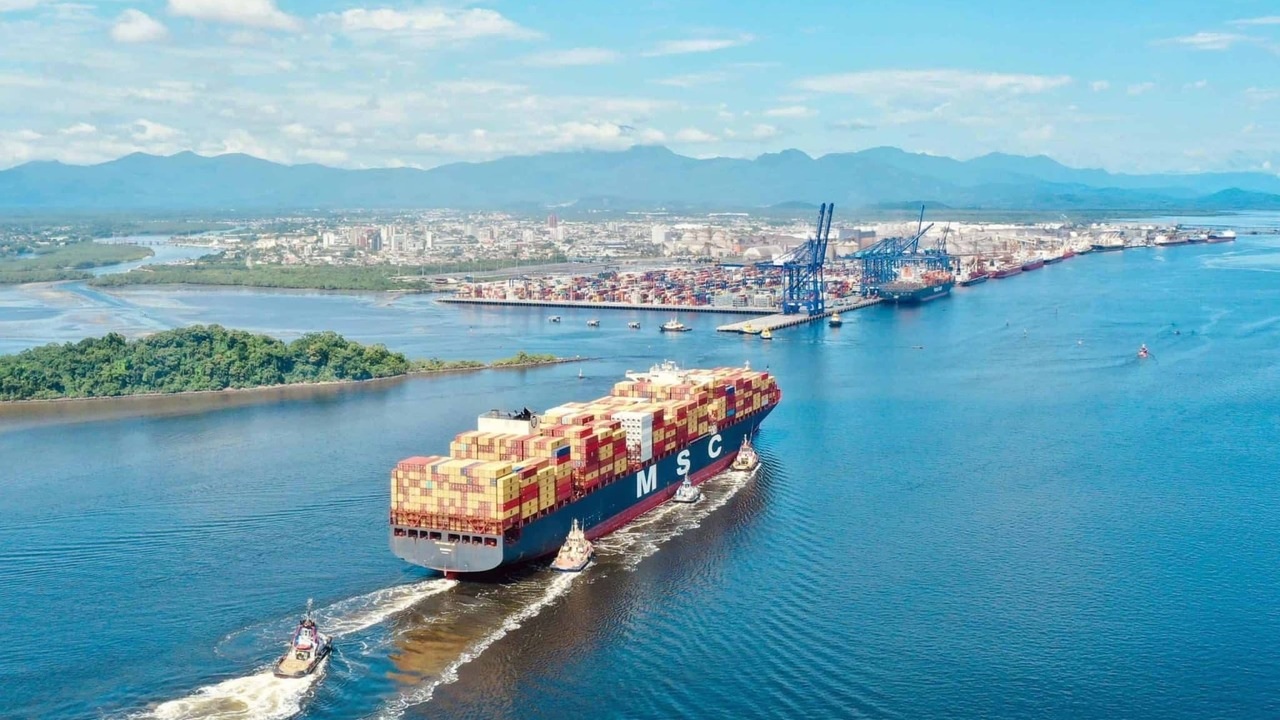
The core number of the project may seem modest until you understand what it means in saltwater. The access channel to Santos Port would increase from the current 15 meters to 16 meters in the first phase and then from 16 to 17 meters.
Channel depth determines draft, and draft determines which ships can enter. Every additional meter allows larger vessels to arrive fully loaded at the dock instead of operating with partially empty holds to avoid scraping the bottom.
In practice, it is the difference between welcoming a state-of-the-art container ship at full capacity or receiving the same ship with weight restrictions. Thus, the benefit lies not just in how many ships dock, but in how much cargo each can bring per trip.
Santos is the largest port in the country and accounts for a significant portion of Brazil’s foreign trade. Therefore, any physical restriction there impacts the entire supply chain, from grain exporters in the Midwest to industrial input importers in São Paulo.
And the costs add up quickly.
A ship leaving with an incomplete hold spreads the same fixed travel costs over less cargo, and this higher unit freight rate is passed along the chain until it reaches the final product price. This is why the discussion about channel depth, which seems like an engineering issue, ultimately turns into a matter of national competitiveness.
Why the Access Channel at Santos Port Becomes a Concession
Dredging in Brazil has always been done through construction and service contracts, with the public sector hiring the dredger, paying for the execution, and then contracting maintenance again. The problem with this model is the discontinuity.