

“Blocking Ebola Entry”… Strengthened and Differentiated Quarantine for DR Congo and Neighboring Countries
Confirmed Cases in DR Congo Triple in Two Months
All Travelers from Neighboring Countries Required to Report Health Status
Gate Quarantine Screening and Active Monitoring for Entrants from DR Congo
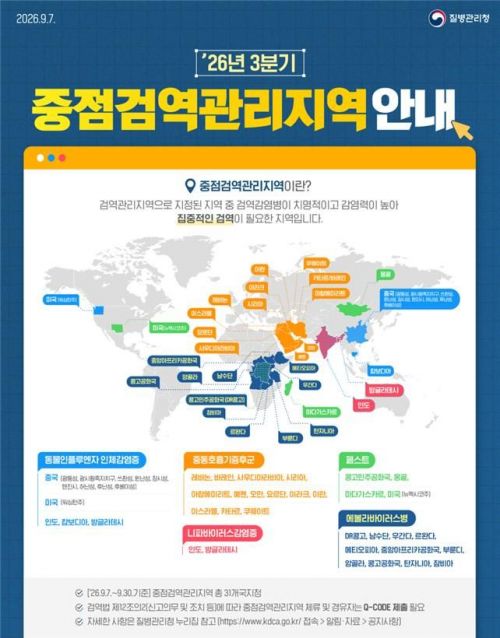
The Korea Disease Control and Prevention Agency (KDCA) announced on September 7 that it has designated the Democratic Republic of the Congo (DR Congo) and nine neighboring countries as key quarantine management areas for Ebola virus disease, adjusting quarantine measures by country according to each nation’s risk level to proactively respond to the possible introduction of Ebola virus disease into Korea.
From mid-July to the end of last month, the number of confirmed cases in DR Congo surged from 1,926 to 6,186, with 3,007 deaths. The outbreak has expanded to six provinces, surpassing the Ebola virus disease epidemic that occurred between 2018 and 2020. However, the proportion of confirmed cases under contact management remains below 25%, fueling concerns about further spread to neighboring countries.
The World Health Organization (WHO) officially declared the end of the outbreak in Uganda on July 27, 42 days after the last patient was discharged and no additional cases were reported. However, since Uganda shares a border with DR Congo, there is a possibility of reintroduction. In this context, the WHO assessed the risk level for DR Congo as “very high” and, via an interim recommendation issued on July 24, assessed Angola, Burundi, the Central African Republic, Rwanda, South Sudan, Tanzania, Uganda, Zambia, and the Republic of the Congo—all countries sharing land borders with DR Congo—as “high risk.”
The KDCA will manage DR Congo and the nine neighboring countries, all assessed as high risk, as key quarantine management areas. However, in consideration of the varying risks of introduction and transmission between neighboring countries and the main outbreak country, it plans to establish a dual quarantine response system tailored to those differences.
Entry procedures will require arrivals who have visited or stayed in any of the nine outbreak-risk countries, including Uganda and South Sudan, to report their health status in full using the Q-Code system (or a health status questionnaire). For travelers entering directly from DR Congo, where a large-scale outbreak is ongoing, pre-arrival passenger lists will be obtained, and targeted screening will be conducted at arrival gates. These individuals will also be subject to active monitoring after entry, in line with the virus’s maximum incubation period (21 days).
Kenya will be removed from the list of quarantine management areas, as it is now evaluated as “low risk” and no longer shares a border with an outbreak country following Uganda’s declaration of Ebola outbreak termination. Meanwhile, Ethiopia will continue to be managed as a key quarantine management area because it is the largest air transit hub on the African continent and the only country with a direct flight to Korea; therefore, most travelers from high-risk areas enter Korea via Ethiopia, making it a “direct flight high-risk area.”
Hot Picks Today

“Five Dresses for Travel at 40,000 Won”…After the Perfect Photo, Straight to the Trash
Im Seungkwan, Commissioner of the Korea Disease Control and Prevention Agency, stated, “Although the current domestic risk of Ebola introduction is not high, these measures represent a proactive response to focus disease control resources according to changing risks while closely monitoring the spread of the Ebola outbreak in Africa.” He added, “We will implement health status reporting, distribute SMS notifications to all travelers from the ten countries, and activate surveillance via the overseas travel history information system for medical institutions (DUR-ITS). For entrants from DR Congo, we will add gate quarantine screening and active monitoring to ensure thorough management.”
This content was produced with the assistance of AI translation services.
© The Asia Business Daily. All rights reserved. Unauthorized AI training and use prohibited.
Credit: Source link