

Analysis: How Russia Is Trying to Paralyze Kyiv Without Occupying It
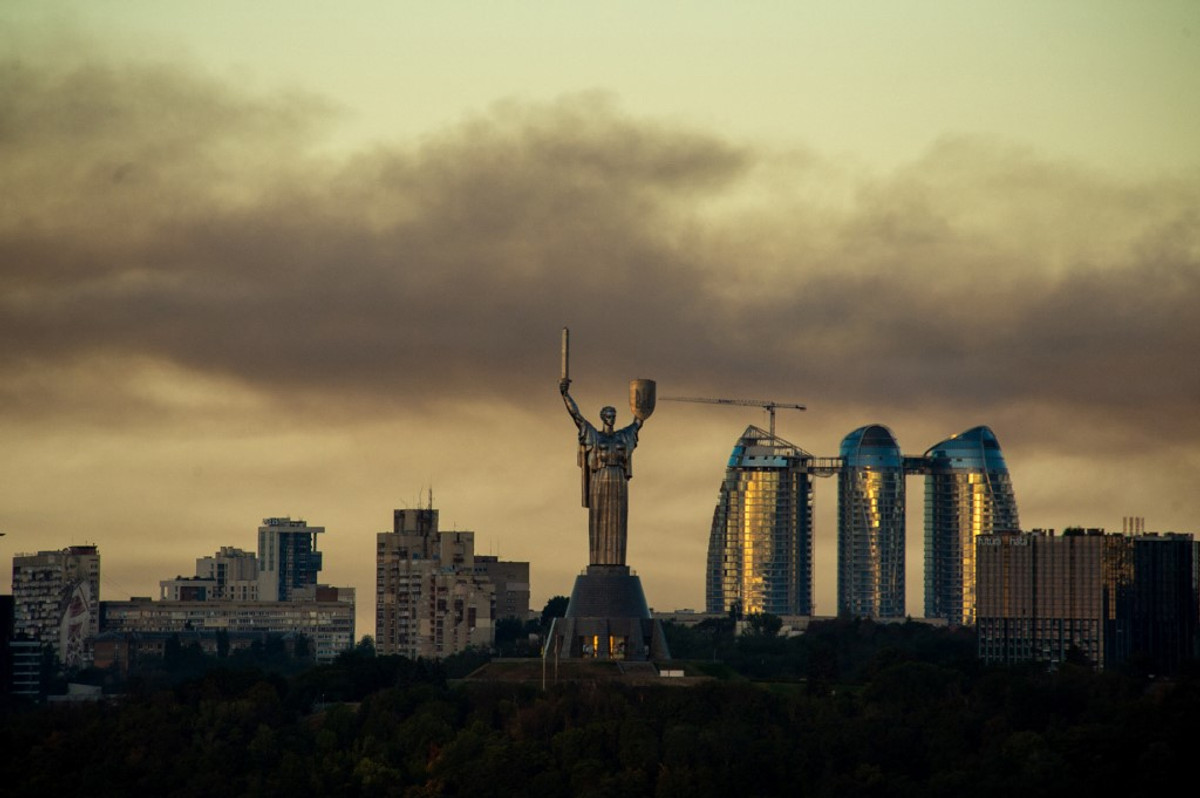
Russia failed to capture Kyiv in 2022. It is now trying to dictate how the city sleeps, travels, and works.
The latest attack began early on Tuesday, Sept. 8, just hours after the expiration of a three-day pause in strikes on Kyiv and Moscow, which was observed during the visit of US envoys Jared Kushner and Steve Witkoff. Russian missiles and drones killed three people and wounded 16, according to Ukrainian officials. The strike damaged at least 14 high-rise buildings, a dormitory, a school, a clinic, and multiple warehouses.
JOIN US ON TELEGRAM
Follow our coverage of the war on the @Kyivpost_official.
“The moment the US president’s peace envoys left, Putin launched another massive, horrific attack against Kyiv,” Ukrainian Foreign Minister Andrii Sybiha said.
Attacks are spread across the entire day
For much of the war, Kyiv’s air-raid routine followed a grim but predictable rhythm: Russian drones arrived at night, missiles struck before dawn, and the city dusted itself off to restart in the morning.
Russia is now deploying smaller groups of drones throughout the day and night. Many are jet-powered models that travel faster and are significantly harder to intercept than the propeller-driven Shahed drones used earlier in the war.
Kyiv Post documented more than 100 jet-powered drones approaching Kyiv during one 12-hour period.
Russia launched more than 2,800 jet-powered drones against Ukraine in August, averaging roughly 90 a day, according to Ukrainian Air Force spokesperson Yurii Ihnat. Their use increased fivefold in July compared with June.
Other Topics of Interest
Rutte: Civilian Deaths in Ukraine Highest Since May 2022 as Aid Delays Cost Lives
NATO chief says allies have provided $10 billion through PURL and US military sales but warns delays in aid are costing Ukrainian lives.
During one four-day stretch in late August, Russia launched nearly 1,500 drones, more than half of them jet-powered. Kyiv and the surrounding region faced attacks for five consecutive days, disrupting commutes and preventing metro trains from crossing the Dnipro River during alerts.
Between Aug. 27 and Sept. 1, Kyiv endured more than 60 air-raid alerts totaling 52 hours. The city spent more than two full days under alert within a six-day period.
The Institute for the Study of War (ISW) assessed that Russia had not necessarily increased the total number of drones used in each campaign. Instead, Moscow was distributing a comparable number across more hours to maximize fatigue and economic disruption.
A single drone approaching Kyiv can trigger citywide sirens, interrupt transit, and send workers into shelters. Once the all-clear sounds, another group can repeat the cycle.
The economic target is time
Every alert carries an economic cost. Beyond physical destruction, the sirens mean delayed workers, interrupted production, closed stores, suspended deliveries, and disrupted public transport. Schools move children into shelters, while medical and emergency crews must continue operating under the threat of additional strikes.
Russia is also targeting the logistics that keep Kyiv and other Ukrainian cities supplied.
Agriculture Minister Taras Vysotskyi estimated in late August that Russian strikes had destroyed roughly 90% of the food-logistics capacity operated by major retail chains, contributing to temporary shortages of milk, sugar, fruit, and vegetables in Kyiv supermarkets.
The attacks have hit Nova Poshta sorting centers, supermarket distribution facilities, and warehouses storing books and consumer goods. Russian strikes have also hit food-storage facilities in Odesa and destroyed Epicentr hypermarkets.
“They are hitting civilian businesses, food warehouses, hypermarkets, postal terminals, warehouses where books are stored,” Interior Minister Ivan Vyhivskyi said.
In August, air alerts consumed 21.8% of scheduled operating hours for Ukrainian shopping centers. In practical terms, malls lost more than one out of every five hours in which they were supposed to operate.
The government’s response shows the scale of the problem. Ukraine is introducing a two-level alert system:
- Yellow alerts will indicate drone threats. Businesses may remain open if employees and customers have access to shelters. Authorities have recommended keeping Kyiv’s metro fully operational.
- Red alerts will indicate missile threats, including ballistic missiles and large combined attacks. Businesses must stop operating and people must move to shelters.
“The economy must continue to function, taxes must flow into the budget and people must receive their salaries,” Prime Minister Sergii Koretskyi said.
Kyiv is also reducing its curfew and adjusting transport rules to limit the economic damage caused by prolonged alerts.
A modern siege logic
Kyiv is not facing a physical siege comparable to the capital of Bosnia and Herzegovina, Sarajevo. During the Bosnian War, Sarajevo was encircled and subjected to 1,425 days of shelling and sniper fire in a campaign that international courts found was intended to terrorize civilians.
Kyiv remains connected to the rest of Ukraine. Goods, weapons and people continue to move. Russian artillery does not surround the capital.
The similarity lies in the use of sustained danger to control civilian life. Russia cannot erect checkpoints around Kyiv, but it can use air-raid alerts to interrupt movement. It cannot physically close every factory, but it can force repeated work stoppages. It cannot occupy the capital, but it can make normal life dependent on when the next drone is launched.
The three-day pause for Witkoff and Kushner demonstrated how selectively that pressure can be applied. Russia and Ukraine agreed not to attack each other’s capitals during the envoys’ visit, but Putin continued to reject a broader ceasefire and insisted on Russia’s existing territorial demands.
The diplomatic pause protected the capitals during the talks but did not protect civilians elsewhere or stop fighting along the front.
Beyond psychological warfare
Civilian exhaustion is only one effect of the campaign. Continuous drone waves also force Ukrainian air-defense crews to work extended shifts, leaving less time to rest, relocate, and repair equipment.
By combining comparatively inexpensive drones with ballistic and cruise missiles, Russia forces Ukraine to decide when to use its most capable and limited interceptors. Patriot systems are essential for stopping ballistic missiles but cannot be used economically against every drone probing Kyiv’s airspace.
Defending the capital also creates a strategic trade-off. Radars, launchers, and interceptors assigned to Kyiv cannot simultaneously defend power stations, airfields, weapons factories, and other Ukrainian cities.
Russia therefore imposes costs even when most of its drones are intercepted. Ukraine must expend ammunition, keep crews constantly active, and defend a growing number of potential targets. The strikes also demonstrate that Kyiv’s political and security institutions remain targets.
For example, on Sept. 4, a Russian drone struck the Security Service of Ukraine headquarters in central Kyiv. President Volodymyr Zelensky said the drone had been directed towards the office of acting Security Service (SBU) chief Oleksandr Poklad.
Preparing for a winter war
Witkoff and Kushner arrived in Kyiv after more than three hours of talks with Putin in Moscow. They described their discussions with Zelensky as substantive and said there had been “significant progress” toward restarting trilateral negotiations, although no dates or venues were announced.
The central dispute remains unchanged. Russia demands that Ukraine surrender territory it still controls in Donbas. Kyiv refuses, while battlefield analysis indicates that Russia could require years to capture the rest of the Donetsk Oblast at its current rate of advance.
Zelensky is preparing for the possibility that the war will continue into winter. During the Kyiv talks, he requested a winter package covering air defense, energy support, and access to US liquefied natural gas.
“If the war continues in the winter, we strongly count on the winter package,” Zelensky said. However, the US delegation announced no new Patriot batteries. Ukraine recently received a small number of Patriot interceptors, while Britain has pledged additional air-defense assistance.
Neither measure eliminates the shortage.
Ukraine needs separate production tracks for drones and ballistic missiles. Zelensky said 67 Ukrainian companies were working on systems capable of intercepting jet-powered drones, although only three to five had demonstrated results.
Ukraine has also sought US permission to manufacture anti-ballistic systems and interceptors. In July, President Donald Trump said that Washington would license Ukrainian production of Patriot interceptors, but he later appeared to reverse that position.
However, on Sept. 2, Secretary of State Marco Rubio said that licensing negotiations remained underway.
Even if an agreement is reached, experts estimate that establishing production would take at least a year.
The goal is friction, not collapse
The campaign does not have to force Kyiv to capitulate to impose strategic costs. Its immediate effect is to make daily life slower, less reliable, and more expensive.
When trains stop, warehouses burn, stores close, and workers spend hours in shelters, Russia inflicts damage without advancing on the ground. By forcing Ukraine to expend interceptors and concentrate air defenses around the capital, Moscow reduces the resources available to protect other cities, infrastructure and the front.
The aerial campaign has already killed civilians, disrupted transport, damaged commercial logistics, and forced Ukraine to redesign its warning system.
Countering it will require more than Patriot missiles. Ukraine needs cheaper anti-drone interceptors, dispersed warehouses, alternative transit routes, more shelters, and geographically precise alerts that prevent one drone from shutting down a city of millions.