

Al-Shabaab Revenue Drops by Half as Somali Government Tightens Financial Screws
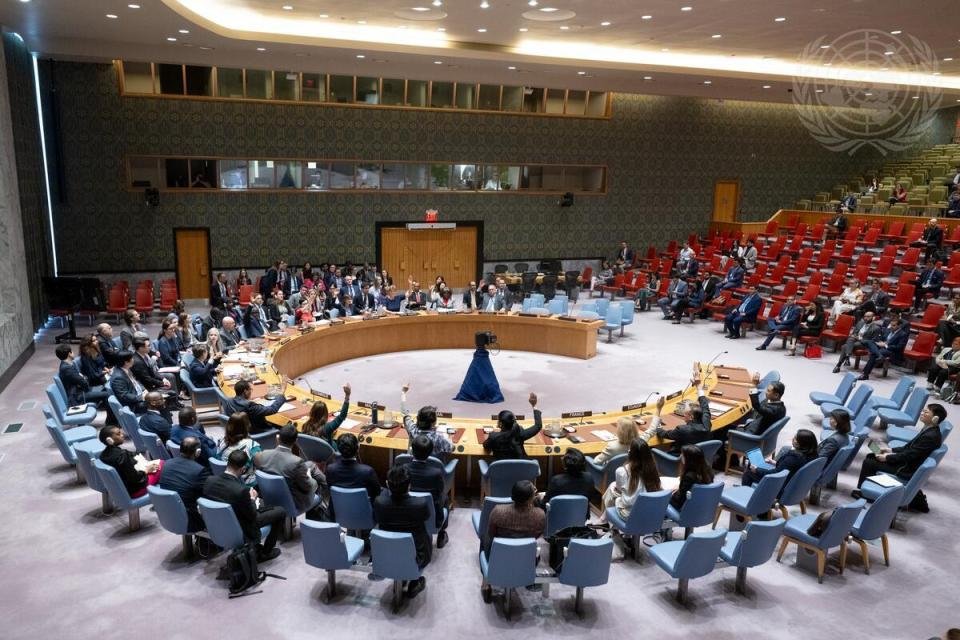
MOGADISHU — A new United Nations Security Council report has found that Al-Shabaab appears to have shifted towards more targeted and strategic operations, rather than sustaining the broadly elevated attack levels observed in 2025, while the group’s revenue collections have declined due to increased security measures and drought conditions [citation:3][citation:13].
The 38th report of the Analytical Support and Sanctions Monitoring Team, submitted pursuant to Security Council Resolution 2734 (2024) concerning ISIL (Da’esh), Al-Qaida and associated individuals and entities, is based on information received by the monitoring team up to June 9, 2026.
According to the report, Al-Shabaab’s revenue collection in Mogadishu has fallen from $12 million to $15 million per month to between $5 million and $9 million due to increased security measures. The declines were also partly caused by drought conditions in Jubaland, Lower Shabelle and Middle Shabelle regions.
Despite this reduction, the report warns that Al-Shabaab’s finances remained resilient. Member States noted that the group maintained relations with both Al-Qaida in the Arabian Peninsula (AQAP) and the Houthis, with concerns that sustained links with the Houthis could enhance Al-Shabaab’s operational capabilities and pose an increased threat to Somali security forces and the African Union Support and Stabilisation Mission in Somalia (AUSSOM) troops.
The Somali National Army, in collaboration with international security partners, has conducted coordinated airstrikes targeting Al-Shabaab cells in the Lower Shabelle region. In May 2026, an operation in the Ugunji sector targeted a gathering of Al-Shabaab militants preparing to launch attacks against civilians and state installations, eliminating six identified fighters and destroying tactical weapons, communication devices, and logistical supplies.
Leadership Losses and Strategic Adaptation
The report notes notable progress by Somali security forces and their partners in degrading the Al-Shabaab leadership. Abdullahi Osman Mohamed Caddow, alias Engineer Isma’il, who oversaw the group’s improvised explosive device operations, was killed in December 2025. Abdullahi Hassan Abdi Osoble, alias Abdullahi Wadaad, responsible for finances, was killed in January 2026, and Mohamed Sahal Idl, alias Abu Usaama, designated to replace him, was killed in February 2026. Despite these losses, Al-Shabaab’s leader, Ahmed Diriye, remained active and is believed to be in southern Somalia.
Al-Shabaab continued seeking to improve the range and accuracy of its mortar systems and to acquire drone-jamming technology to evade surveillance and air strikes. The group’s tactical adjustments appear to be a response to sustained counter-terrorism pressure rather than a voluntary transformation.
The Ministry of Defence has rejected claims that Al-Shabaab has voluntarily become more responsive or less coercive, stating that every reduction in the group’s ability to extort businesses, terrorise communities, and collect illegal revenues is the direct result of sustained government operations and not a voluntary transformation by a terrorist movement.
Foreign Fighter Movements and ISIL in Somalia
The report found that action led by the Government of Somalia constrained but did not eliminate the flow of foreign terrorist fighters to join ISIL (Da’esh) in Somalia. Some foreign terrorist fighters were diverted to other conflict zones, and there were reports that a small number of Al-Shabaab fighters had travelled from Somalia to Afghanistan.
ISIL in Somalia was estimated to have 150-250 fighters, primarily concentrated in the Cal Miskaad mountains. The group’s operational capacity and territorial influence remained constrained due to counter-terrorism operations. However, in January 2026, the tempo of security forces’ operations against the group declined, enabling ISIL fighters temporarily to reoccupy some previously cleared positions. During this period, the group attempted to reconstitute its local support networks in and around the Cal Miskaad area, the Jaceel valley and the Golis Mountains.
The financial capabilities of ISIL in Somalia remained limited, with the group unable to support other ISIL affiliates. Despite these constraints, the group continued to generate low-level revenue through the extortion of businesses in the coastal towns of Boosaaso and Qandala.
NISA has previously warned Somali traders against financing Al-Shabaab under the group’s coercive extortion tactic known as Zakawat, which the group disguises as religious charitable contributions. The intelligence agency has emphasised that engaging in any transactions with Al-Shabaab undermines government efforts to stabilise the country and endangers the lives of ordinary citizens.
Critical Note
While the UN report indicates progress in degrading Al-Shabaab’s leadership and reducing its revenue streams, the group’s resilience and adaptability remain concerning. The decline in revenue is partly attributed to drought conditions rather than solely to government operations, suggesting that environmental factors have played a role in weakening the group’s financial capacity. Furthermore, Al-Shabaab’s continued relationships with AQAP and the Houthis pose significant risks, as these links could enhance the group’s operational capabilities and enable the acquisition of advanced weapons and technology.
The government must sustain the military pressure that has forced Al-Shabaab to adapt, while also addressing the underlying drivers of conflict, including corruption, clan grievances, and economic marginalisation. The international community, while supportive of Somalia’s counter-terrorism efforts, must continue to press for transparency and accountability in the management of security operations and the use of military resources. The Somali people, who have endured decades of conflict, deserve a future free from the threat of terrorism and the cycle of violence that has plagued their country for so long.
Recommended Reading On ftlsomalia.com
Credit: Source link