

Manufacturing Consent for War against Cubans
These days, most of Havana’s streets are fairly empty of cars, but full of people walking or riding bicycles, electric bikes, electric “tricycles,” or scooters. Trash has piled up on most corners where regular pick-up has become impossible given that the garbage trucks have no gasoline. The average conversation starts off with comparing who’s gone the longest without electricity. The sympathy flows, as you exchange stories of what else you are going without: water, gas, food, medicine, transportation. People list the family members they haven’t been able to see and the medical appointments they’ve missed. Inevitably, someone will say better days are coming—“because they have to”—and to keep moving forward.
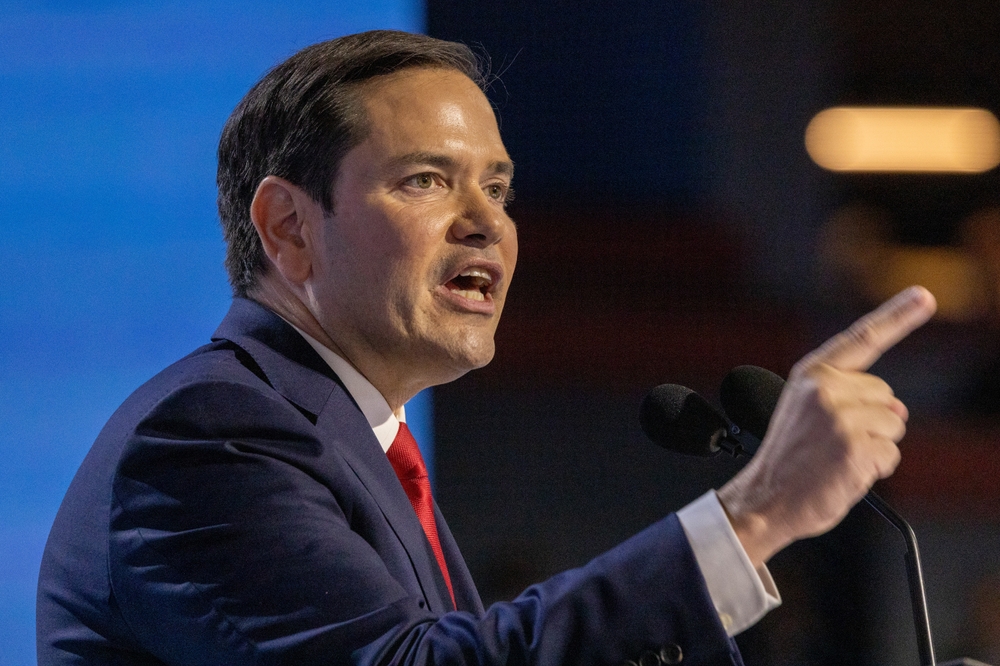
This week alone, the U.S. Department of Justice indicted Raul Castro, the former head of state, who’s now 94 years old and largely out of public life. In addition, the Supreme Court gave a green light to Cuban-American-owned companies with property claims in Cuba from 67 years ago to sue tourist industry actors who “profited” from that land. Secretary of State Marco Rubio continues to grow more and more publicly agitated with Cuba’s refusal to bow to his demands, and Trump’s consistent incoherence shows an absolute lack of any clear policy position towards Cuba, aside from one that may economically benefit him and/or his family.
The indictment of Castro is a page taken from Trump’s playbook on Venezuela from earlier this year. There, the administration indicted a sitting head of state, Nicolas Maduro, as a legal pretext for a military intervention, which was labelled an “emergency” and thus not an act of war that would require Congressional approval. The administration staged a geopolitical coup d’état involving international kidnapping, acts of war in plain violation of international law and the U.N. Charter, and then imprisoned that leader as a message to the world of what happens to those who defy U.S. interests. Such indictments serve as purportedly fixed legal fictions for shifting political pretexts. In Venezuela it was supposedly the state’s support for criminal enterprises and gangs, which was the justification for the Trump administration’s stated reason for the extrajudicial killing of nearly 200 civilians in piracy actions in the Caribbean. Once Maduro was kidnapped and jailed, the administration has stopped talking gangs and narcotrafficking rings.
In Cuba, the Justice Department’s indictment of Raul Castro is a clear response to the political forces that commanded it. As the island nation is not complying rapidly enough to the changes demanded by Washington, the administration has escalated its threats, military preparations, and legal actions, albeit largely symbolic in nature.
Rubio’s Escalation of Threats as Campaign Messaging
For decades, Marco Rubio has pushed for privately what the Cuban-American community in south Florida has not achieved in nearly 70 years: to run Cuba’s political and economic system remotely from Miami and Washington. These remote “owners” of Cuba have driven and financed Rubio’s political career, leading to this moment where he is adamantly (though unsuccessfully) trying to sell the American public that Cuba is a national security threat while simultaneously telling Cubans that their government is too weak to protect them. That inherent contradiction and incoherence, long the basis of U.S. policy towards Cuba, have never been more dangerous than at this moment when Rubio’s rage and blind ambition to cause widespread destruction is bolstered by Trump’s monarchical goals.
The contradictory discourse is present in nearly every aspect of Cuba policy. Just this week, Rubio issued an Orwellian statement in response to the ICE arrest of Adys Lastres Morera, the sister of the head of GAESA, a Cuban entity that is connected to large swaths of the Cuban economy. Rubio was right to point out that “[f]or far too long, the family members of terrorist organizations, repressive anti-American regimes and other bad actors . . . have been given a free pass to enjoy the privileges of living in the United States,” but the United States also has a long tradition of granting sanctuary to terrorists, dictators, and war criminals. In particular, Latin American leaders, generals, and intelligence operatives that have long done the U.S. bidding in propping up violent regimes have been granted refuge in south Florida, the home of Rubio and other elected officials who have promoted violence over diplomacy.
Yet what makes international cooperation, collaboration, and survival possible is not just insisting upon respect for international law and human rights by all governments, but strengthening their ability to do so through dialogue and diplomacy. The Trump-Rubio administration has clearly not been serious about using diplomacy to solve global conflicts, and that holds true in Cuba as well. The administration has tried to identify potential “opposition” I Cuba or political leaders it can “work with” like Delcy Rodriguez in Venezuela. Real U.S. diplomacy looks quite different. Twelve years ago, it brought to Cuba a boom of economic activity, a thriving private sector, better financed public institutions, and riveting cultural exchanges for over a million U.S. residents who found in Cuba a rich cultural, musical, artistic, and academic partner.
Trump and Rubio, though they might articulate the same goals, have different ulterior motives. Their goal is not, and has never been, economic opportunity for Cubans. Instead, they want an economic boon for Cuban-Americans aching to exert political and economic control over a land many have never even visited. Although Florida no longer plays a significant electoral role in U.S.-Cuba policy, Rubio’s recent video talking to the Cuban people—and his messaging in general in escalating threats and aggression towards Cuba—is clearly intended to rally his base. What has caused widespread anxiety and fear among millions in Cuba has nevertheless excited his political base in south Florida.
Inside Cuba
These days in Havana, Cubans are experiencing a duality that has existed for generations who have lived under the threat of U.S. military aggression and the daily reality of economic warfare. Cubans are exhausted. They are increasingly anxious and have reached the bottom of the well of hope. There is a saying that the last thing you lose is hope, meaning it is what you hold on to until the very end. Cubans are at the very end of their ability to see a hopeful future.
I get asked questions daily. Should I take my kids to a shelter? Will the United States bomb Havana? Where is it safe to go? Why don’t U.S. citizens stop their government?
Cubans are experts at survival, and that’s exactly what they continue to do. As U.S. Southern Command sends the aircraft carrier Nimitz into Caribbean waters, Cubans continue to carry on with daily life like they have done decade after decade. Most days, those around me look for an electric tricycle to take them to work or their child to school or have added a child seat to their bicycles. Cars that run on gasoline have become what one of my friends calls “garage adornments.”
Given the daily threat of military intervention and the four-month long oil blockade, activities like sleep have become a luxury. Many families cook or wash clothes at 3:00 a.m. when they get 1-2 hours of electricity. My friend sleeps on the floor with her son near the front door where air drafts can keep them cool in the sweltering heat and humidity. Most of us go without water for days at a time because lack of electricity makes pumping and distributing water impossible. Another dear friend went 35 days with no water while she, her mother, and her toddler spent weeks traveling from house to house bathing and washing clothes. Cooking and cleaning become infinitely more difficult with no water, gas, or electricity. Some daycare centers use coal to cook lunch for undernourished children.
While we live under the perpetual threat of U.S. military aggression, children continue to play in the street with sticks and deflated balls, families continue to find ways to get to work and buy food, and the deep spiritual and religious traditions that sustain many Cubans are turned to over and over again. War has a name and a face. It’s not just a vague “government.” Here there are millions of people who owe the United States nothing and instead have only demanded to live in peace, in their homeland, however flawed it may be.