

Trump Administration Labels Cuba State Sponsor of Terrorism
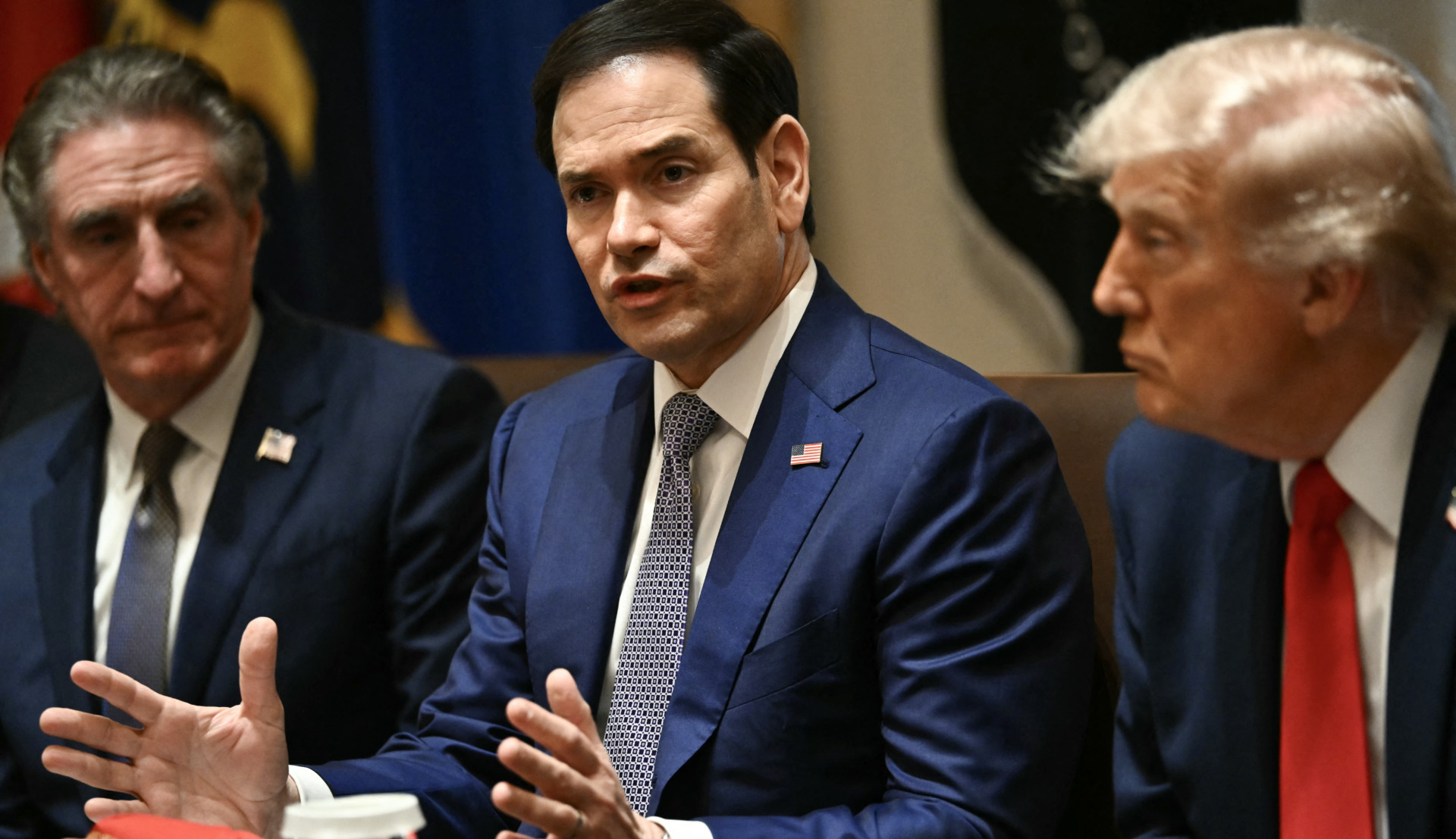
On May 21, Secretary of State Marco Rubio stood at the Miami Homestead Airport and told reporters that Cuba “has been one of the leading sponsors of terrorism in the entire region.” He paired that with a familiar warning: “Having a failed state 90 miles from our shores run by friends of our adversaries poses a threat to the national security of the United States.” The remarks landed the same day the Justice Department unsealed a murder indictment against former Cuban President Raul Castro, and the same day United States Southern Command welcomed the USS Nimitz carrier strike group to the Caribbean.
Rubio’s terrorism framing for Cuba is not new, but the factual basis for using it expired long ago. Meanwhile, the rhetorical pattern, creating a “leading state sponsor of terrorism” narrative around a country the administration appears to want to confront militarily, looks an awful lot like the runway the Trump administration built before striking Iran in February.
For more than a decade (2008 to 2018), I ran the office at the State Department that managed state sponsor of terrorism (SST) designations. I have written about Cuba’s SST and Not Fully Cooperating Country designations before—for Lawfare, the Conversation, and Defense One. The empirical case has not changed since I last looked at it. On the merits, Cuba does not belong on a list of state sponsors of terrorism. What has changed is U.S. policy toward Cuba and the unseriousness with which the Trump administration wields the “terrorist” designation to support its policy goals.
A Brief History of Cuba Being on the List
Cuba was first designated a state sponsor of terrorism in 1982 by the Reagan administration. The justification at the time was historically defensible. Havana was actively arming and training left-wing militant groups across Latin America and parts of Africa, most notably Colombia’s Revolutionary Armed Forces of Colombia, the FARC, and its National Liberation Army, the ELN. Cuba’s foreign policy in the 1960s, 1970s, and into the 1980s was to export revolution, and the U.S. designation fit the country’s conduct.
That conduct attenuated over time. By the late 1990s and through the 2000s, Cuba was no longer arming foreign insurgencies. Increasingly, it was hosting peace processes for them. Havana served as a venue for negotiations between the Colombian government and the FARC, talks that produced the 2016 peace accord, and later for negotiations with the ELN. Hosting peace talks at the request of an allied government is the opposite of sponsoring terrorism.
That is why the Obama administration removed Cuba from the SST list in 2015. The review focused on the statutory standard: whether Cuba had provided support for international terrorism in the preceding six months, and whether it had given assurances it would not do so in the future. The answer was no on the support, and yes on the assurances. The legal determination was clean. The policy judgment behind the de-listing was straightforward. Decades of sanctions had not produced political change on the island, and continued isolation was not advancing U.S. interests.
Ping Ponging on and off the List
What has happened since 2015 is policy whiplash dressed up in counterterrorism vocabulary. The Trump administration returned Cuba to the list on January 11, 2021, in the final days of its first term. The Federal Register notice legalizing the action was not published until January 22, two days after President Joe Biden’s inauguration. The stated basis was Cuba’s refusal to extradite 10 ELN leaders who had been in Havana since 2017 as part of the Colombian government’s own peace process.
That justification fell apart in August 2022, when the Colombian government under President Gustavo Petro suspended the arrest warrants it had previously asked Cuba to honor. The predicate for the 2021 designation was gone. The designation, however, remained in place.
The Biden administration eventually moved. In May 2024, the State Department quietly removed Cuba from the separate Not Fully Cooperating Country (NFCC) list, meaning Cuba was now seen as cooperating with U.S. anti-terrorism efforts. There was no press release. A spokesperson explained that the circumstances had changed. They had. Cuba had resumed law enforcement engagement with the FBI in 2023, and the United States-Cuba Law Enforcement Dialogue had met multiple times. On January 14, 2025, six days before leaving office, Biden certified the statutory predicates for rescinding Cuba’s terrorism designation as a State Sponsor and notified Congress of his intent to lift it. The rescission required a mandatory waiting period. President Donald Trump revoked the certification on the first day of his second term. Biden had waited too long to act and Trump was immediately ready to quash the Biden administration’s maneuver.
That is the ping pong at play when it comes to Cuba’s placement on the list of State Sponsors of Terrorism. On in 1982. Off in 2015. On in 2021. Notice to remove in January 2025. Reinstated within hours of Trump’s second inauguration. The list has stopped being a determination of fact. It has become a partisan struggle.
Cuba Is Not a Leading State Sponsor of Terrorism
Set aside the politics for a moment and look at Cuba’s activity. The statutes underpinning the designation, including the Foreign Assistance Act, the Export Administration Act, and the Arms Export Control Act, ask whether a government has repeatedly provided support for acts of international terrorism. Cuba’s current conduct does not meet that bar in any meaningful sense, and certainly not in any way that puts it in the same category as Iran.
Consider the comparison. Iran is fairly described as the world’s leading state sponsor of terrorism. The State Department’s own most recent Country Reports on Terrorism named Iran in those terms, citing operational support for Hezbollah, Hamas, the Houthis in Yemen, Kataib Hezbollah and other militias in Iraq, and a global network of Islamic Revolutionary Guard Corps Quds Force activities. Iran funds, arms, trains, and directs proxies that have killed thousands of people across the Middle East, including American servicemembers.
What does Cuba do that is comparable? Rubio’s January 2025 testimony before the Senate Foreign Relations Committee, and his statements since, cite four categories of behavior. Providing sanctuary for ELN negotiators sent to Havana at the Colombian government’s request. Harboring of United States fugitives, some dating to the 1970s and 1980s. Engaging in diplomatic friendliness with Iran, Russia, and China. And the residual claim of supporting FARC, which was removed from the Foreign Terrorist Organization list in November 2021 because it had dissolved as an organization under the 2016 peace accord.
None of this is terrorism sponsorship in the way the statute contemplates. Sheltering criminal fugitives, no doubt, is a serious foreign policy grievance. It is not provision of safe haven to a terrorist organization for operational purposes. Hosting ELN negotiators at the request of the Colombia is not sponsorship of the ELN, it is the opposite. Having diplomatic and intelligence ties with U.S. adversaries is a national security concern, but the same is true of dozens of countries that are not on the list, which currently only includes Cuba, Iran, North Korea, and Syria. And the FARC predicate for the SST listing evaporated in 2021 when the State Department itself delisted what was left of the group.
The Financial Action Task Force, the intergovernmental body that sets global standards on terrorist financing and money laundering, rated Cuba compliant or largely compliant with 38 of its 40 recommendations in its 2022 follow-up report. That is a stronger record than several countries the United States considers close partners.
Rubio also cited a report from Axios that Cuba acquired roughly 300 drones from Russia and Iran. Even if the reporting is accurate, drone acquisition by a sovereign State is not terrorism sponsorship. It is procurement. The United States does not place countries on the SST list for buying weapons from rivals. If it did, the list would be considerably longer.
Any objective assessment would conclude that Cuba is a corrupt and repressive one-party State with a hostile foreign policy posture. It is not a meaningful current sponsor of international terrorism, and it hasn’t been for several decades. Furthermore, calling it the leading sponsor of terrorism in the region requires either ignoring Iran’s proxies operating in Latin America or stretching the word “leading” past its breaking point.
The Language Before a Strike
The reason Cuba’s placement on the list matters now, and not just as a disagreement about list management, is that the Trump administration is using the terrorism designation as policy infrastructure for something else. The pattern is recognizable to anyone who watched the runway built before the Trump administration launched strikes on Iran in February.
In the months before Operation Epic Fury, administration officials and allied lawmakers in Congress moved in lockstep on a specific phrase. Iran was, repeatedly and with escalating emphasis, “the world’s leading state sponsor of terrorism.” That framing did real work. It established the moral and legal predicate for direct military action. When the strikes came, the language was already in the bloodstream of the public conversation, and the administration could point to the designation and the rhetorical record as authority for what it was doing.
The Trump administration used a similar playbook in Venezuela, where it rolled out several Foreign Terrorist Organization (FTO) designations against groups inside the country before using military force against the government. The opening gambit came in January 2025, when Trump signed Executive Order 14157 directing the State Department to designate transnational criminal organizations as FTOs under Section 219 of the Immigration and Nationality Act. Pursuant to that order, Rubio designated eight groups, effective February 20, 2025, including Tren de Aragua, the entity most directly tied in U.S. messaging to the Maduro regime’s export of instability. The Treasury Department then sanctioned the Cartel de los Soles as a Specially Designated Global Terrorist on July 25, 2025, naming Maduro as its head and accusing the network of providing material support to Tren de Aragua and the Sinaloa Cartel. Then, in November 2025, Rubio announced that the U.S. government was designating Cartel de los Soles an FTO under Section 219, effective November 24, 2025, with the press statement naming Maduro directly as the cartel’s leader and framing the Venezuelan state as a narco-terrorist enterprise rather than a sovereign government. That sequence converted a 2020 U.S. indictment against Maduro into something operationally actionable (perhaps not unlike the recent indictment against Castro). Roughly six weeks after the Cartel de los Soles FTO designation took effect, on January 3, U.S. forces conducted Operation Absolute Resolve, a military raid on Caracas that captured Maduro and his wife and transported them to the Southern District of New York to face charges. Although U.S. officials publicly framed the operation as the execution of a criminal case rather than regime change, the terror listings in the lead-up to Maduro’s capture tell another story.
A similar lexicon is now being deployed against Cuba. “One of the leading sponsors of terrorism in the entire region.” “A failed state 90 miles from our shores.” “Friends of our adversaries.” The Justice Department’s unsealing of the Castro indictment on Cuban independence day, the timing of the Nimitz strike group’s arrival in the Caribbean, the more than 240 sanctions imposed since January, the interception of at least seven oil tankers bound for Cuba, and CIA Director John Ratcliffe’s May visit to Havana to warn that the window for talks is closing—these are not isolated events. They are laying the groundwork for another possible conflict. The terrorism framing is the rhetorical scaffolding for it.
Whether the administration intends to use military force against Cuba, or whether it intends to use the threat of it as leverage for regime change through economic strangulation, remains unclear.
Time for Something Different
Make no mistake, the Cuban regime is a primary driver of the suffering of the Cuban people. The government’s corruption, its mismanagement of the economy, its repression of dissent, and its insistence on a failed economic model are responsible for the dire conditions on the island. Anyone who has spent time on these issues knows this. But the United States bears responsibility too. The Trading with the Enemy Act has applied to Cuba since the 1962 missile crisis. The Helms-Burton Act of 1996 codified the embargo and added extraterritorial reach. The terrorism listing layers further restrictions on top of these punishments. Nearly six and a half decades of comprehensive sanctions have not produced regime change. They have hardened the regime’s grip and deepened ordinary Cubans’ suffering.
Using the terrorism tag as an excuse to intervene in Cuba, whether with military force or with a deeper strangulation campaign, is inappropriate. It misuses a counterterrorism authority that was designed for genuine state sponsors of terrorism, of which Cuba is no longer one. It accelerates the degradation of the list as a credible foreign policy tool. Further, it sets a precedent that any administration can use the designation against any adversary regardless of the underlying facts.
The Trump administration has, with very few exceptions, steered clear of the hard work of foreign policy. It has preferred sanctions and force to diplomatic engagement. Cuba is an opportunity to do something different. Real diplomacy is difficult. It requires patience, it requires sustained attention across administrations, and it requires being willing to call a partner a partner rather than an enemy. This approach has not been tried with Cuba for any sustained period in 60 years. President Barack Obama’s 2015 experiment of pursuing a new policy in Cuba was not given enough time. Now is the time for meaningful diplomacy. It is not time for another conflict under the guise of counterterrorism.
FEATURED IMAGE: U.S. Secretary of State Marco Rubio speaks alongside US Secretary of the Interior Doug Burgum and US President Donald Trump during a cabinet meeting in the Cabinet Room of the White House in Washington, DC, on May 27, 2026. (Photo by Kent NISHIMURA / AFP via Getty Images)