

5 Decanter Results, 1 Uco Valley Story
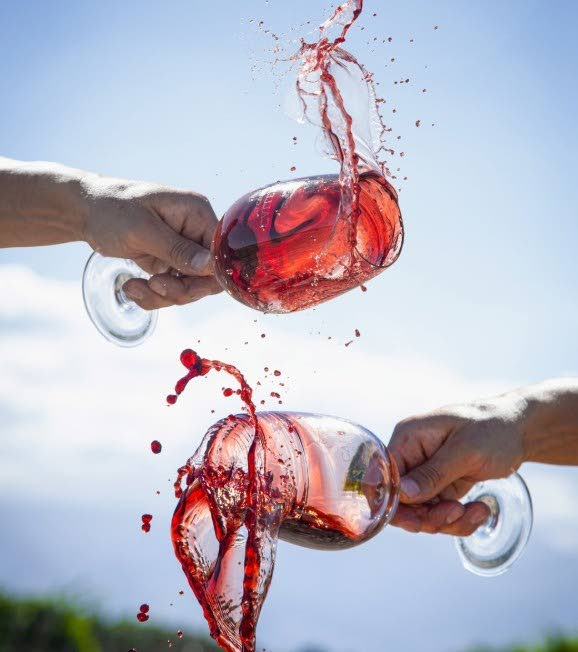
Malbec dominates the international shorthand, and wine tourism has become part of the way Mendoza presents itself to the world. (Photo by Callejón del Crimen)
After several years of living in Argentina, I have stopped describing Mendoza simply as wine country. That phrase is accurate, but it leaves too much out. From the Caribbean, I arrived with a fairly uncomplicated idea of Argentine wine; Mendoza meant Malbec. It did not take long to realise that the interesting part begins when you stop asking whether a wine is from Mendoza and start asking where in Mendoza it comes from, what the producer wanted to express and why the wine tastes the way it does.
That is where the Uco Valley keeps my attention. The valley has become one of the most closely watched parts of Argentine wine, yet it continues to resist easy definition. Gualtallary, El Cepillo, Paraje Altamira and Vista Flores each bring different possibilities, and Vinos de La Luz works across those areas. Its Callejón del Crimen vineyards are identified by the winery at approximately 1,350 metres in Gualtallary, 1,200 metres in El Cepillo, 1,100 metres in Altamira and 1,080 metres in Vista Flores.
The 2026 Decanter World Wine Awards (DWWAs) gives me a particularly good reason to look at what the producer is doing.
Five Vinos de La Luz wines received medals: Gran Callejón del Crimen Ánfora Malbec 2025, platinum and 97 points; Gran Callejón del Crimen Concreto Malbec 2025, gold and 95 points; Gran Callejón Winemaker Selection 2023, silver and 91 points; Callejón del Crimen Gran Reserva Malbec 2023, bronze and 89 points; and Callejón del Crimen Reserva Malbec 2024, bronze and 88 points.
The Gran Callejón del Crimen Ánfora Malbec 2025 is the bottle that makes me want to sit down and taste rather than simply read the score. Decanter placed it among Argentina’s platinum wines at 97 points in the 2026 competition. Argentina’s eight platinum medals all went to Mendoza, making the result part of a particularly strong showing for the province. But 97 points is only the beginning for a wine that comes from El Cepillo, one of the Uco Valley areas represented among Vinos de La Luz’s vineyards.
Malbec has become so closely associated with Argentina that it can be easy to forget how much room there is within the variety. The question is no longer simply what Malbec tastes like. It is what this Malbec tastes like, from this part of the valley, in this vintage, made in this way. The reported tasting profile points towards forest fruit and dried herbs, with fine texture, freshness and a saline impression.
The Gran Callejón del Crimen Concreto Malbec 2025, with 95 points and a gold medal, is where I would continue the tasting. The other 2025 Malbec in the Callejón del Crimen story represents a different approach, giving the drinker something concrete to compare, particularly around texture, fruit definition and freshness. This is how I have come to prefer learning about wine in Argentina.
Put two wines beside each other. Taste them without trying to impress yourself with tasting vocabulary. Notice which one feels broader. Which one has more tension? Which one makes you want food? Which one would you happily keep drinking after the first glass? Those questions are often more useful than identifying every aroma in the glass.
The Gran Callejón Winemaker Selection 2023 received silver at 91 points and it is here that the story moves away from a single-variety expression. Vinos de La Luz describes the Winemaker Selection as a blend of Malbec, Petit Verdot and Merlot, aged for 12 months in 160-litre French oak barrels.
The Callejón del Crimen Gran Reserva Malbec 2023 received bronze and 89 points while the Callejón del Crimen Reserva Malbec 2024 received bronze and 88 points. These are wines that I would definitely include in the tasting. The scores are lower than the headline results, but that is precisely why I find the five-wine presentation useful. It gives us a range rather than a single trophy bottle. Vinos de La Luz describes the Reserva as the line that best represents its identity, while the Gran Reserva is presented as its more classical expression of Argentine wine. That distinction gives the two bottles a useful place in the tasting.
Taken individually, the medals are straightforward but, when taken together, they tell a more interesting story. Vinos de La Luz has wines recognised at four different medal levels, from bronze to platinum, across the 2023, 2024 and 2025 vintages. The 97-point Ánfora provides the headline. The 95-point Concreto confirms that the performance reaches beyond one bottle. The Winemaker Selection adds a blended expression, while the Gran Reserva and Reserva extend the picture across established lines.
The producer’s own description of Callejón del Crimen puts considerable emphasis on geographical diversity, with wines coming from Gualtallary, El Cepillo, Altamira and Vista Flores. It describes its Single Vineyard wines as expressions of that diversity. For someone visiting Mendoza, this is the part worth remembering. Do not stop at the word Mendoza, ask which part of the Uco Valley is in the glass. That small change in the question can completely alter a wine experience.
Living here has also made me aware of how much Argentina’s wine identity has travelled. From outside the country, Mendoza can appear almost mythical. The Andes rise behind the vineyards, Malbec dominates the international shorthand, and wine tourism has become part of the way the region presents itself to the world. From inside, the picture feels more ordinary and therefore more revealing.
You see the bottles at restaurants. You hear producers talk about parcels rather than provinces. You begin recognising the names of valleys and vineyard areas. You learn that altitude alone does not explain a wine. You taste wines that make you reconsider assumptions you arrived with. Coming from Jamaica, I notice the social side of that experience too.
Wine here belongs at the table. There is a familiarity in that which I understand instinctively. The geography may be completely different from the Caribbean, but the pleasure of bringing people together around food, drink and conversation needs no translation. That is where I place Vinos de La Luz.
Its five 2026 DWWA results give the winery an international reference point, but the bottles make more sense when considered through the landscape they come from and the choices made along the way. The 97-point Ánfora is where I would begin. I would pour it slowly, give it a little time, and let the conversation around the table do what it always does in Argentina: Move from the wine to the place, from the place to the people, and eventually back to the glass.
By then, the score would probably be the least interesting thing on the table. Salud!
For anyone visiting Argentina, do not stop at the word Mendoza, ask which part of the Uco Valley is in the glass. (Photo by Callejón del Crimen)
Callejón del Crimen Reserva Malbec 2024, an 88-point wine with a bronze medal is described as the line that best represents the bodega’s identity. (Photo by Callejón del Crimen)
Callejón del Crimen Gran Reserva Malbec 2023 is presented as Vinos de La Luz’s more classical expression of Argentine wine. (Photo by Callejón del Crimen)
Gran Callejón del Crimen Concreto Malbec 2025 scored 95 points and earned the winery a gold medal at the 2026 DWWA. (Photo by Callejón del Crimen)
Malbec has become so closely associated with Argentina that it can be easy to forget how much room there is within the variety. (Photo By Vinos De La Luz)
Vinos de La Luz’s five 2026 DWWA medals give the winery an international reference point. (Photo by Callejón del Crimen)
Gran Callejón Winemaker Selection 2023 is a blend of Malbec, Petit Verdot and Merlot, aged for 12 months in 160-litre French oak barrels. (Photo by Callejón del Crimen)
Gran Callejón del Crimen Ánfora Malbec 2025 is among Argentina’s platinum wines at 97 points in the 2026 DWWA competition. (Photo by Callejón del Crimen)
From outside the country, Mendoza can appear almost mythical, with the majestic Andes rising behind the vineyards. (Photo by Callejón del Crimen)