

23 Liberian Professionals Graduate From Anti-Corruption Fellowship | News
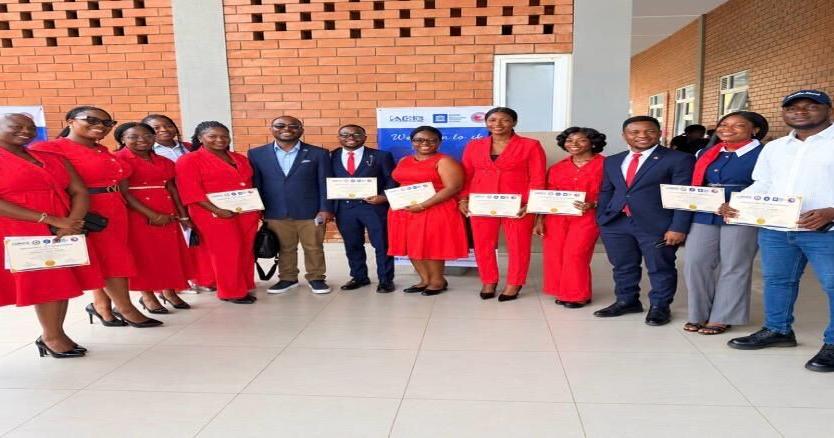
Twenty-three mid-level Liberian professionals have completed the inaugural five-month Governance and Anti-Corruption Fellowship Program, with the Liberia Anti-Corruption Commission (LACC) urging the graduates to turn their training into practical action to protect public resources and strengthen institutions.
The fellowship, organized by Naymote Partners for Democratic Development in partnership with the LACC, brought together professionals for 60 hours of face-to-face training, research projects, policy dialogues, mentorship and civic engagement.
Delivering the keynote address at the graduation ceremony, LACC Commissioner Dr. Miatta Jeh told the fellows that completing the program marked “the beginning of your responsibility,” rather than the end of their work.
Jeh said corruption is not an isolated problem but a governance challenge that affects essential sectors, including schools, healthcare, roads and public procurement.
She reminded the graduates that public resources belong to the Liberian people and challenged them to apply the knowledge gained from the fellowship in their respective professions.
“Public resources do not belong to me… they belong to the people of Liberia,” Jeh said, emphasizing the need for public officials and professionals to view accountability as a responsibility to citizens.
She left the fellows with five commitments: protect integrity, defend public trust, speak truth to power, build bridges and leave every institution stronger than they found it.
Jeh’s message underscored the organizers’ broader objective of developing professionals capable of recognizing governance weaknesses and contributing to reforms within the institutions where they work.
Naymote Deputy Program Director Joshua Dennis Cleon, who provided an overview of the fellowship, said the program was established on the principle that sustainable national development requires leaders who understand governance and are prepared to resist corruption in practice.
According to Cleon, the fellows studied governance reform, integrity systems, transparency and public-sector reform while undertaking research projects designed to identify ways of strengthening institutions.
He said the fellowship also emphasized two core lessons: governance reform requires broad participation across society, while combating corruption requires strengthening systems rather than simply identifying and blaming individuals.
The program received support from UNDP Liberia, UNDP Africa, UN Women Liberia, the European Union in Liberia, the Program for Young Politicians in Africa, the National Endowment for Democracy, ECOWAS and the French Embassy.
Organizers said the fellowship was modeled on the Mandela Washington Fellowship but adapted to Liberia’s specific governance and anti-corruption priorities.
Public Procurement and Concessions Commission (PPCC) Executive Director Hon. Bodger Scott Johnson also praised the graduates and highlighted the importance of young professionals in strengthening public institutions.
Johnson disclosed that young professionals account for about 80 percent of the PPCC’s workforce, while outlining the commission’s role in overseeing public procurement.
He pointed to the PPCC’s e-procurement platform, which is currently being used by 56 government entities.
According to Johnson, the platform has processed approximately US$100 million in contracts and generated about US$400,000 in vendor fees since January. He said the system has also helped identify falsified vendor documents.
Johnson said his guiding principle in public procurement is “results in compliance,” stressing that public procurement must be conducted without bribery and in full adherence to the law.
Governance Commission Acting Chairman Professor Alaric Tokpa linked the fellowship graduation to the International Day of Democracy, saying democracy depends not only on institutions but also on citizens and leaders committed to integrity.
Tokpa said the Governance Commission chairs Pillar Four—Governance and Anti-Corruption—of the government’s ARREST Agenda.
He also announced a new civic education initiative being undertaken in partnership with the Ministry of Education and O’Hara Publishing.
The fellowship organizers said the graduates’ work extended beyond classroom training, with participants expanding professional networks and applying lessons from the program to real governance challenges.
Credit: Source link