

“15 Million Have Been Killed In My LifeTime” — LA’s Congolese Community Reflects on 28 Years of Genocide
The genocide in the Democratic Republic of the Congo (DRC) is a long-standing catastrophe that has taken the lives of millions of Congelese since the late 19th century. According to Refugees International, Congo faces “one of the world’s most protracted humanitarian crises,” with the International Rescue Committee (IRC) warning that close to 7 million Congolese have been forcibly displaced.
Parisa Nkoy, a Los Angeles resident of Congolese descent, expressed the effects the genocide has on her and her family: “I think this sense of hopelessness is driven by the general apathy of the West […] towards what is currently and what has been happening in Congo my entire life. I mean it’s just 15 million that have died [in] my lifetime.”
The devastation in the DRC revolves around how extraordinarily rich the country is in natural resources. Rather than placing it in a position of eminent wealth, these resources have pushed the country into total exploitation. The Eastern DRC plays a key role in the tumult plaguing the region, as it is rich in tin, gold, and coltan. For nearly three decades, various armed groups have controlled this part of the country, with support from western countries and other outside forces, causing much of the destabilization and violence.
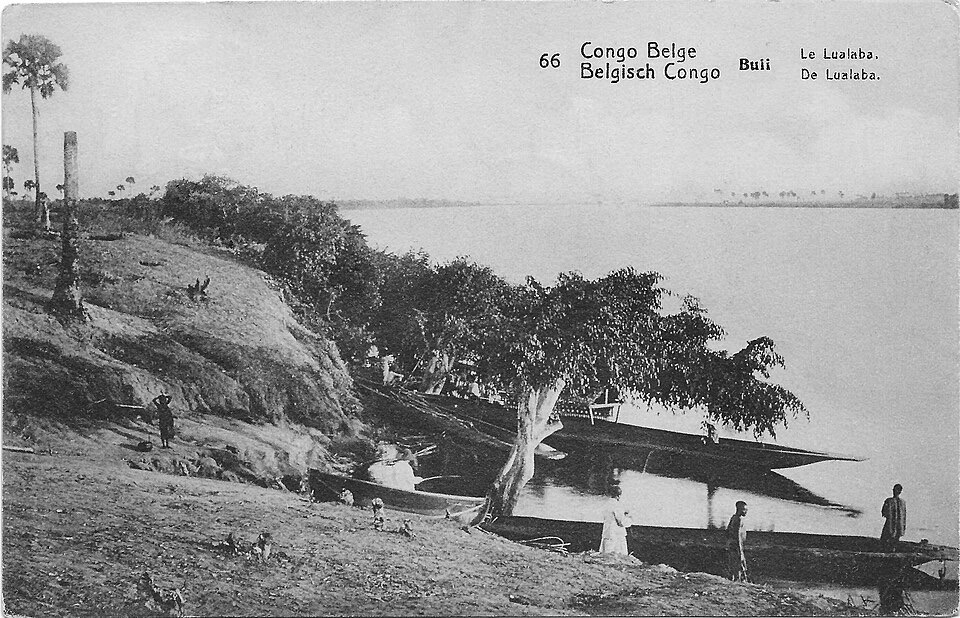
Although much of the region’s instability has occurred in more recent years, its history has been affected by decades of settler colonialism, occupation, and foreign intervention, with exploitation beginning in the 19th century when the DRC was forcibly placed under Belgian occupation by King Leopold II.
King Leopold II effectively owned the entire population of the country, using it as a forced-labor death camp, which took the lives of between 10 to15 million Congolese. The Belgian occupation of Congo is widely recognized as one of the most brutal events in colonial projects on the African continent, yet much of this history is left out or minimised in a lot of educational curricula outside of Belgium.
“America has been socialized to dehumanize Africans all together, it’s normal to hear things like ‘oh you better finish your food there’s starving kids in Africa’ and to think of it as this barren wasteland — it’s just the general dehumanization and desensitization.” Nkoy told Knock LA.
To combat this indifference, it is essential to understand the many chapters in Congo’s history as well as the various external forces that have shaped its turbulent trajectory. Congo won its independence from Belgium’s occupation on June 30, 1960, officially changing its name to The Republic of Congo. Unfortunately, this was not the end of the country’s instability. In the following months, the prime minister of the DRC, Patrice Lumumba, was placed under heavy house arrest in the city of Léopoldville, following a coup led by Colonel Joseph-Désiré Mobutu. He was eventually captured and formally arrested on December 1, 1960, and executed the following year.
Another coup was led once again by Mobutu in 1965, resulting in the removal of civilian leadership and Mobutu leading a 32 year long dictatorship, during which he renamed Congo to “Zaire.” Mobutu claimed the renaming was a part of his Authenticité campaign, which involved rejecting colonial/European culture and influence and promoting a national African identity.
The First Congo war broke out on October 24, 1996, stretching across the DRC’s border and into neighboring Rwanda, where the groundwork for the war had been laid by the horrific events surrounding the Rwandan genocide just a few years before. The Rwandan genocide, one of the fastest and most ruthless mass killings ever carried out in modern history, began in April 1994. Extremist Hutu leaders within the Rwandan government conducted a systematic extermination campaign against the Tutsi minority and moderate Hutus, resulting in the slaughter of over 800,000 people in the span of just 100 days.
The Rwandan genocide left a lasting impact on the region, despite coming to an end just a couple of months after it began. It resulted in The Tutsi-led Rwandan Patriotic Front (RPF) capturing Kigali alongside other territories, defeating the genocidal government, and declaring a permanent ceasefire.
The aftermath of the Rwandan genocide led to armed groups and refugees fleeing into eastern Zaire, which then intensified tensions and drew neighboring military groups like Uganda and Rwanda into the conflict. Both Uganda and Rwanda unequivocally backed the Alliance of Democratic Forces for the Liberation of Congo (AFDL), a rebel coalition led by Laurent-Désiré Kabila, in order to put an end to Mobutu’s dictatorship.
In 1997, the coalition overthrew longtime dictator Mobutu, which put an end to the First Congo War. Kabila then became president and returned Zaire to the name Democratic Republic of the Congo. This alliance, however, that originally brought Kabila to power quickly fractured. Kabila was seeking to distance himself from the other countries, and ordered Rwandan troops to leave in 1998.
Their response? Uganda and Rwanda began arming and backing new rebel groups in the region, which triggered the Second Congo War. For Congolese civilians across the region, the change in the government did not bring the stability many had hoped for after a 32 year-long dictatorship. Congolese communities were caught in the crossfire between government forces and armed rebel groups. Violence across the region intensified — villages were attacked, Congolese families displaced, and access to food, medical care, and resources utterly collapsed.
Peace agreements were eventually reached in 2003, with a hope of finally putting an end to decades of prolonged violence. Although most of the foreign troops in Congo retreated, Eastern Congo was never actually demilitarized. The main group that remained, at least according to the Rwandan government, is the Forces Démocratiques de Libération du Rwanda (FDLR), a Rwandan Hutu-led group with roots in forces that fled Rwanda into the eastern DRC. Multiple efforts were made to absorb or disarm the rebel groups but they continued to fail, and Rwanda always viewed the Hutu groups as a security threat, intentionally targeting them for years.
Another group, known as the National Congress for the Defence of the People (CNDP), reached a peace agreement with the Congolese government on March 23, 2009, which allowed many of its fighters to join the national army and offered the potential of transforming the CNDP into a political party. The CNDP has always emboldened itself as protectors of Tutsi-Congelese, particularly from forces like the FDLR.
In 2012 things took a turn when CNDP fighters broke away from the army, fracturing the agreement with the Congolese central government. The rebel group claimed that the Congolese government failed to uphold the agreement which involved security in Eastern Congo with protection of Tutsi Congolese, as well as the return of Tutsi-Congolese refugees, and upholding military and political integration. The CNDP then reformed into a new militia known as the M23, named after the March 23 peace agreement date.
Although the M23 is backed by Rwanda, they are a separate group in the DRC, with separate interests and objectives. The group consists of majority Tutsis who claim they are fighting to protect Congolese Tutsis who have faced decades of persecution and discrimination for decades in the DRC. In present day Congo, the M23 is regarded as one of the most powerful rebel groups in Eastern DRC, extending the cycle of violence and instability in the region.
The Congolese government declared the M23 a terrorist group in 2022, claiming it will defend every inch of the country against their mass atrocities, which have taken the lives of hundreds of thousands of Congolese and displaced millions. This current genocide in Congo is heavily layered with multiple reports of sexual violence against civilians, including children. Reports claim that Rwanda backs the M23 with at least 3,000 to 4,000 troops on the ground, many being funded by the West and other countries.
Many journalists and activists claim that the root of all the violence points to one thing: total domination and control of the region. This is due to Eastern Congo being heavily abundant in precious metals such as gold, cobalt, and coltan — all used to make electronic devices and necessary equipment for your iPhones — which have helped to both fuel and fund the conflict.
The M23 took control of a coltan mine called “Mine de Rubaya” in 2024 — the largest coltan mine in the region, and the mine that “feeds the tech world,” according to Reuters. A United Nations report states that the M23 was roughly making at least $800,000 a month from the coltan mine, as the minerals were being exploited via Rwanda.
Nkoy spoke about how many people in the West don’t recognize many of their privileges and have no idea the phones and electronic devices we use contain specific resources that have been acquired “by the blood of Congolese people.” This is a fight for resources at the expense of Congolese lives.
What is also forgotten amidst all of the regional unrest is how colonialism, foreign influence, and exploitation have been at the center stage of much of Congo’s instability. When asked about the biggest misconception when it comes to the DRC, Nkoy told Knock LA , “This is just African people fighting amongst each other, or just war in Congo, when the reality of it is that it is a genocide being driven by financial cost. Yes it involves Rwanda, but it’s Rwanda proxy militias that are funded and propped up and supported by the West. Without that understanding, it looks just like this issue has ‘nothing to do with me.’”
In fact, the DRC has been immensely important to the western world. For example, between 1939-1945 during the second world war, the United States used uranium and plutonium from Belgium-occupied Congo to build the atomic bombs that were dropped on Hiroshima and Nagasaki. More recently, the United States has entertained a deal that would grant American companies greater access to DRC-specific minerals needed for electronic devices, batteries, electric cars, and other advanced technology in exchange for US military assistance.
There are other global players who have ensured that instability remains a status quo in the DRC. China plays a significant role in dominating the DRC’s mineral trade. A 2025 academic report sponsored by the US National Geospatial-Intelligence Agency claimed that Chinese companies controlled at least 72% of the DRC’s cobalt and copper mines. The UAE is one of the world’s largest gold hubs, with direct investments and extensive trade ties being made with Rwanda and bilateral trade doubling to at least 1.5 billion US dollars, as the primary minerals being exported to the UAE are gold and coltan.
As the DRC grapples with decades of violence and displacement, another crisis has emerged within the country. In May, Congo experienced its 17th Ebola outbreak, with reports stating that it has taken the lives of at least 2,500 Congolese thus far.
Nkoy says, “The hardest part for me is all the stories we see coming on the ground in Congo. There was another attack in the Northern province in Kivu, in eastern DRC, just the other day. We’re getting these updates constantly — and also the recent Ebola outbreak… there’s just so much death and destruction and harm, it’s important to take the time to center ourselves and acknowledge that.”
A lot of the news and updates coming out of Congo rarely reach mainstream media, with many news outlets prioritizing other human rights crises across the world. There is a great sense of dehumanization and lack of regard when it comes to devastations occurring across the African continent.
Nkoy emphasized the importance of educating Americans about the richness of Congolese culture, in a way that is digestible for people and “doesn’t brutalize Congolese bodies.” Rather than focusing on the violence, she hopes that others will humanize the Congolese people, understand their cultures, and learn about their stories.
Conversations about the DRC have been left out of most progressive spaces across Los Angeles and the United States, said Nkoy, but she leans on the hope that has been growing amongst Congolese in more recent years.
“I think recently especially in LA, with a lot of people kind of waking up to what’s been happening in Palestine, and here we’re dealing with ICE raids, and this current administration, I think people are starting to become more aware,” she says. “I am hopeful that the tide will turn.”
August 2 marked Congo’s genocide remembrance day, known as “Genocost.” It commemorates the millions of lives lost through decades of violence and exploitation in the region. Many Congolese in Los Angeles have sought to find community through Pan-Africanist spaces. Nkoy mentioned prominent collectives and organizations within the city such as the All–African People’s Revolutionary Party and other movements who are working to help support the Congolese cause within the Los Angeles community.
Nkoy, expressing the importance of the remembrance week, says, “It means everything to me and to my fellow LA Congolese diaspora folks to be able to take time to honor all of the martyrs that we’ve lost as well as all of the survivors.”
Related
Credit: Source link