

Zimbabwe Caps Gold-Buying Incentives at $300 Million
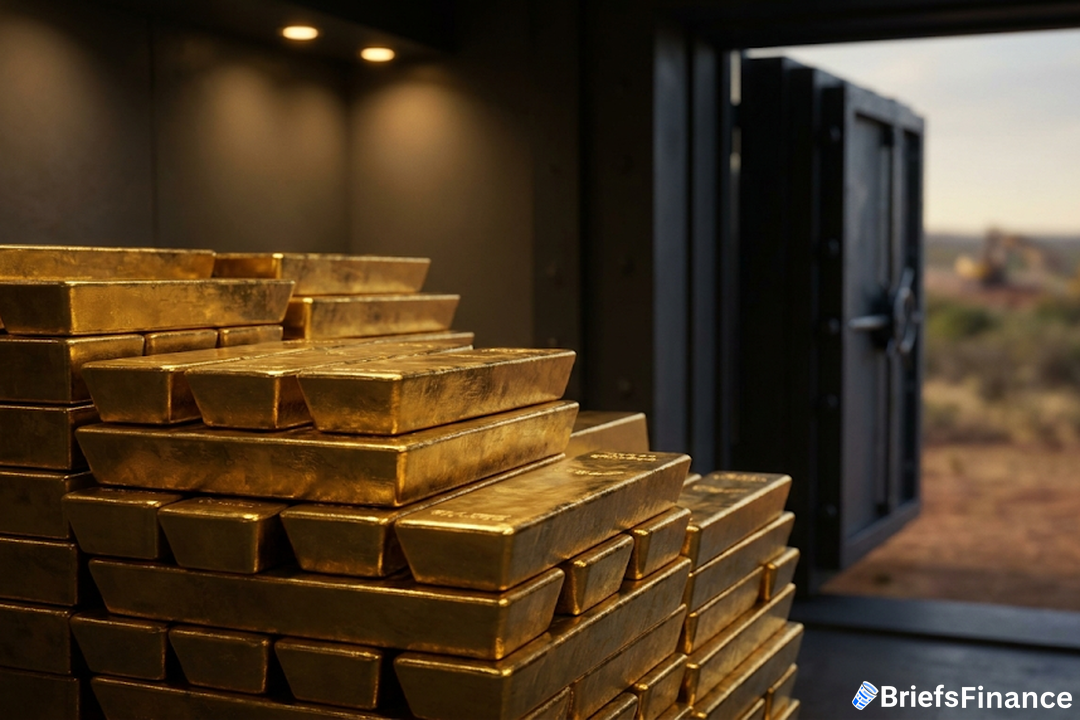
A Cap on Gold-Buying Incentives
Zimbabwe has a currency backed by gold, called the Zig. It was introduced in 2024, and its whole job is to be money that people can trust to hold its value.
The Zig’s credibility depends on the central bank being able to buy gold and add it to reserves. That requirement is why the incentive program matters to Zimbabwe‘s monetary strategy.
The government buys gold mainly to back the Zig and keep it credible and stable. To make sure miners sell their gold to the central bank, it offers incentives, and that spending is what the new cap targets.
Without a steady supply of gold, a gold-backed currency is just a name. Gold prices swing around, and so do the amounts miners deliver, which makes the program’s cost hard to predict.
So the government capped it. Finance Minister Mthuli Ncube and central bank governor John Mushayavanhu disclosed in a joint letter that no more than $300 million may be spent under the gold-miner compensation program between now and the end of 2026.
The cap runs through the end of 2026, and the letter is part of the report on Zimbabwe’s IMF program released Saturday.
The Long Road Back From Default
The bigger story is the debt. Zimbabwe defaulted on its loans in 1999 and has not been able to borrow on international markets since, with creditors that include the World Bank, the Paris Club, and the African Development Bank.
Zimbabwe finally obtained an IMF staff-monitored program in February after lengthy negotiations.
Get the free Always Be Buying eBook and learn the simple system for building wealth on any income
The program runs for 10 months, and it is not a bailout, just a watchful eye. Think of it as a probation period where the IMF checks that the government is handling its money carefully.
The program is a key step toward repaying billions in overdue debt and, eventually, borrowing again. The IMF’s early read is positive: the primary fiscal balance, which tracks the budget before interest payments on debt, was stronger than expected through end-March because revenue came in strong.
The IMF expects the economy to grow 5% this year and 4.2% in 2027.
Until Zimbabwe clears its arrears to creditors, it cannot borrow on international markets to support development or stabilize the Zig. Each IMF review is a signal of whether the government can stick to its financial commitments.
The 2027 budget, the same one that will decide the future of the gold incentive program, is scheduled for November.
Gold Production Keeps Climbing
Meanwhile, the gold itself is flowing. In the first six months of 2026, gold output reached 21.4 metric tons, compared with 20.3 metric tons in the same period a year earlier.
The revenue jump is even sharper. During those six months, gold exports brought in $3.1 billion, 69% more than in the same period a year earlier.
The central bank reported those numbers in July, and they explain why the government still wants the incentive scheme in place. The gold keeps the currency going, and the exports keep the money coming in.
That puts the $300 million cap in perspective. It is a real limit, but it is small next to the $3.1 billion the country earned from gold exports in just six months.
That gap is part of why the cap makes sense. The government can keep the gold coming without spending anywhere near what the exports bring in.
What It Means for Your Money
Here is the part that matters beyond Zimbabwe. The cap is a promise to lenders that the government will not let gold buying blow a hole in its budget.
For anyone holding gold, the Zig, or any investment tied to emerging markets, this is about credibility. A gold-backed currency only works if people believe the gold is really there and the government is not overspending to get it.
The next checkpoint is November, when the 2027 budget is presented. That budget presentation is also the moment when the incentive program for gold producers comes up for review, and officials may decide whether its scope needs changes.
For Zimbabweans, that decision shapes whether the Zig can keep holding its value. For investors, it is a window into whether a country locked out of global markets since 1999 can clear its debt arrears.
Download the free Always Be Buying eBook and start putting your money to work today
Credit: Source link