

Young Liberians Demand Seats at the Table of Democracy | News
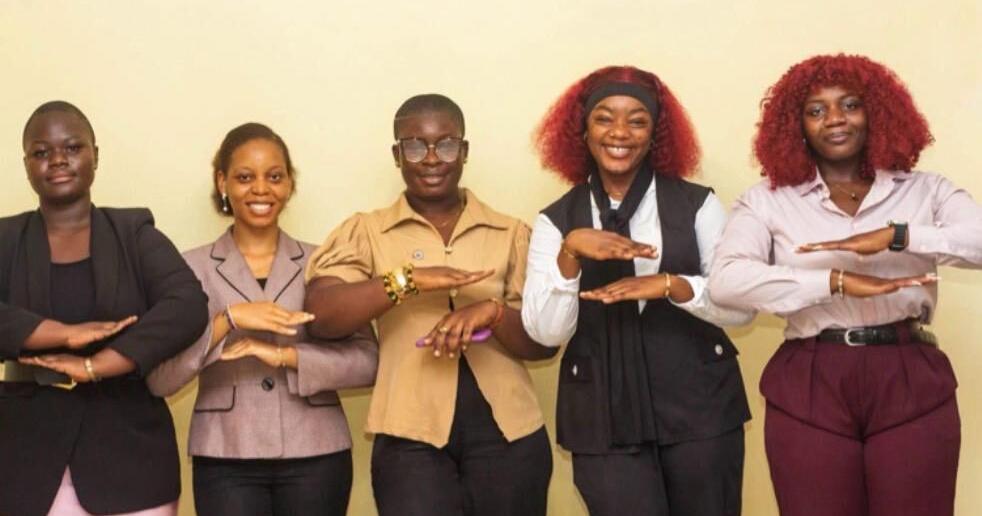
The celebration of the International Day of Democracy has placed an increasingly difficult question at the center of the country’s democratic conversation—Is democracy actually working for young people?
That question took center stage Tuesday, September 15, as young Liberians from political parties, student organizations, petty-trading communities and youth groups gathered for a dialogue organized by the Netherlands Institute for Multiparty Democracy (NIMD), and the Federation of Liberian Youth (FLY).
The event, held under the theme “What Does Democracy Mean To You?”, brought young people into a conversation about political participation, representation, accountability, peace and democratic governance.
The activity was co-funded by the European Union in Liberia, the Embassy of Sweden in Monrovia and the Embassy of Ireland under the Liberia Electoral Support Project (LESP), managed by UNDP Liberia and implemented with NIMD and UN Women Liberia.
But beneath the celebration of the country’s democratic progress was a deeper concern—young people are often central to elections but remain peripheral to political decision-making after the votes are counted.
That contradiction is increasingly becoming one of the most important tests of democracy in the country.
The “future leaders” who want to lead now
Setting the tone for the discussion, Rosetta Fardolo, Head of the FLY Secretariat, challenged participants to confront whether democracy is delivering meaningful opportunities for its youthful population.
She spoke about the persistent lack of opportunities available to young people and the tendency of politicians to mobilize them during elections, only for many to become politically irrelevant once campaigns end.
Her observation touched on a familiar political pattern across much of Africa where young people are frequently treated as campaign workers, crowds, online mobilizers, party foot soldiers and voters, but less frequently as policy-makers, candidates, legislators and senior decision-makers.
Participants particularly challenged the description of young people as “future leaders.”
For many in the room, the argument was straightforward—if young people constitute a significant share of the population and are already participating in political and civic life, why should leadership continually be postponed to some undefined future?
The question is not whether young people should eventually inherit political power. It is whether political systems are giving them meaningful opportunities to exercise leadership now.
That concern is supported by recent research commissioned by NIMD under the Liberia Electoral Support Project. A 2025 political economy analysis found that decision-making within Liberian political parties remains highly centralized and dominated by senior leaders, limiting meaningful engagement by women and young people. It also found that youth are often relegated to campaign-support roles with limited influence over policy or party strategy, while party structures tend to prioritize seniority.
That makes the concerns raised at Tuesday’s dialogue more than a generational complaint. They point to a structural question about how political parties distribute power.
Liberia nevertheless has important democratic achievements to celebrate.
The country has experienced peaceful transfers of presidential power in recent electoral cycles. In 2018, George Weah succeeded Ellen Johnson Sirleaf following the 2017 elections—the first peaceful transfer between democratically elected presidents in Liberia in more than seven decades.
The 2023 elections produced another peaceful transition, with Joseph Nyuma Boakai defeating Weah in a closely contested runoff and assuming office in January 2024. The United Nations described the 2023 elections as the first primarily organized by Liberia without significant international support and praised the orderly transfer of power.
These developments matter enormously for a country emerging from civil war.
But peaceful elections do not, by themselves, complete the work of democracy.
The more difficult question is what happens between elections.
Can citizens challenge government decisions? Can young people influence party policy before campaign season? Can a young entrepreneur, student, community organizer or first-time political aspirant gain access to political structures without money, family connections or patronage? Can institutions hold powerful individuals accountable regardless of political affiliation?
These questions go directly to the substance of democratic governance.
As the CMC delegation observed in its statement following the dialogue, democracy must extend beyond elections to include “meaningful participation, accountability, representation, inclusion, and opportunities for citizens particularly young people to contribute to decisions that shape their future.”
Political marginalization does not necessarily mean that young people are completely absent from politics.
In fact, the opposite can sometimes be true.
Young people may be among the most visible participants during political campaigns—organizing rallies, mobilizing voters, producing social-media content, transporting supporters and defending party positions.
The problem arises when that participation does not translate into influence over policy, party leadership or public decision-making.
NIMD’s research provides evidence of this gap in Liberia, while UNDP’s Liberia Electoral Support Project explicitly identifies the underrepresentation of youth and women in political processes as one of the challenges facing democratic governance.
This creates what could be described as a participation paradox—Young people may be numerous enough to determine electoral outcomes but not sufficiently represented to influence the decisions that follow those elections.
That gap can produce frustration and political disengagement.
It can also create opportunities for political manipulation, particularly where economic hardship leaves young people dependent on short-term political benefits.
When employment is scarce, educational opportunities are limited and access to capital is difficult, political patronage can become particularly attractive.
The danger is that politics becomes less about building institutions and more about maintaining networks of dependency.
Liberia’s challenge is not unique. Across Africa, young people constitute a large and growing share of the population, yet their presence in formal political decision-making remains disproportionately low.
International IDEA has documented the broader continental problem, noting that youth participation and direct representation in political structures remain limited even though young people make up a substantial proportion of Africa’s population.
Money, patronage and the cost of political entry
One of the most difficult barriers is money. Political participation is not free.
Campaigns require transportation, communication, organization, publicity, party activities and, in many cases, personal financial resources. For young people who are unemployed or underemployed, competing with established politicians who possess stronger financial networks can be extremely difficult.
International IDEA’s work on youth participation in African political processes has specifically examined the negative impact of money in politics and the way political financing can affect youth participation.
This creates an uncomfortable cycle. Young people need money to enter politics. They often lack the money because they have limited economic opportunities. They therefore become more useful to established politicians as mobilizers than as competitors.
There are also signs that young Liberians are increasingly seeking to change this dynamic.
In 2026, NIMD and its partners have expanded youth-focused democratic initiatives, including Democracy School programs involving young representatives from multiple political parties. Participants have called for stronger structures for youth-wing coordination, greater representation and mechanisms for youth participation in democratic processes.
NIMD has also highlighted persistent unemployment and limited access to market-relevant education and TVET opportunities as issues weakening youth participation and civic engagement.
This is important because political exclusion cannot be addressed solely through political speeches.
A young person without employment, skills, capital or institutional access has fewer resources with which to participate meaningfully in politics.
Consequently, youth political empowerment must involve more than encouraging young people to vote.
It requires pathways into policy development, political party leadership, local governance, public administration, entrepreneurship, civil society and elected office.
The strongest message emerging from the dialogue is therefore not that democracy has failed in Liberia. Rather, it is that Liberia’s democratic success story remains incomplete.
The country has demonstrated that political competition does not have to lead to violence and that power can change hands through elections.
The next question is whether that democracy can become sufficiently inclusive to allow a new generation to participate in shaping the country’s political and economic future.
That means strengthening the rule of law, protecting freedom of expression and assembly, strengthening independent institutions and making political parties more internally democratic.
It also means confronting the barriers that make politics inaccessible to people without money, connections or established political networks.
Credit: Source link