
Yemen’s presidential council chief vows to restore state authority nationwide
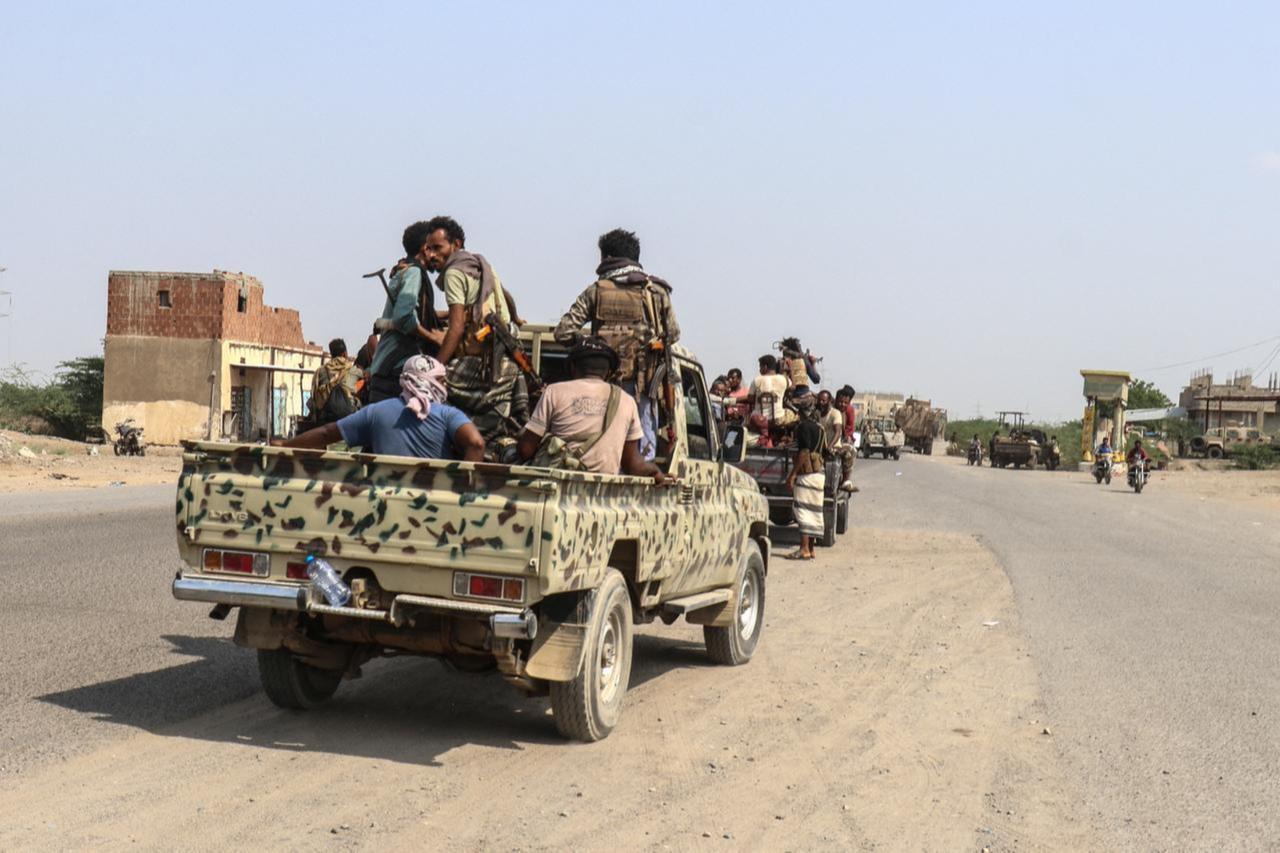
Forces loyal Yemen’s Saudi-backed government ride in a pick-up trucks along a road in the Hays district, south of Hodeidah on Sept. 5, 2026. (AFP Photo)
September 14, 2026 01:42 AM GMT+03:00
The head of Yemen’s Presidential Leadership Council said Sunday that recent battlefield setbacks will not derail the government’s campaign to reclaim state institutions and extend its authority across the country, as fighting with Houthi forces reshapes territorial control on several fronts.
Rashad al-Alimi, chairman of the council, made the pledge during a series of phone calls with council members, Prime Minister Shaya al-Zindani, the commander of the Fourth Military Region, provincial governors and military commanders, in which the officials reviewed the latest field, security, humanitarian and public service developments.

Forces loyal Yemen’s Saudi-backed government ride in a pick-up trucks along a road in the Hays district, south of Hodeidah on Sept. 5, 2026. (AFP Photo)
Al-Alimi says setbacks will not change strategic course
Al-Alimi told the officials that shifts on individual front lines would not alter the broader trajectory of the conflict.
“The course of major national battles is not determined by a temporary change on one front line,” he said, adding that such developments would not weaken the capacity of Yemen’s people and armed forces to restore state institutions.
He said the outcome would instead hinge on “strength of will, unity of purpose and decision-making, and the ability to learn from challenges and turn them into opportunities to build greater strength and cohesion and regain the initiative.” He added that the state’s resilience depends on the “integration of its military, security, political, economic and service fronts.”
The territorial balance in Yemen has shifted markedly in recent days. The Houthis have announced control over several districts in Al Hudaydah and Taiz provinces along the western coast, as well as a number of Red Sea islands, including Perim Island in the Bab al-Mandab Strait, a narrow waterway that links the Red Sea to the Gulf of Aden and sits along one of the world’s busiest shipping routes.
Government forces claim advances in the north, strikes elsewhere
Yemeni government forces reported advances of their own in Al-Jawf province near the Saudi border, saying they were closing in on the provincial capital, Al-Hazm.
Government forces also said they had carried out airstrikes on Houthi positions in Mokha and nearby areas, as well as in Taiz, Lahj and Al-Dhalea provinces, destroying military vehicles and weapons, according to their account. Separately, they said they had repelled a major Houthi assault on Marib.
The clashes mark a sharp escalation after a period of comparative quiet, with fighting between government forces and the Houthis intensifying since early July.
Yemen’s war dates back to September 2014, when Houthi forces seized the capital, Sanaa, along with several other provinces, prompting a Saudi-led coalition to intervene militarily in March 2015 in support of the internationally recognized government. The conflict has persisted for more than a decade despite periodic ceasefires and diplomatic efforts.

September 14, 2026 01:42 AM GMT+03:00