

World Bank Calls for Urgent Action on Liberia’s Bad Loans Crisis | News
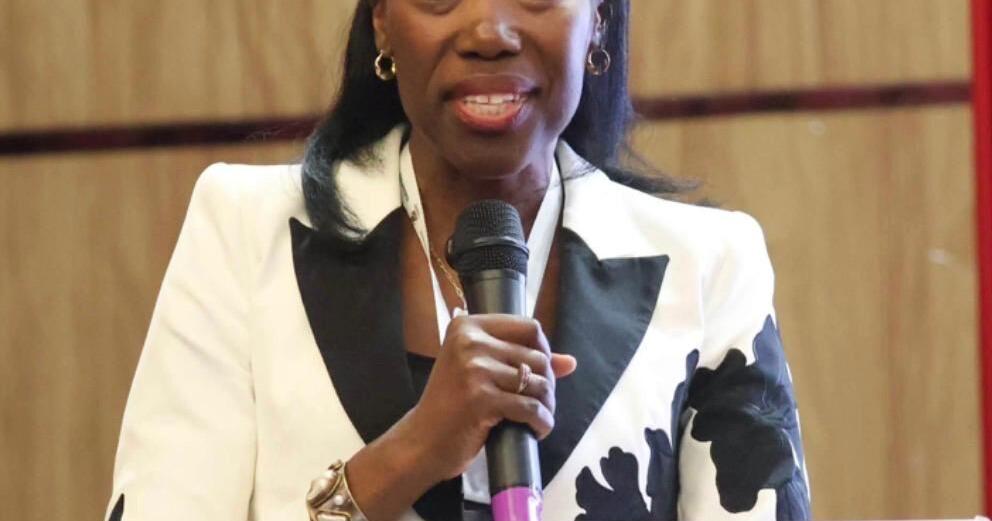
The World Bank Group has called for urgent and coordinated action to resolve Liberia’s persistent non-performing loans (NPLs), warning that the country’s bad-loan problem is not merely a banking-sector issue but a major constraint on private-sector growth, investment and job creation.
World Bank Group Country Manager Georgia Wallen made the call Wednesday, September 9, 2026, at the opening of the national Non-Performing Loans Resolution Conference in Monrovia, bringing together government officials, financial institutions, private-sector leaders, development partners and other stakeholders to address challenges confronting Liberia’s financial system.
Wallen said the conference must go beyond simply reducing the volume of distressed loans on commercial banks’ books, arguing that Liberia needs to build a financial system capable of providing affordable, appropriately structured and long-term credit to productive businesses across the country.
“The ambitions of this event go beyond tackling the persistent challenge of high non-performing loans (NPLs) in Liberia,” Wallen said.
“Today is about spurring collective action to nurture a financial system that can provide affordable, appropriately structured, long-term credit to productive businesses across Liberia.”
She said such reforms are critical to achieving the economic transformation objectives of the government’s ARREST agenda, while also aligning with the central objective of the World Bank Group’s partnership with Liberia: creating the foundations for “more and better jobs.”
According to Wallen, resolving the NPL crisis should be treated as a national economic priority because the problem directly affects the ability of banks to lend to businesses and households.
“Resolving NPLs is not only a matter of financial stability: it is central to Liberia’s growth and employment agenda,” she declared.
Wallen cited findings from the World Bank-supported 2026 Financial Sector Assessment, which she said provides a clear picture of the scale and structural nature of Liberia’s financial-sector challenges.
She noted that Liberia’s financial system remains heavily dominated by commercial banks, while overall financial intermediation remains shallow.
“Domestic credit to the private sector was only about 15 percent of GDP in the latest internationally comparable data,” she said.
More concerning, Wallen disclosed that NPLs represented approximately 19 percent of total loans at the end of 2024, a level she described as “well above prudential benchmarks.”
Although the NPL ratio subsequently declined to 12.5 percent, she cautioned that the improvement does not necessarily represent a fundamental strengthening of banks’ loan portfolios.
“A subsequent decline to 12.5 percent reflected mainly write-offs and restructuring rather than sustained cash recoveries,” Wallen explained.
The distinction is significant because writing off a bad loan or restructuring it can reduce the reported NPL ratio without necessarily meaning that the underlying financial problems have been resolved through actual repayment and recovery.
Wallen also pointed to Liberia’s relatively low loan-to-deposit ratio of around 35 percent, saying the figure reflects the limited incentives banks have to extend credit.
“Loan to deposit ratios hover around 35% because banks have little incentive to lend,” she said.
The World Bank official said the effects of Liberia’s weak credit environment are already being felt by businesses, particularly enterprises that depend on commercial financing to expand operations, invest in equipment, create jobs and increase production.
She disclosed that nearly 40 percent of surveyed Liberian businesses last year identified lack of access to finance as their single biggest obstacle, compared with approximately 30 percent a decade ago.
That trend, she warned, demonstrates that the challenge has become more acute rather than less severe.
“High NPLs weaken bank profitability and lending capacity. The consequences are visible at firm level,” Wallen said.
While financial inclusion is changing rapidly through the expansion of mobile money, she noted that formal bank credit, long-term financing and financial products tailored to smaller businesses remain inadequate.
She further identified several structural weaknesses contributing to the problem, including weaknesses in governance, gaps in timely credit information, slow debt recovery and insolvency processes, and the absence of a functioning market for distressed assets.
“These constraints are linked and cannot be solved by any one institution or instrument,” she emphasized.
Against this backdrop, Wallen outlined four priorities for policymakers and financial-sector stakeholders as they deliberate during the conference.
The first, she said, is to build an ecosystem of trust within Liberia’s credit market.
She explained that banks need reliable information to determine the identity, financial obligations and repayment history of potential borrowers.
“The Financial Sector Assessment highlights the need for reliable borrower identification, fuller reporting of existing obligations and repayment behavior, and effective use of movable and immovable assets as security,” she said.
Wallen welcomed the government’s efforts to modernize Liberia’s credit-reporting system and improve data quality, describing those initiatives as essential to reducing uncertainty and lowering the cost of lending.
She cited as “an excellent recent example” the launch of Liberia’s Enhanced Collateral Registry, which she said should help strengthen the framework for secured lending.
The second priority, according to Wallen, is to address both sides of the credit relationship.
She said responsibility for Liberia’s credit challenges cannot rest entirely with banks or borrowers.
Financial institutions, she argued, must strengthen underwriting, governance, related-party controls and concentration-risk management.
Borrowers, meanwhile, must improve their record-keeping, transparency and repayment discipline.
Government also has an important role to play, she said, particularly by validating and addressing legitimate payment arrears and strengthening commitment controls.
The third priority is to recognize and resolve distressed assets swiftly and transparently.
Wallen said Liberia needs stronger risk-based supervision, more consistent loan classification and provisioning, as well as firmer enforcement of prudential requirements.
Banks, she said, must improve their governance structures, underwriting standards, early-warning systems, loan restructuring mechanisms and write-off practices.
At the same time, she called for stronger financial safety-net and crisis-management arrangements.
This, she explained, requires clearer institutional responsibilities and credible bank-recovery and resolution tools that can be activated before financial stress becomes a crisis.
The fourth priority is to link financial stability with deeper and more inclusive finance.
Wallen said Liberia has significant opportunities to expand digital financial services and payment systems but warned that innovation must be accompanied by appropriate safeguards.
“The Financial Sector Assessment sees significant potential in digital financial services and payments,” she said.
“It also cautions that innovation should be matched by proportionate regulation, operational resilience, financial integrity safeguards, and consumer protection.”
Wallen stressed that the success of Liberia’s financial-sector reforms should not be measured solely by whether the NPL ratio declines.
Instead, she said, the ultimate test should be whether viable businesses can obtain financing on workable terms.
“The test of reform is not only whether the NPL ratio falls, but whether viable micro, small and medium enterprises—including women- and youth-led businesses, agricultural enterprises, and firms outside Monrovia—gain access to financing on workable terms,” she said.
The emphasis on MSMEs is particularly important because smaller businesses constitute a major part of Liberia’s private sector but often face greater difficulties meeting traditional bank lending requirements.
Wallen said the World Bank Group, through the World Bank, International Finance Corporation (IFC) and Multilateral Investment Guarantee Agency (MIGA), is already working with Liberia to strengthen the country’s financial ecosystem.
Under the leadership of the Ministry of Commerce and Industry and the Central Bank of Liberia, she said the World Bank-financed LIFT Project is helping strengthen the private-sector ecosystem by improving access to finance, expanding business-development services and supporting digital financial infrastructure.
She disclosed that the project’s US$6 million Line of Credit facility has performed strongly, reaching 253 micro, small and medium-sized enterprises (MSMEs) with zero non-performing loans.
“The US$6 million Line of Credit facility has performed strongly, reaching 253 MSMEs — with zero non-performing loans!” Wallen stated.
She said IFC is complementing these efforts by upgrading Liberia’s policy and regulatory framework for secured transactions, expanding digital credit and agent banking, and using its Local Champions Initiative to prepare promising Liberian companies for long-term financing and investment.
MIGA, she added, is supporting the expansion of telecommunications and mobile-money services through its US$81 million guarantee for Orange Liberia, including services reaching underserved communities.
“Together, these interventions address the full chain—from better financial infrastructure and capable enterprises to more confident lenders and additional private capital,” Wallen said.
As the national conference gets underway, Wallen urged the Central Bank, government, commercial banks, businesses and development partners to move beyond discussion and translate the conference’s recommendations into concrete reforms.
She said Liberia’s objective should be a financial system characterized by stronger banks, more responsible borrowers, more effective institutions and greater access to financing for productive businesses nationwide.
“This gathering is about realizing Liberia’s vision of stronger banks; more responsible borrowing; more effective institutions; and increased access to finance for productive enterprises – nationwide,” she said.
The World Bank Group, she assured participants, is prepared to work with all stakeholders to turn the conference roadmap into practical action.
“We look forward to engaging with all stakeholders – the Central Bank, Government, financial institutions, businesses, and other partners – to translate the roadmap from this conference into actions that unlock opportunity and jobs across Liberia,” Wallen concluded.
Credit: Source link