

Wild blonde capuchin monkeys — an endangered species in Brazil’s dry Caatinga forest already known for using sticks to fish termites — were filmed cracking food open with stones, the first record of stone tool use in this species anywhere
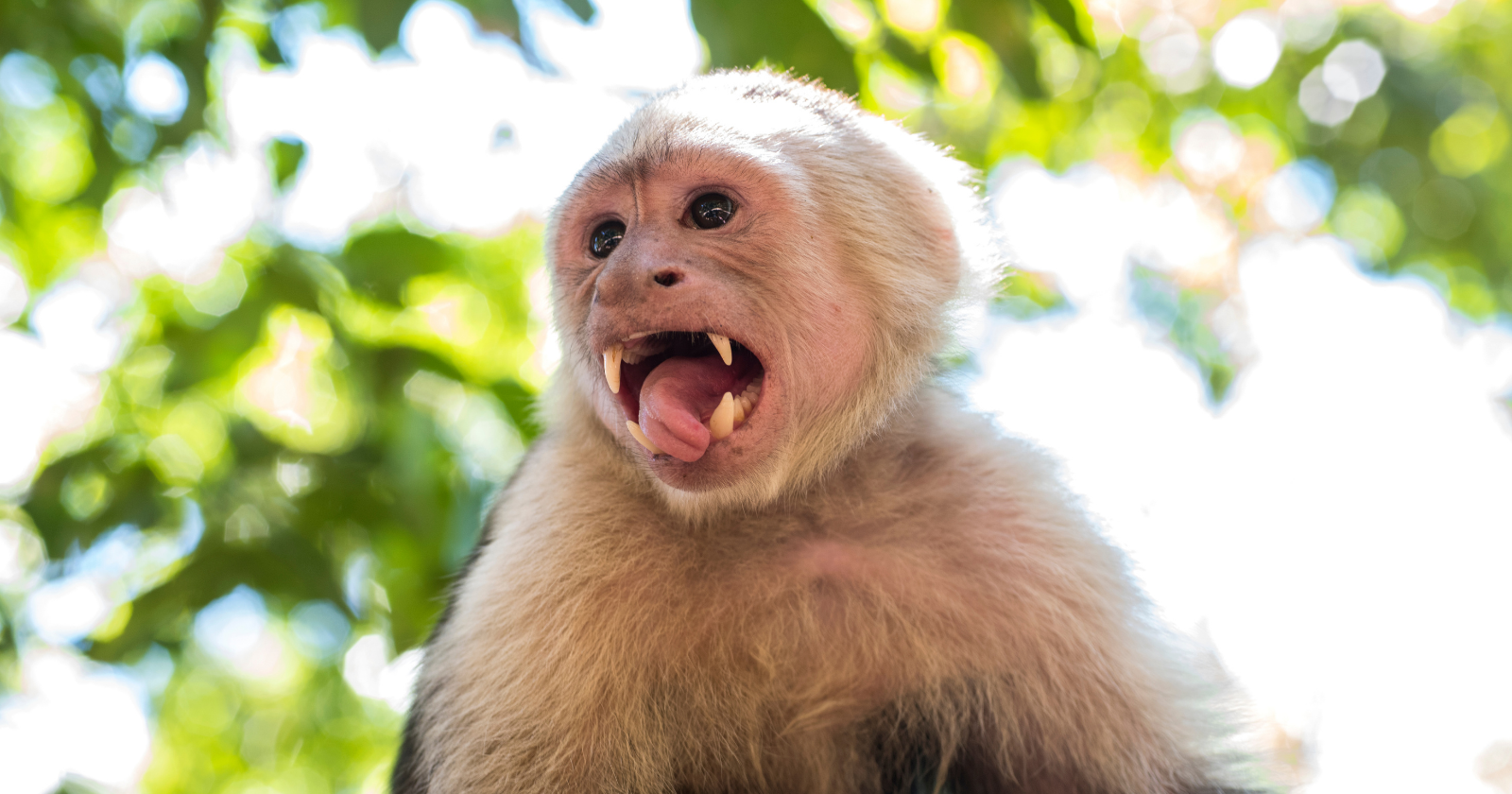
A camera trap in Brazil’s Caatinga dry forest caught something researchers had never documented in this species before: a wild blonde capuchin monkey picking up a stone, raising it overhead, and bringing it down on a nut wedged into a natural stone anvil. The blow cracked the shell open. The monkey ate what was inside.
It sounds like a small thing.
It is not, for a species that has never been seen doing it before.
A skill nobody had recorded
The blonde capuchin (Sapajus flavius) is endemic to north-eastern Brazil, split between fragments of Atlantic Forest and a more recently documented population living in the Caatinga, the semi-arid scrubland that covers much of the country’s interior. According to a study published in the journal Primates by lead author Geovana C. B. Lima and colleagues, researchers observed the monkeys using stones as tools across three sites in the Caatinga, the first time this behaviour has been recorded in the species anywhere.
Blonde capuchins were already known for another kind of tool use: poking sticks into termite mounds to fish out insects. Stone-assisted foraging is a different skill, and one the researchers describe as passively observed rather than induced, meaning nobody set up nuts for the monkeys to crack. The animals were simply doing what they do, and the cameras happened to be running.
Hammer and anvil
The technique the monkeys used is the same broad method known from other tool-using capuchins in Brazil: a hammerstone brought down on a nut or seed pod resting on a flatter stone anvil. In our reading of the paper, the researchers measured the stones involved and found hammers averaging around 476 grams, roughly the weight of a full can of soft drink, used on anvils about 48 centimetres high with a working surface of a little over a square metre.
Six instances of the behaviour were recorded in total. That is a small sample, and the researchers frame the finding accordingly: as a first documented case, not a settled account of how common or widespread the habit is among blonde capuchins generally.
The food items involved were nuts and seed pods from native Caatinga plants, including the licuri palm (Syagrus coronata), a species whose hard-shelled fruit is a known target for stone-tool foraging in other capuchin populations, and favela (Cnidoscolus quercifolius), a spiny native shrub. Both grow in the dry forest the monkeys inhabit and neither is easy to open by hand.
Not a one-off
A follow-up study published in Scientific Reports in 2025, led by Maria Gabriella Rufino and João Pedro Souza-Alves, one of the authors on the original paper, suggests the behaviour is more than a single lucky sighting. Working in Caatinga forest in the state of Alagoas, the researchers mapped 296 stone tool sites on the forest floor and found that 47 of them, close to 16 per cent, showed clear signs of repeated reuse, with 72 separate reuse events logged over ten months of fieldwork.
That second study did not itself observe monkeys mid-strike as often as the original paper did. Instead, it worked backwards from the physical evidence: worn anvils, scattered hammerstones, cracked shells left where the animals had been feeding. The pattern of reuse tracked closely with the size of nearby trees, measured by trunk cross-section, which the researchers treat as a rough proxy for how much food a patch of forest can supply. Sites near larger, more productive trees were reused more often, suggesting the monkeys are not choosing anvils at random but returning to spots that keep paying off.
Taken together, the two papers describe a picture broader than a single filmed strike of stone on shell. They describe a foraging habit with its own geography, built up site by site across the dry forest the monkeys call home.
A species already on the edge
Sapajus flavius is listed as Endangered on the IUCN Red List. Its Atlantic Forest range has been fragmented for decades by sugarcane agriculture, and the population living in the Caatinga was only formally documented in recent years, following local reports of sightings stretching back around four decades. A separate paper in the journal Oryx, describing early conservation efforts for the species in this dry forest habitat, underscores how little was known about this population until quite recently.
That context matters for how the tool-use finding should be read. A behaviour going unrecorded for this long is not necessarily evidence that it is new. It may simply reflect how little sustained observation this particular group of monkeys, in this particular habitat, had received before now.
What it adds to the picture
Stone tool use is not unique among Brazilian capuchins. Bearded capuchins (Sapajus libidinosus) at Serra da Capivara National Park have been studied for years using stones to crack nuts, and other Sapajus species, including the critically endangered yellow-breasted capuchin, have shown similar behaviour. What the new observation does is extend that pattern to a species where it had not previously been confirmed, in a habitat, the Caatinga, that is drier and more open than the environments where capuchin tool use is best studied.
The researchers note that this single study cannot establish how the behaviour arose in this population, whether through independent invention, social learning within the group, or some combination of both. Answering that would need longer-term observation across more sites.
For a species already fighting habitat loss on two fronts, the finding adds a small but concrete detail to what is known about how blonde capuchins actually live day to day. It also carries a practical weight for conservation planning. If particular trees and anvil sites are used repeatedly across generations, then protecting a patch of Caatinga for this species means protecting more than open ground and cover. It means protecting the specific trees and stones the monkeys have already learned to rely on.
Researchers studying the species’ behavioural flexibility now have one more data point: a monkey, a stone, a nut, and a skill nobody had written down before.
Comments are closed.