

Why Morocco Appears as MAR, Not MOR, on World Cup Scoreboards
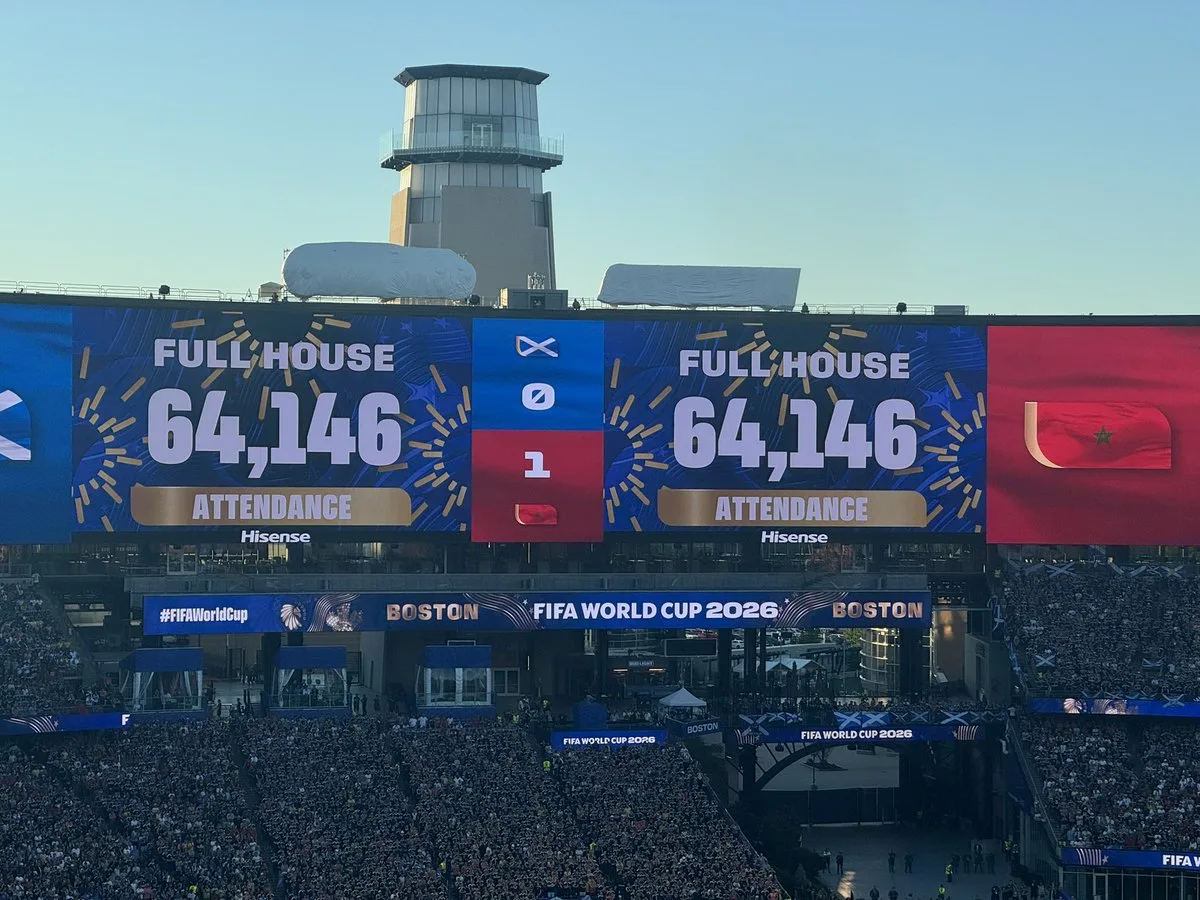
Marrakech – For Moroccans, French speakers, and anyone who has followed the Atlas Lions across multiple tournaments, the three letters MAR on the scoreboard are entirely self-evident. There is nothing to question. It does not register as unusual.
But as the 2026 FIFA World Cup unfolds across North America, the abbreviation has sent millions of English-speaking viewers straight to their search bars mid-match. British outlets, including The Sun and The Mirror, have published dedicated explainers. American newspapers have followed. It has become one of the most Googled football questions of the tournament’s opening week.
The answer sits in language, not in error. FIFA assigns each of its member associations a unique three-letter code for use across all official competitions. Morocco’s code – MAR – derives from the French name for the country: Maroc.
The same linguistic root shapes the country’s presence far beyond the pitch. Morocco’s ISO country code is MA, the basis for its national internet domain .ma, its designation in international mail and diplomatic channels, and its identification in global data systems.
The French origin of the code traces to colonial history. France established a protectorate over Morocco in the early 1900s and maintained control until independence in 1956.
Morocco’s official languages today are Arabic and Amazigh. French, however, remains deeply embedded in the country’s government, business sector, and international affairs. FIFA, headquartered in Switzerland and using French as one of its official languages, adopted the French-derived code.
Morocco is not alone in this. Switzerland appears as SUI, from its French name Suisse – which also avoids favouring one of the country’s four official languages over the others. Germany is GER, not a form of Deutschland. Croatia uses CRO rather than anything from its native Hrvatska. Spain shows as ESP, from España.
Saudi Arabia carries the code KSA. Iran and Iraq appear as IRN and IRQ, partly to prevent confusion between countries whose English names share the same opening letters. FIFA’s guiding rule is simple: consistency. Once a code is assigned, it stays fixed across all broadcasts, graphics, and databases.
Why are they called the Atlas Lions?
That code now sits beside one of the strongest national teams in world football. Their nickname, the Atlas Lions, speaks for itself, tying together two powerful national symbols: the Atlas Mountains that run across Morocco and the Barbary lion, also known as the Atlas lion, once native to the region.
The Barbary lion was among the largest lion subspecies ever recorded, recognized by its distinctive dark mane that extended over the shoulders and belly. It roamed the Atlas Mountains and the wider Maghreb for centuries before European colonial hunters drove it to extinction in the wild.
The last known photograph of a wild Barbary lion was taken in 1925 by French military photographer Marcelin Flandrin from aboard a flight on the Casablanca-Dakar air route. The aerial image captured a solitary lion in the Atlas Mountains. A postcard edition of the photograph later surfaced.
View this post on Instagram
The last confirmed shooting of a wild Barbary lion occurred in 1942 near Tizi n’Tichka in the Moroccan Atlas. But the species survived through Moroccan royalty.
For centuries, Amazigh tribal leaders captured cubs in the Atlas and presented them as tribute to the sultan/ruler, who kept them in palace gardens. The tradition passed from the Almohad dynasty in the twelfth century through to the Alaouite kings.
Descendants of those royal lions are still alive today at Rabat Zoo, which holds the world’s largest captive population of Barbary lion descendants, numbering around 38 lions.
Though the species vanished from the mountains, it never disappeared from the national consciousness. Two Barbary lions also feature on the coat of arms (emblem) of the Kingdom of Morocco, adopted on August 14, 1957, by King Mohammed V shortly after independence.
The two lions flank the royal crown and a shield bearing the green pentagram (the five-pointed star), the Atlas Mountains, and a rising sun. Beneath the shield, a ribbon carries a verse from the Quran, Surah 47, Verse 7: “If you glorify God, He will glorify you.”
What about Morocco’s World Cup run so far?
This is the country’s seventh World Cup finals, following appearances in 1970, 1986, 1994, 1998, 2018, 2022, and 2026. At the 2022 tournament in Qatar, Morocco became the first African and Arab nation to reach a World Cup semi-final, eliminating Spain and Portugal before falling to France.
In the current edition, Morocco sit sixth in the FIFA live rankings – the highest position in the national team’s history. They opened Group C with a 1-1 draw against Brazil. Ismael Saibari chipped the ball over Alisson for the opening goal before Vinicius Junior equalized.
On Friday, the Atlas Lions beat Scotland 1-0. Saibari needed just 70 seconds. Brahim Díaz seized on a lapse in Scotland’s defensive third, threaded a pass down the right flank, and found Saibari’s run into the box. Still officially a PSV Eindhoven player but reportedly bound for Bayern Munich, the attacking midfielder drove the ball past Angus Gunn at the far post.
It was the fastest goal of the 2026 World Cup, surpassing Czechia’s Michal Sadílek, who had scored after five minutes and seven seconds against South Africa earlier in the tournament.
It is also the fastest goal ever scored by Morocco at a FIFA World Cup and the second-fastest by an African nation in the tournament’s history, behind only Asamoah Gyan’s strike for Ghana against the Czech Republic in 2006. The all-time record still belongs to Turkey’s Hakan Şükür, who scored 11 seconds into a match against South Korea in 2002.
Saibari’s goal carried another milestone. He became only the second African player to score in each of his first two World Cup appearances, joining Egypt’s Mohamed Salah.
Morocco controlled the rest of the match with 60% possession, 12 shots to Scotland’s six, and two on target to Scotland’s zero. Yassine Bounou was not tested once in 90 minutes. Their final group match is against Haiti on June 24.
Credit: Source link