

Why China’s Open-Source Message Wins
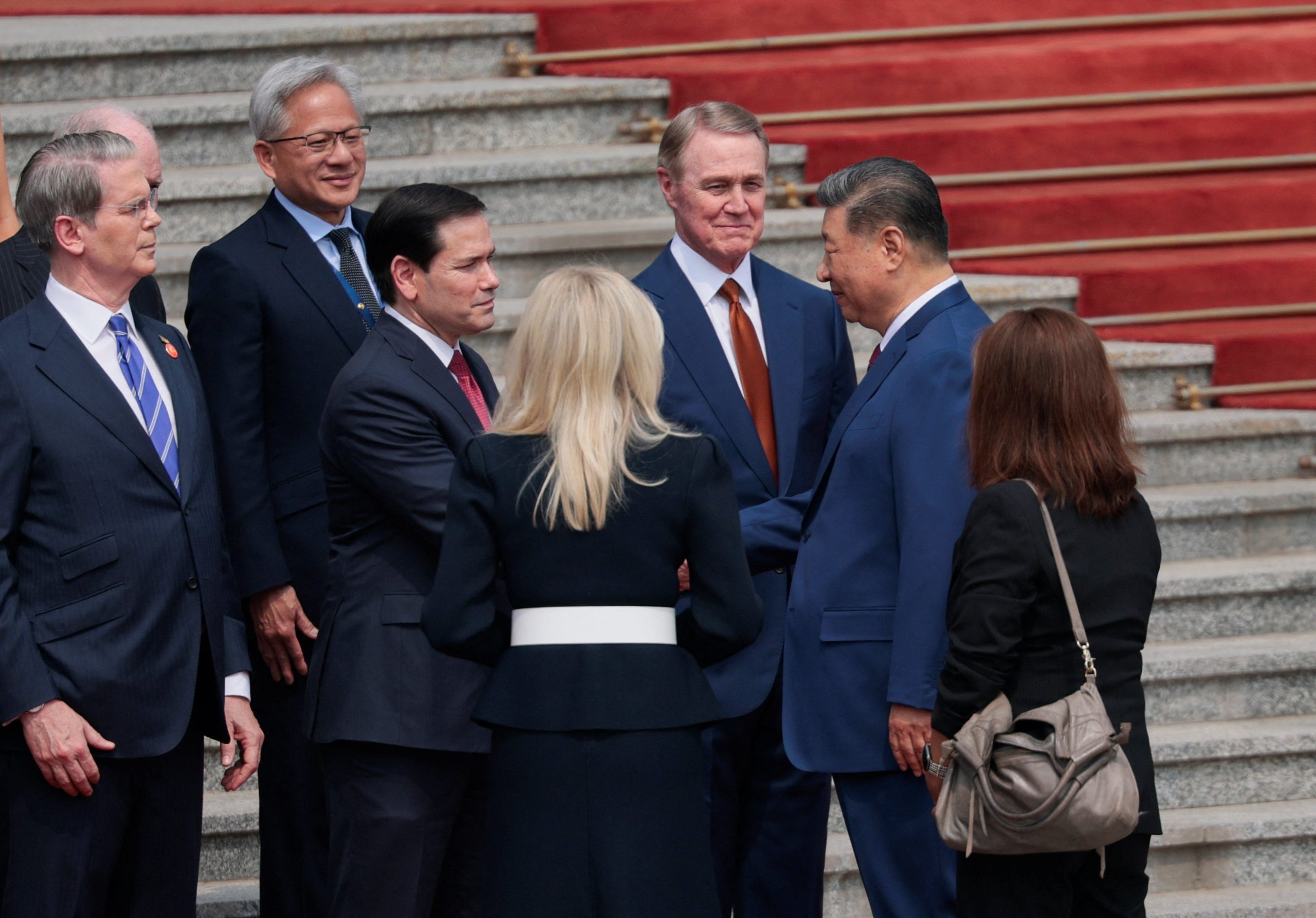
President Xi Jinping’s speech at the recent Shanghai World Artificial Intelligence Conference presented his country as an appealing champion of open, multilateral, accessible AI to benefit all of humanity.
For many countries, the US offers something different — closed models, paying for someone else’s computing power, relying on infrastructure located in other jurisdictions and accepting that Washington can change the terms of access at any time. China counters with cheaper, open models that can be downloaded, adapted to local languages, and run with much greater autonomy.
Recent advances by companies such as DeepSeek, Zhipu, and Moonshot show that this is not merely propaganda. Kimi K3 is capable of competing with some of the best US models. This strategy could democratize access to AI. It can reduce costs, weaken the stranglehold of US companies, and enable countries that could never afford to fund a state-of-the-art model to develop their own applications. China is transitioning from being viewed as a copycat to becoming a vast laboratory for widespread adoption.
But to confuse that with altruism would be naive. China does not offer open technology because it has discovered a philanthropic calling, but because openness creates ecosystems, sets standards, and generates dependencies. A country can freely download a model and yet end up depending on chips, cloud services, development tools, updates, security systems, or communications infrastructure controlled by Chinese providers.
The most effective form of dependence is not one that is imposed, but one that seems rational. China does not need to conquer countries or force them to adopt its technology; it is enough for it to become the cheapest, most accessible, and most functional option. When the American alternative requires paying more, giving up more autonomy, and accepting political conditions, the decision practically makes itself.
Get the Latest
Sign up to receive regular Bandwidth emails and stay informed about CEPA’s work.
President Xi promised thousands of training slots, international cooperation centers, and AI-based tools for developing countries. He also presented the new global organization promoted from Shanghai as an alternative to a technological order dominated by a handful of powers and companies. The initiative aims to position China as the natural partner of the Global South and as a guarantor that AI will not become a new mechanism of exclusion. It is consistent with his vision outlined in 2022 that “China cannot develop without the world, and the world also needs China.”
Does that make China a reliable partner? Not necessarily. The same country that speaks of AI “for the good of humanity” maintains one of the most sophisticated systems of digital censorship and surveillance in the world. The Chinese government is using AI to strengthen its social control, and its models must adhere to very specific political restrictions on issues such as Tiananmen, Taiwan, Xinjiang, or the leadership of the Communist Party.
President Xi’s insistence that AI must remain “safe and controllable” may seem reasonable, but in the Chinese context it also means “subordinate to the state.” Open-source code does not necessarily imply political openness, ideological neutrality, or the absence of censorship. A model can be technically modifiable yet still incorporate biases, restrictions, or priorities derived from the environment in which it was created.
Nor can the US convincingly present itself as the guardian of free technology. Its companies monopolize models, data, chips, and computing power, while its government uses sanctions, export controls, and extraterritorial jurisdiction to preserve its advantage. Its proposal for freedom often means, in practice, the freedom to contract services from US companies under the terms they set.
The real question is not whether the world will be better off if China wins. Replacing one technological hegemony with another can hardly be considered a victory. The best scenario is one in which Chinese competition breaks up oligopolies, lowers prices, and opens up opportunities for Europe, India, Latin America, Africa, and Southeast Asia.
China can make a decisive contribution to a multipolar world. But taking advantage of what it has to offer requires setting aside any paternalistic fantasies. Beijing and Washington both seek influence, markets, and the ability to set the rules.
China’s great skill lies in having understood that, when the dominant power begins to close doors and act as a jealous guardian of its privileges, there is no need to present itself as a conqueror. It is enough simply to offer cooperation. The challenge for the rest of the world is to accept that cooperation without confusing it with benevolence and, above all, without trading one form of dependence for another.
Enrique Dans is a Senior Fellow with the Tech Policy Program at the Center for European Policy Analysis (CEPA).
Bandwidth is CEPA’s online journal dedicated to advancing transatlantic cooperation on tech policy. All opinions expressed on Bandwidth are those of the author alone and may not represent those of the institutions they represent or the Center for European Policy Analysis. CEPA maintains a strict intellectual independence policy across all its projects and publications.
Read More From Bandwidth
CEPA’s online journal dedicated to advancing transatlantic cooperation on tech policy.