

Why child labor persists despite Nigeria’s legal protection
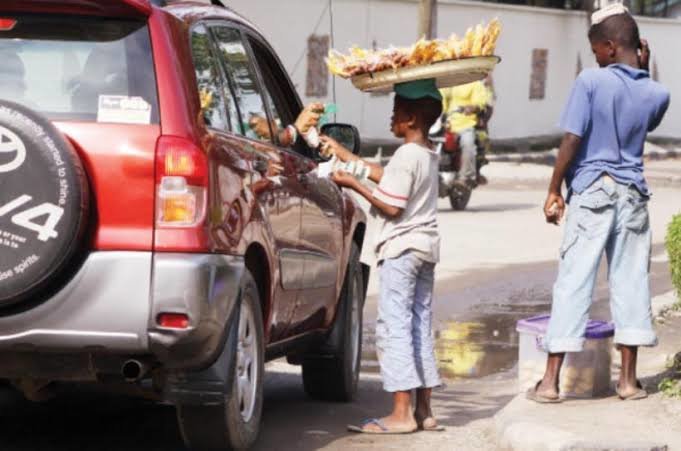
As Nigeria joins the world to mark World Day Against Child Labour, poverty, weak enforcement, and systemic failures keep thousands of children trapped in labour across the country.
This year’s global campaign to mark World Day Against Child Labour is led by the International Labour Organisation (ILO) alongside the United Nations Children’s Fund (UNICEF) and the UN Food and Agriculture Organisation (FAO). The theme: “Red card to child labour: Fair play for children, decent work for adults,” utilises the universal sports symbolism of a red card, in which global health and human rights bodies say it signals that systemic economic exploitation of minors is completely unacceptable and therefore must be structurally penalised.
ILO estimates that nearly 138 million children remain trapped in child labour globally, including 54 million in hazardous work.
This reality is reflected in the lives of minors like Blessing Imeh, who is now 20 but recalled being sent away to work as a textile sales attendant in Balogun Market, Lagos State. Then 15 years old, Imeh said the decision was driven by the economic strain of the COVID-19 pandemic in 2021. As one of five children, she was forced to abandon her education after completing Junior Secondary School, and on January 21, 2021, she moved to Lagos.
“I’ve always dreamt of living in Lagos, but I never knew it would be because of work,” she said. “My parents sent me to work with an Alhaja who sells Ankara in Balogun Market after my junior secondary school exams. I told them that I would like to further my studies, but my father said he couldn’t afford it.”
She explained that while she was technically in her dream city, the reality was nothing to write home about. “It pained me then, but the thought of living in Lagos made it bearable. I remember calling my mother just five days after I arrived, begging her to come back to Ikot Udoma, in Akwa Ibom, because the work was so stressful.”
Unlike Imeh, Maryam Abubakar was introduced to the labour market as a primary four pupil in 2009. Alongside her elder sister, Kifayah, she spent her childhood hawking sachet water in Ilorin, Kwara State, to support her family.
“My elder sister, Kifayah, and I would hawk pure water at the Oja Tuntun Market,” Maryam recalled. “We were always so happy whenever our white transparent bucket was empty, because it meant we had sold everything,” she recalled.
By 2011, she was in junior secondary school, and financial demands forced the sisters to take on domestic work for university students to fund their academic needs.
“My sister and I would go to Agbooba to help the university students living behind the Blue Mist water factory to wash plates and fetch water. The money was used to buy books and stationery, while my father paid the school fees. We ate from the money my mum made from selling water at home.”
She noted that while her peers enjoyed childhood pastimes like reading or watching television, hers was defined by a hustle for survival.
“Throughout my secondary school days, while other children watched TV or read books, my sibling and I would go to Agbooba, knocking on hostel doors, shouting, ‘Omo onise yin re o’, meaning, ‘Your errand girls are here.’”
FG committed to empowering children—Women Affairs Minister
The ICIR attempted to speak with the Ministry of Women Affairs and Social Development regarding current child labour enforcement strategies, but the attempt was unsuccessful. However, in May 2025, the Minister, Imaan Sulaiman-Ibrahim, highlighted the Federal Government’s long-term targets for child protection.
Speaking at the first regional meeting of the Pathfinder African Countries on the global alliance to end violence against children, the minister clarified that the targets include supporting services for two million at-risk children by 2030, elimination of harmful practices in 18 states by 2028 and strengthening of legal frameworks through enforcement of the Child Rights Act and Violence Against Persons Prohibition Act. She also restated the importance of expansion of the Safe Schools Programme and increased budgetary allocation for child protection.
Also, the Minister of State for Labour and Employment, Nkeiruka Onyejeocha, restated Nigeria’s alignment with global frameworks, emphasising that the country remains fully committed to its international treaty obligations on child welfare.
According to Onyejeocha, the fight against child exploitation requires a unified front that transcends demographic boundaries, alongside a deliberate shift towards youth empowerment. “Violence against children knows no age, race, or colour,” Onyejeocha stated, adding that, “we have ratified International Labour Organisation conventions on child labour nationwide and are committed to empowering our children through education, skill development, and digital technology access.”
Why child labour persists- Expert
However, Human Rights Lawyer and Gender Justice Advocate, Gladys Emmanuel, says the challenge goes beyond writing laws or ratifying international labour conventions to funding and institutional independence. Emmanuel noted that Nigeria’s Child Rights Act is clearly derived from international conventions, but actual enforcement requires specialised personnel and sustained funding.
“Currently, state-level task forces are treated as temporary, ad-hoc committees rather than permanent law enforcement or social welfare institutions, leaving them completely disconnected from the main judicial and enforcement systems,” she said.
The Human Rights Lawyer explained that Nigeria’s intricate blend of constitutional, statutory, religious, and customary laws often creates conflicts, making it essential for interventions to be tailored in ways that resonate with the local cultural context of the different regions to ensure understanding.
While such implementation requires significant resources, Emmanuel says, unfortunately, the state ministries of women’s affairs and social development, which handle child protection, consistently receive some of the lowest budgetary allocations in the country.
“Without a dedicated statutory fund for task forces, temporary shelters, maintenance, long-term rehabilitation, and conditional cash transfers. Without consistent funding, we might not be able to implement any of these strategies,” she warned.
Speaking on the delicate link between population dynamics and child protection, Emmanuel explained that societal expectations often demand that a woman get her spouse’s permission for family planning, which frequently leads to domestic disagreements where husbands argue that resources will “miraculously appear” for every child born. This mindset, according to the lawyer, directly results in larger families where some children are inevitably left out of school.
She emphasised the need to hold corporate supply chains accountable, especially when child labour in agriculture and informal mining is hidden deep within an unmonitored informal economy, highlighting the EU’s due diligence laws and Ghana’s blockchain tracking as useful models. She said Nigeria must adopt digital monitoring and grassroots support to protect vulnerable families.
Zainab Abdulrasaq ia a reporter and a fact-checker with The ICIR. She believes that accountable citizenship starts with an accountable government, which is why she highlights injustice and everyday struggles through her reporting, one story at a time. She adores reading and can be reached via zabdulrasaq@icirnigeria.org and @blackbookishgirl on Instagram/Medium
Credit: Source link