

Who should get the Reggae Icon award?
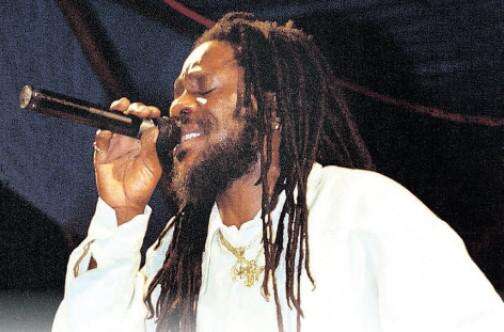
In yesterday’s part one of this article shared with the Jamaica Observer, Dr Leo Gilling, journalist, philanthropist and policy analyst, questions what exactly does the Reggae Icon Award measure and why a slew of apparently deserving artistes were leapfrogged by some of the current recipients.
Following is part two of the article which has been truncated for space:
In Part I, I raised a straightforward question:
If Jamaica’s Reggae Icon Award is guided by qualifications emphasising pioneering influence, cultural authenticity, global impact, longevity, and community contribution, what happens when those same qualifications are applied to Jamaican-born artistes who have not received the award?
The answer reveals the central problem. Jamaica has an abundance of Reggae Icons. And when there is an abundance of qualified people, the order of recognition becomes important.
Using the same five categories and the same ten-point scale used in Part I, consider a selection of Jamaican-born artistes who have not appeared among the recipients examined there. Again, these are not Government of Jamaica scores. They are analytical scores designed to test how consistently the stated qualifications operate. Individual numbers can reasonably be debated. What matters is the comparative pattern.
Artiste Pioneer / Evolution Cultural / Conscious Global Longevity / Influence Community Total /50
Bob Marley 10 10 10 10 10 50
Toots Hibbert 10 10 10 10 9 49
Jimmy Cliff 10 10 10 10 9 49
Peter Tosh 10 10 10 10 9 49
Burning Spear 10 10 10 10 9 49
Bunny Wailer 10 10 10 10 9 49
Marcia Griffiths 10 9 10 10 9 48
Dennis Brown 10 10 10 10 8 48
U-Roy 10 9 10 10 8 47
Freddie McGregor 9 9 9 10 9 46
Gregory Isaacs 9 8 10 10 8 45
Yellowman 10 7 10 10 7 44
Ini Kamoze 9 9 10 9 6 43
Shabba Ranks 9 6 10 10 7 42
Eek-A-Mouse 9 8 9 10 6 42
Do not become distracted by whether one artiste should receive 47 rather than 48… The more important question is this: How can a selection system that emphasises pioneering influence and historical contribution explain the absence of so many people who actually pioneered and transformed Jamaican music?
Toots Hibbert
Toots and the Maytals were present through the development of ska, rocksteady, and reggae. “Do the Reggay” is widely associated with popularising the very word by which reggae became known. If one of the qualifications is Pioneering Foundation & Evolution, it is difficult to construct a stronger case. This is not simply longevity. This is participation in the actual development of the music.
Jimmy Cliff
Long before reggae became firmly established as a worldwide musical force, Jimmy Cliff was carrying Jamaican music internationally. His recordings helped introduce reggae to global audiences, while The Harder They Come, the movie became one of the most important cultural vehicles through which international audiences encountered Jamaican music, language, struggles, and identity. If global ambassadorship is one of the principal qualifications, Jimmy Cliff is one of the standards against which that category should be measured.
Peter Tosh and Bunny Wailer
Peter Tosh and Bunny Wailer were not later beneficiaries of the reggae movement. They were part of its foundational architecture. Alongside Bob Marley, they helped shape the Wailers during one of the most important periods in the development of Jamaican music. Peter Tosh subsequently established an international solo career defined by resistance, social justice, equal rights, Rastafari, and political consciousness. Bunny Wailer carried forward another deeply Jamaican roots-reggae tradition while maintaining extraordinary artistic longevity. If the award values both pioneering and conscious cultural expression, their cases are exceptionally difficult to ignore.
Burning Spear
Few artistes embody roots reggae’s spiritual, historical, and cultural foundations more completely than Burning Spear. His work has consistently connected reggae to African identity, Marcus Garvey, Rastafari, history, liberation, and cultural memory. His contribution is not based on one era or one hit. It is the sustained representation of a cultural philosophy over decades. If authenticity, consciousness, longevity, and global ambassadorship are serious qualifications, Burning Spear represents almost the textbook case.
Marcia Griffiths
Marcia Griffiths presents one of the most difficult omissions to understand. Her career reaches back into rocksteady. She became one half of Bob and Marcia. She became one of the I-Three alongside Bob Marley and the Wailers. She developed a distinguished solo career. And she has remained culturally relevant across generations. Her career effectively travels through much of the history the Reggae Icon Award is supposed to celebrate. If pioneering, global ambassadorship, cultural authenticity, and longevity matter, Marcia Griffiths should logically appear very early in any hierarchy of Jamaican musical icons.
Dennis Brown
Dennis Brown became one of reggae’s defining voices. His significance cannot simply be measured by the number of records he made or the length of his career. His vocal style became part of reggae’s language. Generations of singers followed paths he helped establish. That is influence. That is legacy. And that is precisely what an Icon award should be designed to recognise.
U-Roy
U-Roy’s importance extends far beyond successful recordings. He helped to transform Jamaican deejaying into a major recorded musical form. His rhythmic vocal delivery over existing recordings became enormously influential in Jamaica and far beyond it. Something existed before him. He transformed it. Others subsequently built upon it. That is what pioneering looks like. If that does not qualify as Pioneering Foundation & Evolution, then we need to reconsider what the word means.
Shabba Ranks (right) places a velvet cape around the shoulders of U Roy at Club Amazura in Queens, New York,last Friday.
Yellowman
Dancehall is part of Jamaica’s musical architecture, too. Yellowman became one of the first dancehall artistes to achieve substantial international visibility and helped demonstrate that the emerging form could travel well beyond Jamaica. His influence on the generations of deejays that followed is undeniable. He therefore represents another kind of pioneer. Not the pioneer who helped create reggae in the 1960s, but the pioneer who helped move Jamaican music into its next major era. That distinction matters.
Yellowman.
Shabba Ranks
Shabba Ranks pushed that internationalisation further. He did not merely have successful records. He helped demonstrate that unmistakably Jamaican dancehall and deejay culture could penetrate the international commercial mainstream. His two consecutive Grammy victories represented an important milestone in dancehall’s international recognition. That is not simply commercial success. It changed what appeared possible for Jamaican dancehall artistes internationally. Later generations walked through doors that artistes such as Yellowman and Shabba helped open. That is evolution.
Shabba Ranks.
Ini Kamoze
Ini Kamoze’s “Here Comes the Hotstepper” reached No 1 in the United States. That represents extraordinary global penetration for a Jamaican artiste. But his importance extends beyond one crossover hit. His earlier “World-A-Music” became part of the musical foundation of Damian Marley’s “Welcome to Jamrock”. There we can actually see Jamaican musical influence travelling from one generation into another. That is precisely what an evolution criterion should recognise.
Eek-A-Mouse
And then there is Eek-A-Mouse. Nobody needs to be told when Eek-A-Mouse is singing.
His distinctive singjay approach combined melody, deejaying, rhythmic vocalisation, and unmistakable vocal sounds into something immediately identifiable. Whether an individual listener personally likes the style is irrelevant. Innovation is not determined by taste. The question is whether the artiste introduced or developed something distinctive enough to expand the musical landscape. Eek-A-Mouse did.
Once these artistes are placed beside the existing recipients, the issue changes. The question is no longer: Are the recipients deserving? Many clearly are. The question becomes: What principle determines priority among deserving artistes?
And that is where the existing qualifications begin to struggle.