

What’s next for Haitian, Syrian TPS holders? Updates in Mass. – NBC Boston
Parts of the immigrant community in Boston have been left shellshocked by last week’s Supreme Court ruling allowing the Trump administration to end temporary protected status (TPS) for people from Haiti and Syria.
At-Large Boston City Councilor Ruthzee Louijeune said it had been “three days of just, honestly, continued heartbreak,” and Sarang Sekhabat, with the MIRA Coalition, called it “a rough weekend.”
After the 6-3 decision ending the legal status for Haitians and Syrians admitted into the country with TPS, immigration attorneys fielded questions throughout the weekend.
“I was meeting with somebody today and there’s nothing for people to go back to in Haiti,” said Jeannie Kain, with Kain Immigration.
But in an appearance on CNN’s “State of the Union” this weekend, Homeland Security Sec. Markwayne Mullen made clear the Trump administration is moving forward.
“Temporary Protected Status was never intended to be permanent,” said Mullen. “They can try to apply for a permanent residence here, they can apply for a temporary visa if they choose to. Or they can choose to go back and if they want to go back, we will help them do that.”
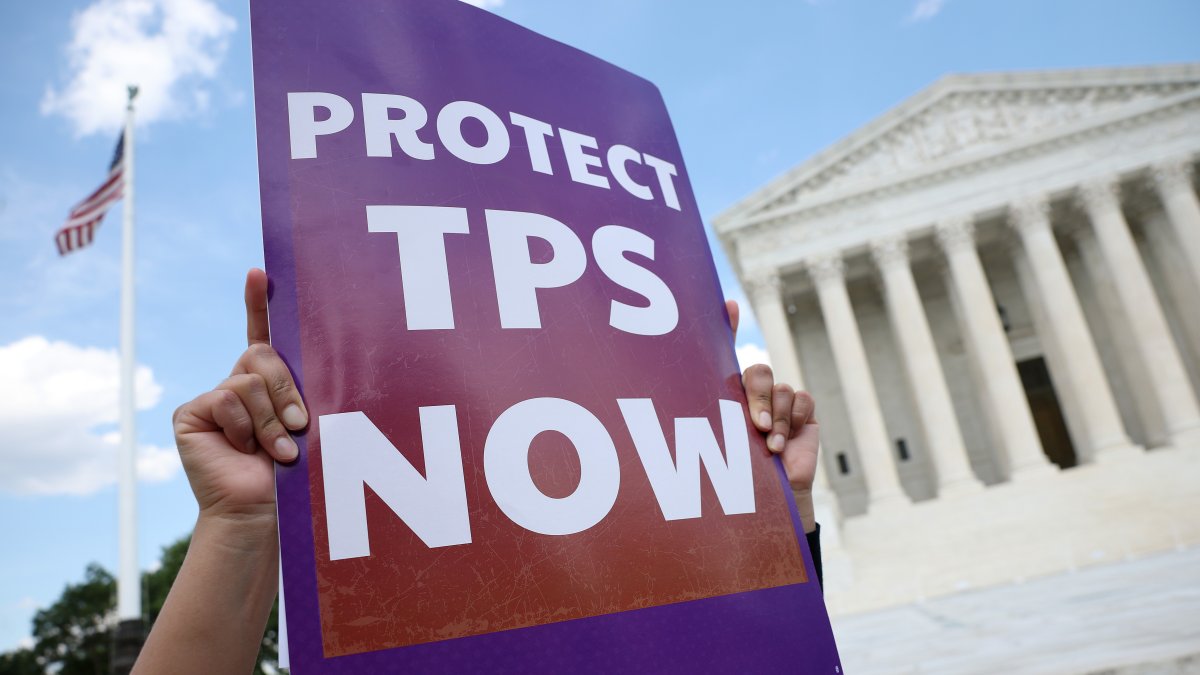
WASHINGTON, DC – JUNE 25: An immigration activist holds a sign during a rally against the U.S. Supreme Court’s ruling on temporary protective status outside of the Supreme Court on June 25, 2026 in Washington, DC. The Supreme Court ruled 6-3 in Mullin v. Doe, clearing the way for the Trump administration to end removal protections for Syrian and Haitian nationals. (Photo by Kevin Dietsch/Getty Images)
Many in Boston balk at that framing.
“They’re telling Haitians to go back, that it’s safe enough to go back to Haiti, but then telling Americans we shouldn’t go there,” said Sekhabat, referring to a travel warning from the State Department.
“As soon as conditions in Haiti improve, then that would be an appropriate reason to end TPS, but that time hasn’t arrived yet,” said Kain.
The ruling could also hold impacts beyond the Haitian and Syrian communities. More than a million people from a dozen other countries also face the potential of losing their TPS status.