

What’s An African Guinea Fowl Doing In Rogers Park?
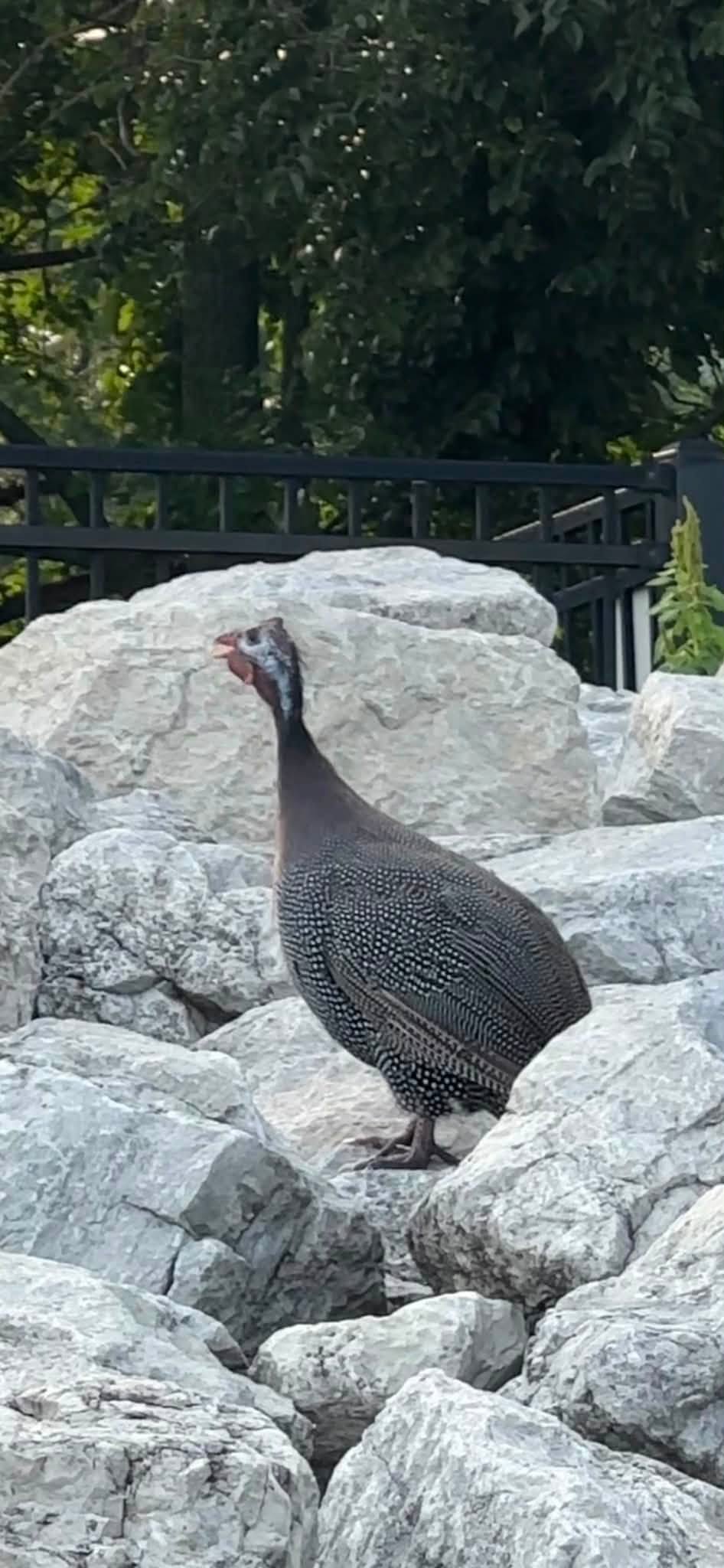
ROGERS PARK — Astaire Woldemichael-Smith was walking along Howard Beach with friends and their children Tuesday night when they heard a “very loud, unfamiliar” bird clucking.
They were a good distance away, but the noise was enough to grab their attention.
The group walked toward the sound, initially thinking they might discover a wild turkey. Woldemichael-Smith had seen those before in Michigan, but once the group got closer, she knew this bird was something else.
They started taking photos and videos. Then they used an iPhone feature that helps identify animals in photos.
The result: “helmeted guinea fowl.”
“That led to more confusion because how was this bird here?” Woldemichael-Smith said. “[We] had never heard of them.”
She posted the photos and video to a Rogers Park neighborhood Facebook group, asking if anyone knew what they were looking at.
Turns out, many people did. And the report made its way to the Chicago Bird Alliance and the Chicago Bird Collision Monitors, which has a group of around 400 volunteers who rescue birds that are injured or misplaced.
After viewing the reported sightings, bird experts agreed it is a guinea fowl.
Guinea fowl are native to Africa, but they are sometimes domesticated and raised as poultry in the U.S., usually in small backyard flocks.
While the bird may have appeared wildly out of place hopping around the large rocks near the Rogers Park lakefront, it certainly didn’t make any epic voyage from overseas.
It’s “definitely not a rare bird that flew in from Africa,” said Annette Prince, director of the Chicago Bird Collision Monitors and member of the Chicago Bird Alliance.
“It is likely a domestic stock that somebody had — either in a market being sold or someone had it along with their other poultry in their yard,” Prince said.
Guinea fowl are commonly kept by poultry owners as a “guard bird” for their chicken stock, Prince said, because they’re large birds that are aggressive and protective.
And they aren’t easy to catch when they get loose.
The Chicago Bird Collision Monitors received two reports of the Rogers Park guinea fowl, with the first coming Tuesday night. The group sent volunteers to the lakefront Wednesday to try to look for the bird, but they could not locate it.
It’s possible the bird has been hiding in trees or on rooftops to avoid any predators like coyotes or foxes, Prince said. Coyotes and foxes have both been spotted in Rogers Park in years past.
Guinea fowl can fly — not far, but just far enough to be out of reach. Prince likened their flight ability to that of a chicken or peacock; they can fly into trees, onto rooftops or over fences, she said. They also run quickly.
“They’re fast, they’re clever, they’re very strong birds,” Prince said. “They look like a basic chicken, but they’re way tougher and stronger than a chicken.”
If someone spots the bird, Prince said they should call the Chicago Bird Collision Monitors at (773) 988-1867 so volunteers can try to locate and rescue it. The group has a large number of volunteers in Rogers Park, she said.
If someone encounters the bird and is comfortable doing so, Prince recommends trying to guide it into an enclosed area like a garage or alcove rather than chase it down.
“You certainly won’t outrun it,” she said.
She suggested placing food or seeds out to keep it occupied until someone can arrive to rescue it.
Once the bird is captured, the Bird Collision Monitors would try to determine through community outreach whether anyone owns it. After some time, if no owner comes forward, the group would reach out to farmers who could potentially take the bird.
Reports of guinea fowl sightings aren’t especially common, but bird groups have seen them before in Chicago, Prince said.
Guinea fowl have increasingly been kept alongside backyard poultry and some people underestimate what they’re getting into when they buy a young bird, Prince said.
“A lot of people buy chickens and some other birds when they’re small because they’re kind of cute when they’re babies,” she said. “When they get older, they get louder, if they’re roosters, and guinea fowl are loud also. They’re a very loud bird.”
She hopes people who own unusual birds understand the responsibilities that come with caring for them, and that they find a new home for them rather than releasing them if they can no longer keep them.
“These birds are not part of Illinois’ native wildlife and living on their own independently can be a struggle for them,” Prince said.
______________________________________________________________________
Support Local News!
Subscribe to Block Club Chicago, an independent, 501(c)(3), journalist-run newsroom. Every dime we make funds reporting from Chicago’s neighborhoods. Already subscribe? Click here to gift a subscription, or you can support Block Club with a tax-deductible donation.
Listen to the Block Club Chicago podcast:
Credit: Source link