

What will East Africa do with its new stadiums after AFCON 2027?
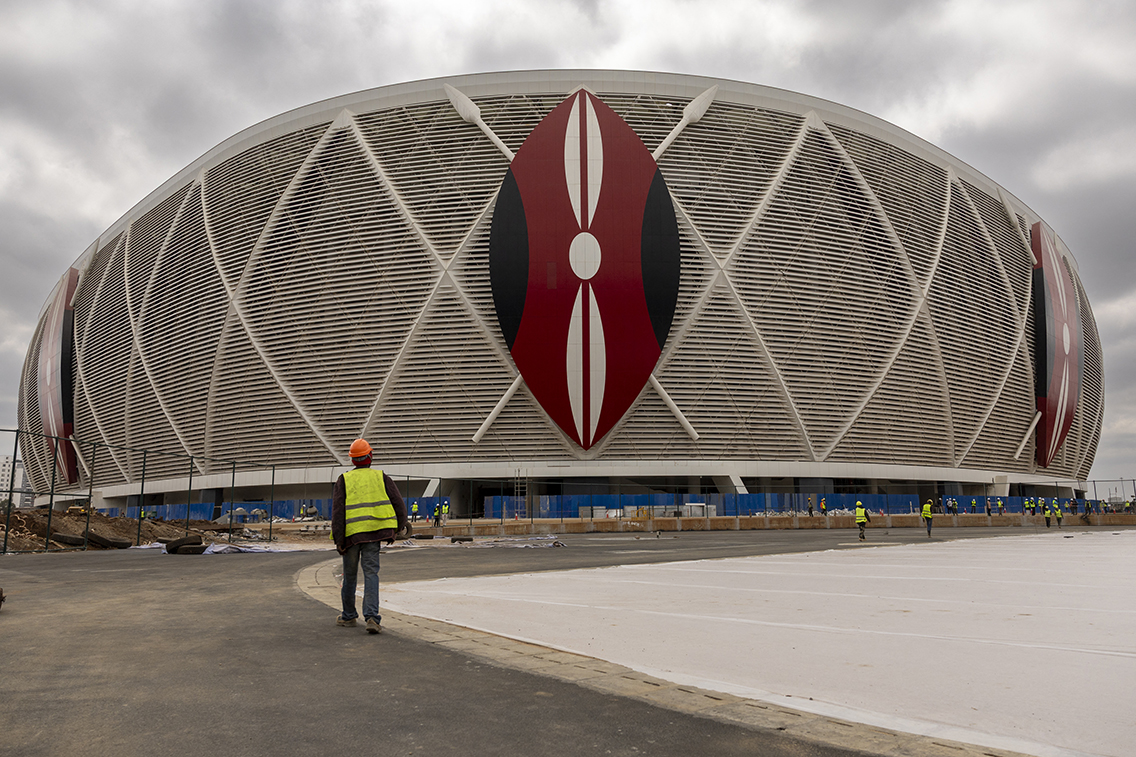
On January 5th 2027, multiple UEFA Champions League winners Bayern Munich and Ajax will play at Kenya’s new national stadium in Nairobi.
Two and a half weeks later, the $345mn stadium will host an HSBC SVNS rugby
tournament. The matches will offer a peek into whether Kenya’s biggest sports infrastructure investment in years can successfully host international fixtures.
Built by a Chinese firm in the west of Nairobi’s central business district, the 60,000-seat Raila Odinga International Stadium is one of the main venues for the next edition of the Africa Cup of Nations. Scheduled for 19th June to 17 July 2027, the edition will carry the unresolved controversy of the 2025 edition, when Morocco was awarded the title after appealing a 1-0 match-time loss to Senegal.
It will also carry the weight of history and transition. Scheduled for its 70th anniversary, AFCON 2027 will be the first edition in five decades to be held in East and Central Africa. It’ll also be the last to be held in an odd-numbered year, as it will be switching to a four-year cycle after the 2028 edition.
Staging grounds
Kenya’s co-hosts, Uganda and Tanzania, are also building new stadiums for the tournament. Uganda is building at least two new 20,000-seat stadiums, and expanding its Mandela National Stadium to 45,000 seats. Its cumulative investment in new infrastructure is over $300mn.
Tanzania is building the new Samia Suluhu Stadium in Arusha, and will also host matches in stadiums in Dar es Salaam and Zanzibar. Like its neighbours, Tanzania is also investing heavily in renovating its existing stadiums, and other supporting infrastructure to host the continental tournament.
The investments coincide with tight fiscal conditions across the region, as governments work to meet debt obligations without piling on too much new debt. While revenue projections are still unclear, it is likely that East Africa’s governments will earn less than they are spending to host the month-long tournament.

Kenya has already experimented with innovative financing for its stadium infrastructure. The new stadium was financed through a $345mn bond listed on the Nairobi Securities Exchange with a 15-year tenor to avoid piling more debt onto an already constrained national budget. The private sector set-up creates motivation to plan for a post-AFCON future, but historical turnout figures for domestic matches suggest that filling the stadiums consistently will be an impossible task.

“The pattern across the continent is consistent: a government builds one or more stadiums for a tournament, the tournament ends, and the stadiums become a public liability,” Paulo J. Cruz, CEO of African Collaborations Group, said in a recent interview with the Daily Monitor, Uganda’s largest daily newspaper.
The ACB is pushing East African countries to draw up commercial plans ahead of the continental tournament, with Cruz advocating for integrated, mixed-use development plans. The plans would combine different types of assets, including retail, residential and commercial spaces to boost revenue flows.
“When people are not coming to see a game of rugby or football, they still come to see a concert, or to attend a wedding, or to see a fair. And when they are not coming for that, they still come because their gym is here, their cinema is here, the school of their son is here, or just their favourite restaurant is here,” Nicolas Pompigne-Mognard, ACB’s founder, said in an interview with SABS Channel Africa.
The idea is to view the stadiums as just the core of a planned sports and entertainment ecosystem, as opposed to standalone projects. This would take more investment, which governments might be hesitant to fund after the capital-intensive pre-tournament phase. Models such as Kenya’s listed infrastructure bond could provide a blueprint for public-private financing structures.
As part of AFCON plans, East Africa’s governments are also building new transport links to ease movement. Kenya is building a dedicated railway connection and rehabilitating an existing 13.3km line between the Nairobi Central Station and the new stadium. Uganda and Tanzania are also revamping their public transport lines to boost connectivity, but cross-border travel in the region is still a hassle.
High airfares are a particular sticking point, Uganda’s state minister for tourism Susan Nsambu said in a recent meeting with regional tour operators in Mombasa, Kenya. But the region, which draws significant revenue from tourism, is optimistic it is prepared enough not just to host the matches and spectators, but to draw lasting value.
AFCON will provide a solid test case for whether East Africa can host a single tournament. What happens after will decide whether the stadiums remain assets or become white elephants.
Crédito: Link de origem