

What Went Wrong for Brazil at the 2026 World Cup?
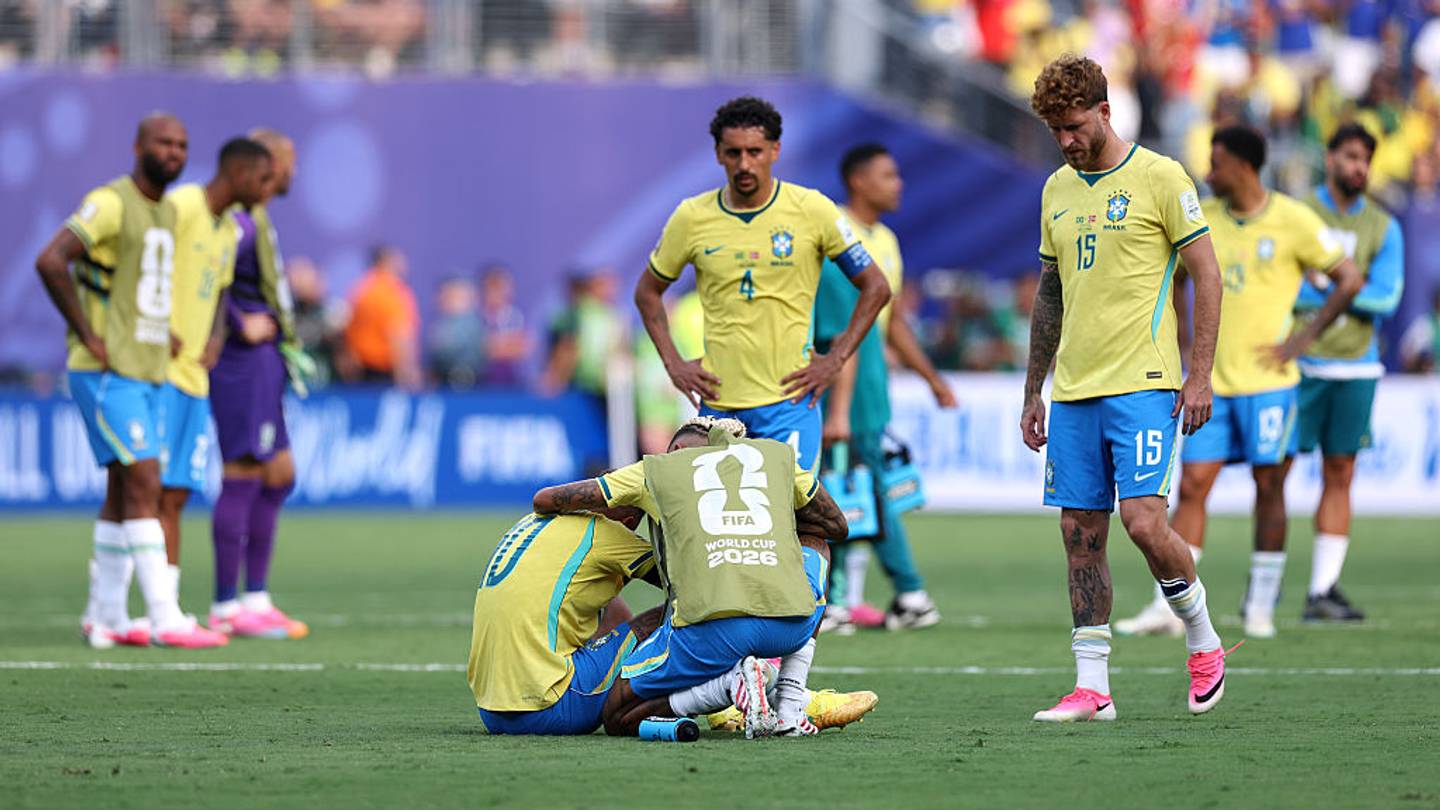
For the first time in 36 years, Brazil won’t play in the quarterfinals of the World Cup.
Even during blunder-ridden campaigns since its most recent triumph in 2002, the Seleção has always stood among the tournament’s final eight. But, following an abject defeat to dark horse Norway on Sunday, it has suffered its earliest exit for nearly four decades.
Brazil sauntered through the group stage in North America, but it remained impossible to gauge its true level. The opening draw with Morocco was an intriguing tactical battle which deservedly finished level, and was followed by convincing 3–0 wins over Haiti and Scotland in which the South Americans were never asked to escape second gear.
However, the round of 32 victory over Japan was an indicator that troubled waters lay ahead. A much-improved second half yielded Brazil’s 2–1 comeback victory, but Carlo Ancelotti’s men had been outsmarted and outfought during a chastening first half.
It was therefore little surprise to see Norway cause them major issues and a spurned penalty kick early in proceedings only added to the inevitable sense of dread. Then Erling Haaland happened, as he so often does, and Brazil, rather pitifully, had absolutely zero response.
A record-extending sixth world title wasn’t expected this summer, but a deep run masterminded by one of the all-time coaching greats was the bare minimum. Once again, Brazil has fallen agonizingly short.
So, where did it all go wrong for the Seleção?
An Unspectacular Roster
When glancing back to Brazil’s last World Cup-winning roster in 2002, which contained the likes of Ronaldo, Ronaldinho, Rivaldo, Cafu and Roberto Carlos, it’s immediately evident just how far Brazil’s talent pool has diminished. After all, how many of Ancelotti’s current crop will be heralded among the all-time greats in the coming years?
Quality is an issue for the Seleção across key areas. The fullback positions lack swagger and assurance, the aging midfield is too easily overrun and the offensive line lacks depth and a goalscoring No. 9. While Brazil’s roster is still the envy of most nations, it was never likely to be a title-winning squad.
The midfield has been a particular issue, lacking the balance and legs to cope with high-intensity opponents. Casemiro looked every bit a waning 34-year-old despite a strong club campaign, while Bruno Guimarães’s lack of mobility was regularly punished, even if he was a strong attacking force.
Outside of Vinícius Júnior and the injured Raphinha, the forward unit lacked world-class performers, evidenced by the need to rely on 19-year-old Bournemouth winger Rayan so heavily when Raphinha was missing. Matheus Cunha impressed in spurts but is hardly an orthodox center forward, while the likes of Endrick, Neymar and Luiz Henrique had little influence from the bench in Brazil’s time of need.
Ultimately, Ancelotti didn’t have the weapons to make a march for the crown.
The Neymar Debacle

Ancelotti did still make some errors with his roster selection, however, chiefly the inclusion of an injured, 34-year-old Neymar. The veteran’s availability dominated much of the discourse around Brazil and he was ultimately only fit enough to play 37 minutes at the tournament, during which time his only contribution was a consolation penalty against Norway.
Despite knowing Neymar would struggle to make a sizeable impact this summer because of his fitness issues, Ancelotti persisted with the Santos forward, all while leaving some promising options at home.
Having witnessed how things panned out in North America, Chelsea striker João Pedro must be particularly frustrated after being snubbed off the back of a 20-goal campaign, while even somebody like Richarlison could have provided some necessary chaos as a substitute.
In the end, the Neymar decision backfired, but Ancelotti was also undermined by a raft of injuries to key players, both before and during the tournament.
Untimely Injuries

Neymar was not the only player battling fitness issues in North America. It was impossible to predict that Barcelona ace Raphinha would suffer a hamstring injury during Brazil’s second match, forcing him to sit out the next three games. The electric 29-year-old has a strong record with the national team and has been in astonishing form over the past two seasons, with his shoes proving impossible to fill.
Lucas Paquetá was another troubled by a hamstring complaint against Japan, missing the Norway fixture, while first-choice right back Wesley was replaced on the eve of the tournament due to a thigh problem. Brazil had no natural alternative to the Roma defender and instead called up Manchester United-bound midfielder Éderson, while naming 34-year-old Danilo Luiz at right back. The latter struggled throughout the tournament.
Of course, there were other absentees before a ball was even kicked. The injury-prone Éder Militão was missing in the backline and could have been an alternative at right back, while Brazil’s offensive quality was depleted by the absence of vital wingers Rodrygo and Estêvão, both of whom might have made a massive impact if available.
Wasted Chances

Ancelotti’s typically pragmatic approach was not without merit. Brazil played some stylish soccer at the tournament, especially during its group stage wins and in the second half against Japan, but it often lacked the necessary cutting edge in key moments.
That was underscored by Brazil’s profligacy against Norway, an early penalty miss followed by several squandered opportunities—most notably Endrick’s missed chance when directly through on goal. After producing 2.61 expected goals, 33 touches in the Norwegian box and five big chances, the Seleção somehow failed to score from open play.
The issue wasn’t limited to the Norway clash, with Brazil underperforming its expected goals total by two across its five matches. 13 big chances were missed, too, while a shot conversion rate of 13.5% is lower than other behemoths such as France, England, Argentina and Portugal.
In the end, Brazil’s inefficiency proved costly.
READ THE LATEST WORLD CUP NEWS, ANALYSIS AND INSIGHT FROM SI FC
 Add us as a preferred source on Google