

What Rubio Actually Got From Colombia, Ecuador and Peru: Deals, a Terror Listing and a Decoration
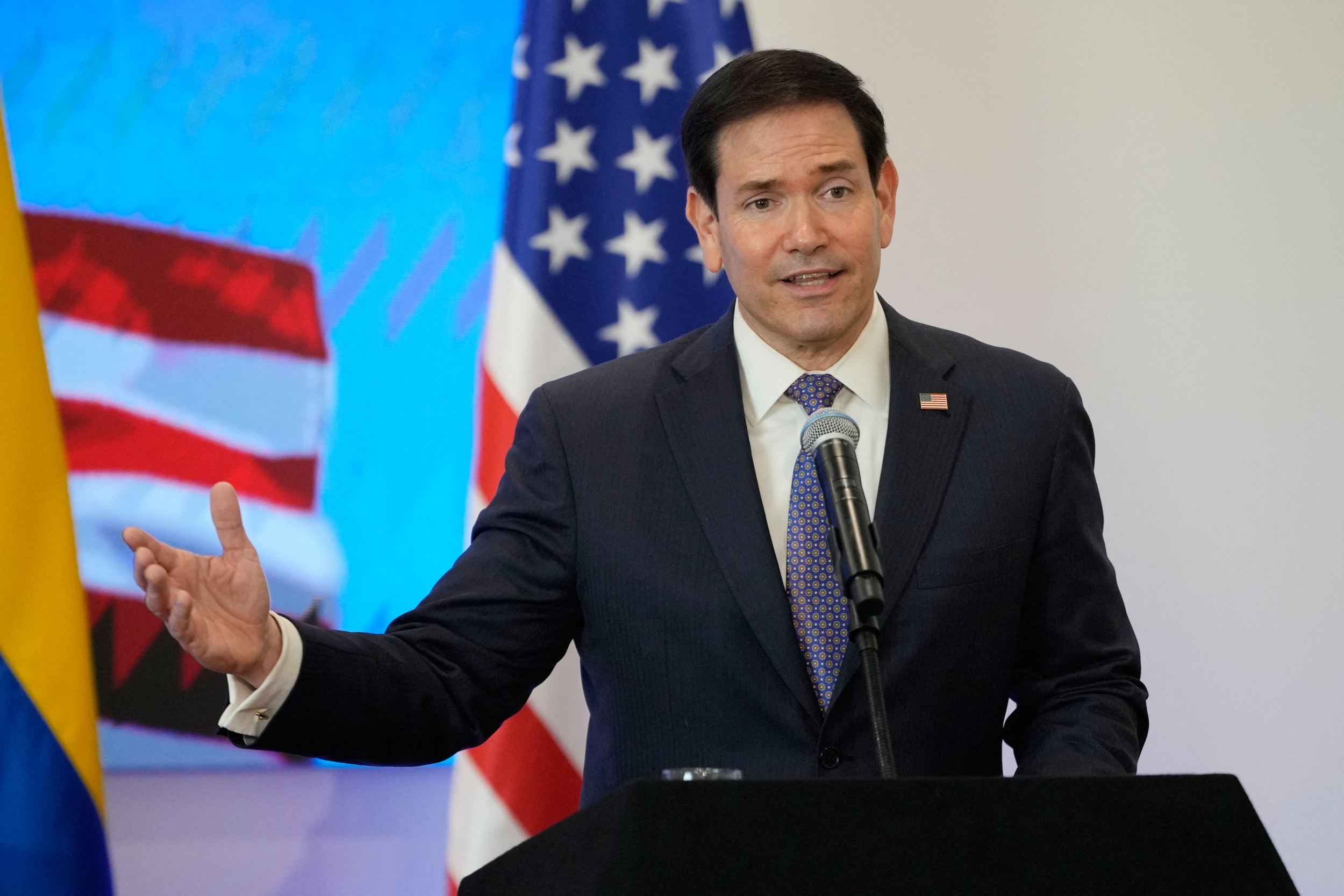
Photo by Fernando Vergara / POOL / AFP via Getty Images
The Briefing
- Secretary of State Marco Rubio spent September 8-10 crisscrossing Bogotá’s Caribbean coast, Quito and Lima, locking in security pacts with three newly installed, Trump-aligned governments and pushing each further into Washington’s “Shield of the Americas” anti-cartel bloc.
- Bogotá put pen to a mining-and-nuclear-energy pact and banked a pledged $1 billion U.S. security package; Quito picked up a “foreign terrorist organization” designation against a local trafficking gang plus an unusual promise of continued lethal boat strikes; Lima agreed to formally sign onto the bloc.
- The trip doubled as a receipt for a hemispheric realignment: all three stops are now led by conservative presidents who took office within the last two months, while critics at home and pushback from China’s embassy in Lima complicate the picture.
Marco Rubio closed out a three-nation sprint through South America on Thursday, using stops in Bogotá’s Caribbean coast, Quito and Lima to cement Washington’s bet on a new generation of right-leaning presidents. Across the three Andean nations, the Secretary of State produced signed paperwork on minerals, nuclear energy and counternarcotics, along with a steady stream of blunt talk about drug boats and “narcoterrorism” that has defined the Trump administration’s approach to the region, according to the State Department’s own narrative of the trip.
Colombia: a $1 billion pledge and a fresh start after Petro
Rubio’s first stop, on September 8, brought him to Barranquilla for his introductory meeting with President Abelardo De La Espriella, who took office August 7 and has openly courted closer ties with Washington after years of friction under his predecessor, Gustavo Petro. The two governments used the occasion to sign a pair of memorandums of understanding: one establishing a framework for securing supply chains in critical minerals and rare earths — plus a second memorandum covering civil nuclear cooperation, per the official State Department transcript of the signing ceremony. The minerals pact effectively pulls Colombia into a wider U.S. push to build supply chains that don’t run through China.

Photo by Fernando Vergara / POOL / AFP via Getty Images
Washington also pledged roughly $1 billion in security assistance, aimed at upgrading Colombia’s anti-drone systems, cyber defenses and special-forces capability, and De La Espriella said his government wants equipment, outside expertise and shared intelligence — not American soldiers deployed against cartels directly, local10.com reported from Barranquilla. The Colombian leader confirmed his country has formally joined the “Shield of the Americas” coalition and that Medellín will host a regional operations center, vowing to give traffickers “prison or a grave.”
Rubio, for his part, left the door open to an eventual U.S. or joint military base in Colombia, though he stressed no decision has been made and that any base would require a formal invitation from Bogotá. Recovery aid was also formally on the agenda for the magnitude-7.4 quake that struck western Colombia on August 10 — a disaster with a toll that climbed for weeks, reaching 329 confirmed dead and roughly 300,000 people affected in a late-August government tally.
Ecuador: a terrorist designation, a decoration and a warning about boats
From Barranquilla, Rubio flew to Quito on September 9 for talks with President Daniel Noboa, whom U.S. officials now describe as the region’s most enthusiastic partner on counternarcotics. Rubio told reporters the administration has shifted toward joint operations that respect partner countries’ own laws in their territorial waters, though he made clear lethal force remains on the table, saying Washington would “still blow up ships if need be.” He described elite Ecuadorian and American units as coordinating constantly, calling the level of cooperation unprecedented, and announced a new foreign terrorist organization designation for Los Tiguerones, a domestic trafficking ring, local10.com reported. He also said he plans to seek an added $45 million from lawmakers to sustain the broader campaign against such groups, the same report noted.

Photo by Rodrigo BUENDIA / AFP via Getty Images
Foreign Minister Roberto Kury described Ecuador as “a loyal ally, an active ally and a decisive ally” to building a safer hemisphere, while Noboa presented Rubio with Ecuador’s National Order of Merit, in the degree of Grand Cross, at a ceremony inside the Carondelet presidential palace, citing his role in strengthening bilateral ties, according to the official ceremony transcript. Wire accounts of the honor’s exact rank within Ecuador’s decoration system differ; see the fact-check memo below for details.
Peru: a new chancellor, a crime wave and a tilt toward Washington

Photo by ERNESTO BENAVIDES / AFP via Getty Images
Rubio’s final stop, on September 10, put him in Lima for back-to-back meetings with Foreign Minister Carlos Espá and President Keiko Fujimori, who took office July 28 and used the visit to announce that Peru will formally join the Shield of the Americas coalition, giving her government faster access to shared intelligence and coordinated support against organized crime. At a joint news conference, Fujimori said her own history fighting the Shining Path insurgency shaped her urgency, adding that “it is necessary to unite our efforts with other countries.”
The backdrop is a steep rise in extortion complaints nationwide: officials logged just 2,421 cases back in 2019, a figure that had rocketed to 26,734 by last year, according to official statistics. That surge is part of why authorities in late August put the capital and the port of Callao under emergency footing for 60 days, alongside parallel restrictions inside five prisons meant to curb escapes, the Associated Press reported. Officials also discussed U.S. support for Peru’s preparations for a possible El Niño weather emergency and ongoing trade friction over new American tariffs, according to a separate account of the bilateral summit. Rubio’s arrival also drew street protests in Lima, and it landed against a backdrop of pushback from Beijing: the Chinese embassy in Peru argued this week that the region is “nobody’s backyard,” a reminder that China remains Peru’s largest trading partner even as Espá has signaled he wants to deepen security ties with Washington.
A hemisphere tilting right, and an unresolved argument over boat strikes
Rubio’s swing through the Andes was less a one-off diplomatic mission than a lap of honor for a broader realignment. Colombia, Ecuador and Peru are now all led by conservative presidents who took office within roughly the past six weeks and have volunteered to align with Trump’s counter-cartel agenda — a realignment the White House has likewise cultivated with Honduras’s president-elect, Nasry Asfura, with Bolivia’s newly elected Rodrigo Paz, and has enjoyed for some time now with Argentina’s president, Javier Milei, Al Jazeera noted in its curtain-raiser on the trip. The “Shield of the Americas” bloc that Colombia joined in August and that Peru pledged to join this week was itself launched at a March 7 gathering the president hosted at his own Doral, Florida golf resort, drawing in roughly a dozen governments from across the hemisphere.
Underpinning all of it is a campaign of lethal U.S. strikes on suspected drug-trafficking vessels in the Caribbean and Pacific, responsible for at least 227 deaths over the past year — a toll the administration frames as a necessary escalation and that critics call illegal and largely ineffective at slowing the drug trade, NPR reported ahead of Rubio’s departure. None of that controversy surfaced publicly during the tour itself, a sign of how little daylight now exists between Washington and its newest allies in Bogotá, Quito and Lima — even as the harder questions, including whether a U.S. base ever materializes in Colombia and whether Congress approves the $45 million Rubio requested for Ecuador, remain unsettled.
© {{Year}} Latin Times. All rights reserved. Do not reproduce without permission.