

What female baboons want in a mate has little to do with food
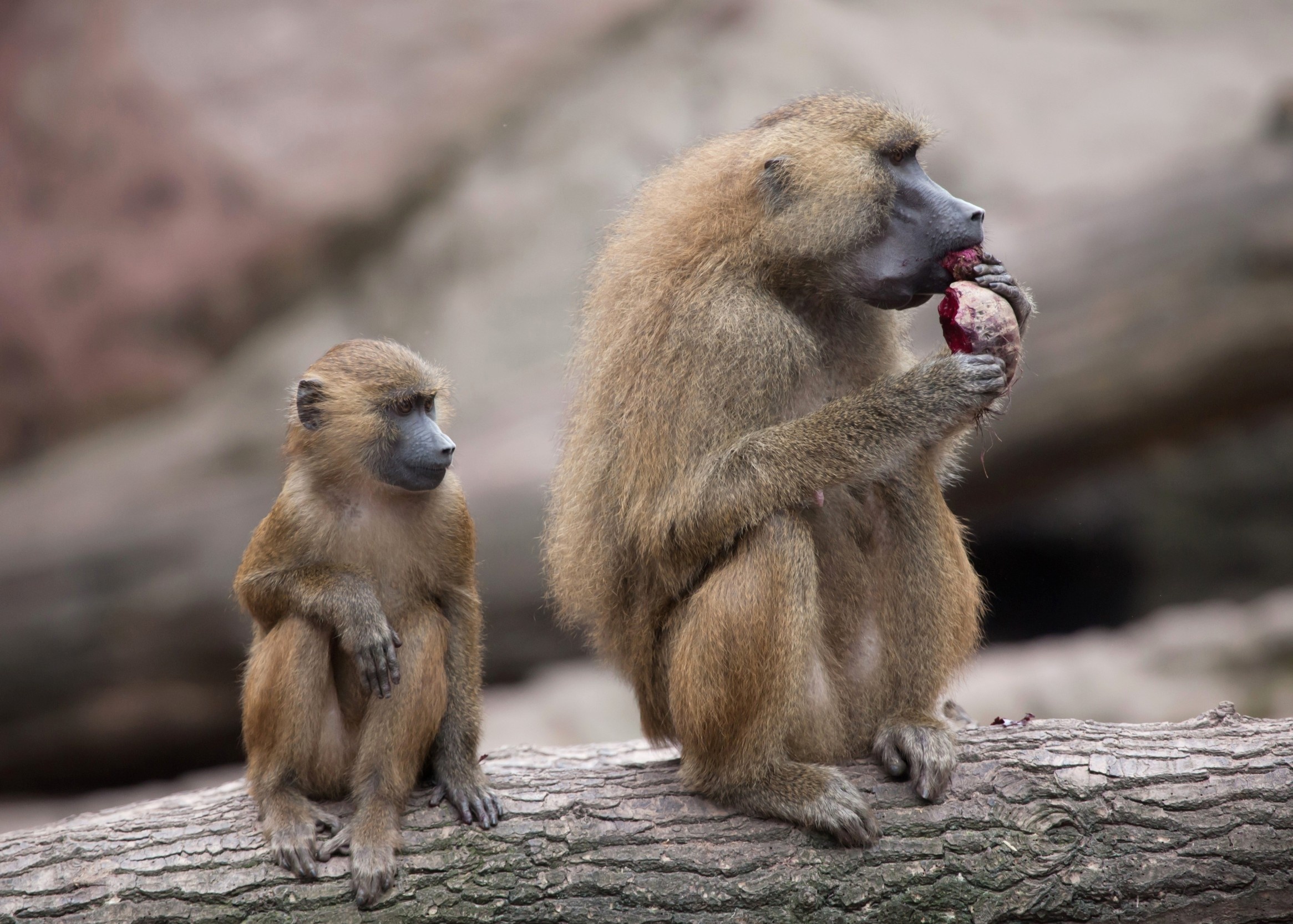
Female Guinea baboons don’t prefer males who are better hunters or meat sharers, revealing surprising clues about mate choice.
Sharing a valuable food can do more than satisfy hunger.
In many human hunter-gatherer communities, a successful hunter can support close family members while also showing the wider group that he is a capable provider.
Some animals also offer food during courtship, raising questions about the evolutionary roots of human food sharing.
An investigation that followed wild Guinea baboons for nine years now suggests that males do not gain more female partners, or keep them longer, simply by catching and passing along meat.
Why Guinea baboons matter
Guinea baboons live in a society with several social layers. At the base is a unit containing one primary male, one or more females, and their young, while several units join into larger parties and gangs.
Females can move between groups and choose which male unit to join. Once a female joins, her primary male is usually her main social partner and nearly her only mating partner.
Earlier genetic work found that primary males fathered 91.7% of the young born within their units.
The number of females linked to a male, along with the time they stay, can therefore indicate reproductive success, or how many young he may father, although these measures do not count every offspring directly.
Nine years in Senegal
The work came from the German Primate Center (DPZ). Observations took place at the Centre de Recherche de Primatologie (CRP) Simenti in Senegal from April 2014 through June 2023.
Across those nine years, the team followed 465 individually recognized baboons and recorded 109 events involving meat.
It documented 320 transfers, meaning another baboon gained access to part or all of a carcass, not necessarily through deliberate giving.
Guinea baboons usually catch birds or small mammals when an opportunity appears rather than organizing group hunts.
The team tested whether males that caught or possessed meat had more females, and whether females stayed longer with males that acquired or transferred meat more often.
Females found other sources
The researchers could identify the original catcher in 64 events. Males made 57 of those captures, while females made seven, or 11%, marking the first recorded cases of female prey capture in this species.
Females received meat in 140 of the 320 recorded transfers. Their primary male remained the largest source, accounting for 83 transfers, or 59%, but 57 transfers came through other routes.
Of those outside transfers, 43 came from other males. Another 14 came through females whose meat had originated beyond the recipient’s unit, showing that access could move through several social paths.
“Despite what we predicted, we found no evidence that females preferred to join or remain longer in the units of males who acquired or shared meat more often,” said William J. O’Hearn, lead author of the study from the Georg August University Göttingen.
“Instead, females seem to get a substantial portion of their meat from sources other than their unit male, including simply catching the prey themselves.”
Meat did not predict choice
For the first analysis, the team examined 235 yearly records from 57 males across eight parties.
Some males caught prey themselves, while others obtained carcasses from another baboon, allowing the researchers to separate capture skill from general access to meat.
Neither measure predicted the number of females in a male’s unit.
Males that caught prey or possessed carcasses more often did not have more female partners than males with fewer recorded meat opportunities.
Meat sharing did not retain females
A second analysis covered 236 female and male pairings involving 99 females and 54 males.
Females did not stay longer with males that acquired more carcasses or transferred meat to them more frequently.
These results show no reliable link in the recorded population, but they do not prove that meat can never matter.
A small effect, or one limited to certain conditions, may have been difficult to detect because meat eating happened so rarely.
Age showed a stronger pattern
Male age showed the clearest pattern in the results.
Males in the early and middle prime of adulthood tended to have more females than younger males, later prime males, or old males.
Females also remained longer with males in their prime years.
The analysis does not show whether females responded to physical condition, social experience, safety, or another trait that changes with age.
Why meat may matter less
The researchers recorded about 1.12 meat events per month, far below the weekly hunting reported for many human hunter-gatherer communities.
An occasional carcass may provide useful food without shaping a female’s choice of a long-term partner.
Females also had more ways to obtain meat than earlier observations had suggested.
When several routes lead to the same food, a male’s ability to provide it may offer less useful information about his overall quality.
Other traits may influence choice
“Guinea baboons provide a particularly interesting evolutionary comparison to humans where similar ecological conditions and social systems have resulted in differences in the importance of meat sharing to female partner choice,” William J. O’Hearn said.
“Where females have many options for sourcing meat, it need not be a factor when choosing a mate.”
Other traits may carry more weight, including a male’s care for young, his tolerance toward females, his response to threats, or the females already living in his unit.
These ideas remain possible explanations rather than conclusions from the current results.
Limitations of the study
The field team recorded meat events when observers happened to witness them, so the dataset cannot include every carcass obtained by every baboon.
The original catcher was known in only 64 of the 109 events, which limited the evidence about capture skill.
Some female and male relationships had already begun when data collection started. Their true starting dates were unknown, so the researchers treated the recorded lengths as minimum estimates.
The work also focused on one wild population and used partner number and relationship length as signs of reproductive output.
It did not directly count every birth or change meat access experimentally, so it cannot reveal exactly why females made their choices.
Ultimately, the research shows that behaviors which look similar across species do not always serve the same purpose.
In Guinea baboons, age may matter more for mate choice than meat sharing. Care, tolerance, safety, and social relationships may also shape a female’s decision.
For these baboons, it seems the quality of a partner matters more than what he brings to the table.
The study is published in the American Journal of Biological Anthropology.
—–
Like what you read? Subscribe to our newsletter for engaging articles, exclusive content, and the latest updates.
Check us out on EarthSnap, a free app brought to you by Eric Ralls and Earth.com.
—–
Credit: Source link