

What can save Mali from collapse?
The security situation in Mali is becoming critical in the wake of a large-scale, coordinated series of attacks across multiple cities on April 25. The attacks were primarily the work of the jihadist group Jama’at Nusrat al-Islam wal-Muslimin (JNIM), an al-Qaeda affiliate led by Iyad Ag Ghali, a defector from the Tuareg rebellion. JNIM, which was formed in 2017 out of several al-Qaeda–aligned groups, has been fighting the Malian state for almost a decade, and the junta since it came to power in 2020. Before the latest offensive, it already controlled or contested large swaths of central and northern Mali including Gao, Mopti, and Timbuktu.
The offensive partially decapitated the ruling junta by killing its defense minister, the powerful General Sadio Camara, who had initiated Mali’s strategic rapprochement with Russia. It also seriously wounded the junta’s head of state security, General Modibo Koné.
Despite historically being rivals, JNIM and the Azawad Liberation Front (FLA), a Tuareg separatist group, sealed an operational alliance to retake the northern city of Kidal, which had until then been controlled by the national army with the support of Russian mercenaries. The Russian expeditionary force, Africa Corps, had to negotiate its withdrawal from Kidal on April 27, leaving behind sophisticated equipment for the insurgents.
Kidal is not just a town. It holds great strategic and geopolitical importance for Mali. It is a strategic chokepoint, as it is located close to both Algeria and Niger. It is also a hub for illicit trafficking and provides fertile ground for armed groups. Controlling Kidal means holding a military advantage in the north. Kidal also holds immense symbolic significance: It is a Tuareg stronghold and lies at the heart of the FLA’s separatist territorial claims.
Under these circumstances, the situation is becoming untenable for the junta. Several positions have been abandoned, garrisons are surrounded, and on April 28, JNIM announced a blockade of Bamako. The specter of a total collapse of a country spanning over a million square kilometers is looming, an outcome we anticipated last year.
This rapid deterioration of the country’s security situation stems from accumulated structural failures. The coups d’état of 2020 and 2021 disrupted the military’s chain of command. The arrival of Russian mercenaries exacerbated abuses against civilians, fueling recruitment by armed insurgent groups. Internal repression under the junta has undermined national unity, while tensions within the military have grown, particularly regarding the pay conditions of foreign forces. Meanwhile, armed groups are consolidating their territorial control, administering certain areas and developing parallel economies based on various forms of trafficking. Against this backdrop, they faced demoralized Malian forces during the April 25 offensive.
The junta has also made a series of strategic missteps. Soon after taking power in 2023, it called for the end of the United Nations mission in the country, which fully withdrew in December of that year. In January 2024, it broke the Algiers Agreement, a peace deal with Tuareg separatist groups that had been brokered in 2015. And it allowed itself to become diplomatically isolated, withdrawing from the Economic Community of West African States in January 2025.
Furthermore, the junta’s diplomatic missteps have exacerbated a dispute with neighboring Algeria. Earlier this month, the junta reversed Mali’s stance on the dispute over Western Sahara to support Morocco’s position. Algeria criticized Mali’s shifting alliances and diplomatic exchanges between Algeria and Mali have become more hostile, with recalls of ambassadors and public statements signaling mistrust. Tensions along the long Mali–Algeria border intensified, with the junta accusing Algeria of shooting down one of Mali’s surveillance drones.
As Algeria shares a border with Mali stretching over 1,300 kilometers, it has a major stake in the insurgent conflict. In the past week, the Algerian government has strongly condemned terrorist acts while advocating for an inclusive dialogue that respects Mali’s territorial integrity. This stance underscores its desire to play a stabilizing role while safeguarding its security interests, preventing both the rise of a jihadist state and a partition of Mali that could encourage Tuareg separatism. The insurgents’ major blows against the Malian junta may strengthen Algeria’s regional influence, which had been weakened since 2023 amid a breakdown in relations with Bamako, which has long accused Algiers of supporting Tuareg rebel groups. Algeria has reemerged as a key mediator, even reportedly facilitating the withdrawal of foreign paramilitaries from Kidal through its local connections.
As the JNIM and FLA offensives continue, several troubling potential scenarios are emerging. Prolonged resistance by the junta from Bamako could worsen the situation. A takeover by the jihadists would pave the way for a major tragedy, given that their ideological agenda is rejected by a large portion of the population and the region.
However, a political solution remains possible. Imam Mahmoud Dicko and his Coalition of Forces for the Republic have called for an inclusive dialogue—though with the junta stepping aside. Dicko is widely regarded as one of the most prominent opponents of General Assimi Goïta’s junta, and he has been in exile in Algiers since December 2023. His popularity has led the junta to fear his return to Bamako, and it has accused him of taking part in “subversive activities” from exile, which could pave the way for his arrest if he were to arrive in the country.
Respected by many stakeholders, including certain armed groups, he now represents one of the few credible alternatives to a spiral of widespread violence. While the junta prioritizes a more forceful, military-based approach, Dicko advocates dialogue with jihadist groups. He also opposes the junta’s constitutional revision of June 2023 and its repeated postponements of elections.
In this volatile context, the consequences of Mali’s future will extend far beyond its borders. An outcome that leads to widespread instability and violence in Mali will pose a direct threat to all of West Africa.
Hussein Ba is a Senegalese columnist who frequently covers security and political issues in Mali.
Rama Yade is the senior director of the Atlantic Council’s Africa Center.

The Africa Center works to promote dynamic geopolitical partnerships with African states and to redirect US and European policy priorities toward strengthening security and bolstering economic growth and prosperity on the continent.
Further reading
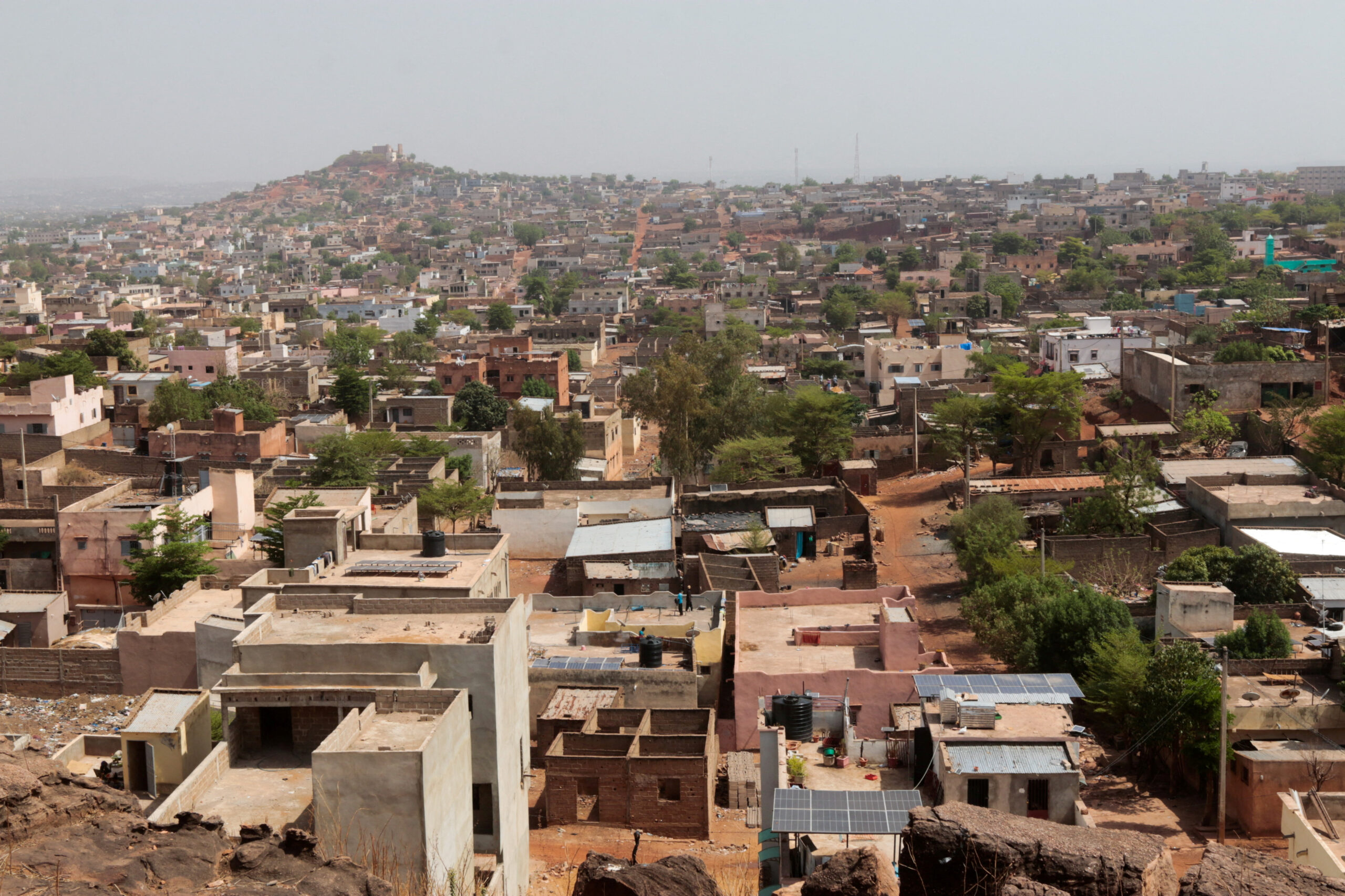
Image: A general view of Bamako after insurgents launched attacks on military bases across the Mali on April 25, 2026. (REUTERS/Aboubacar Traore)
Credit: Source link