

What Brazil’s Six Biomes Can Teach the World About Climate Solutions
Brazil’s climate story does not begin in one place.
It begins in the Amazon, where forests help regulate rainfall across the continent. It continues in the Atlantic Forest, which shapes the landscape and water systems of cities like Rio de Janeiro. It stretches into the Cerrado, the Pantanal, the Caatinga, and the Pampa — each biome carrying its own environmental pressures, economic questions, and locally developed solutions.
That is why Brazil is increasingly central to global conversations on climate and economic resilience. The country is not only home to some of the world’s most important ecosystems; it is also a place where climate solutions are being tested across forests, wetlands, grasslands, farms, research institutions, and community-led initiatives.
As countries search for approaches that balance economic development, climate resilience, food production, and biodiversity protection, attention is increasingly turning to Brazil. Few countries combine the scale of natural resources, scientific research capacity, and ecosystem diversity found across its six biomes.
On June 4, Rio de Janeiro will host Global Citizen NOW, a Global Citizen event bringing together civil society representatives, artists, policymakers, funders, and youth leaders to discuss practical approaches to climate-aligned job creation, community-led climate action, plus education and skills for the climate economy.
The event will take place during Nature Week, bringing together participants focused on practical climate and environmental solutions that support biodiversity conservation and economic resilience. These meetings provide an opportunity for representatives from the public sector, private sector, and civil society to exchange perspectives on addressing the impacts of climate change.
Once again, Brazil is hosting discussions about the future of the global climate agenda and continues to play an influential role in international climate conversations. The country has a long history with the climate discussions. It was the stage for Rio-92, where the United Nations Framework Convention on Climate Change (UNFCCC) was approved. In other words, it was in Rio de Janeiro where the main international environmental treaty was formalized to stabilize greenhouse gas concentrations in the atmosphere at a level that prevents dangerous human interference with the climate system.
But Brazil’s significance is not only historical. The country is emerging as a global climate leader because Brazilian organizations are developing solutions that consider their local contexts and the needs of their territories and people. “Our basic principle is that we don’t just have a country with six different biomes, but we also have different ecosystems that need to coexist,” says Ana Euler, Executive Director of Innovation, Business and Technology Transfer at the Brazilian Agricultural Research Corporation (Embrapa).
Embrapa is one of the largest agricultural research organizations in the world, with more than 50 years of work focused on innovation, efficiency, sustainability, and economic development. It has made a historical contribution to climate adaptation in Brazil, creating technologies that need to be, above all, territorially relevant.
Climate Solutions Depend on Science and Local Knowledge
One example is the Embrapa Genetic Bank, considered one of the largest on the planet with almost 400,000 samples from all over Brazil, and which is only possible due to a strategic partnership with Indigenous, Quilombolas, and extractive communities. This is because many samples cannot be preserved in the laboratory’s cold storage chambers in Brasília. The creole seeds (sementes crioulas), for example, are traditional seeds of local varieties that have been used and preserved for generations and need the environmental conditions of the place where they originated.
“Brazil is a country of continental dimensions, so there is no one-size-fits-all solution. We deal with diverse challenges considering everyone who is part of this ecosystem. Therefore, governance is essential for solutions to be effective. We need to connect the government, the private sector, and traditional communities,” says Euler. “Biodiversity is essential, as 70% to 80% of it is under the responsibility of traditional peoples and communities. Therefore, it is crucial to establish a pact between society and government to support conservation in these territories,” she stated.
For Amazonian communities, this type of collaboration has the potential to support broader participation in the bioeconomy, generating income for communities and boosting the forest economy. According to some recent studies, such as “The New Economy of Amazon” by the WRI Brazil in 2023, the bioeconomy generates around 12 billion reais per year in the region.
Angela Mendes, environmental advocate and daughter of Brazilian rubber tapper and conservationist Chico Mendes. Image: Oliver Kornblihtt
But Angela Mendes, whose father Chico Mendes, was a prominent environmental advocate, reinforces that protecting the forest is not possible without listening to the communities in the region. “We are in a constant state of mobilization and articulation to guarantee public policies for the future not only of the forest, but of all those who make the forest stand. The ancestral knowledge of these populations is one of our most important technologies,” says Mendes.
Climate Pressure Reshaping a Lesser-Known Biome
“People believe that Indigenous communities only exist in the Amazon, but we are in all biomes. In Southern Brazil, our struggle is made invisible,” explains Luana Kaingang, an Indigenous leader who is part of the Kaingang people, the fifth largest Indigenous community in Brazil, with 45,000 people (according to the 2022 Census), and the fourth most spoken Indigenous language in Brazil.
 Luana Kaingang speaks about Indigenous knowledge, land stewardship, and environmental issues in Brazil. Image: Oliver Kornblihtt
In May 2024, the state of Rio Grande do Sul made headlines in various national and international media outlets due to the historic flooding that affected approximately 400 municipalities. The impactful images of the flood drew attention to the climate-related challenges in the Southern of Brasil, reinforcing that efforts to find solutions cannot be limited to the Amazon rainforest.
“We need to be included in public policies. We understand our region and our work is based on ancestral knowledge to recover our territory,” says Kaingang.
Rio Grande do Sul is home to one of the biomes with the lowest rates of formal environmental protection. According to a study by MapBiomas, only 3% (that is, 575,000 hectares) of the Pampa are protected by conservation units. Soybean cultivation grew almost 387% between 1985 and 2023, and the expansion of agroforestry already occupies 45% of the biome’s area.
One of the solutions presented by the Ministry of Environment and Climate Change (MMA) is PPPampa, an action plan focused on four axes, addressing sustainable productive activities, monitoring, and environmental control. Conservation efforts in the Pampa biome can have implications for environmental systems across Brazil.
Rio’s Climate Story Begins in the Atlantic Forest
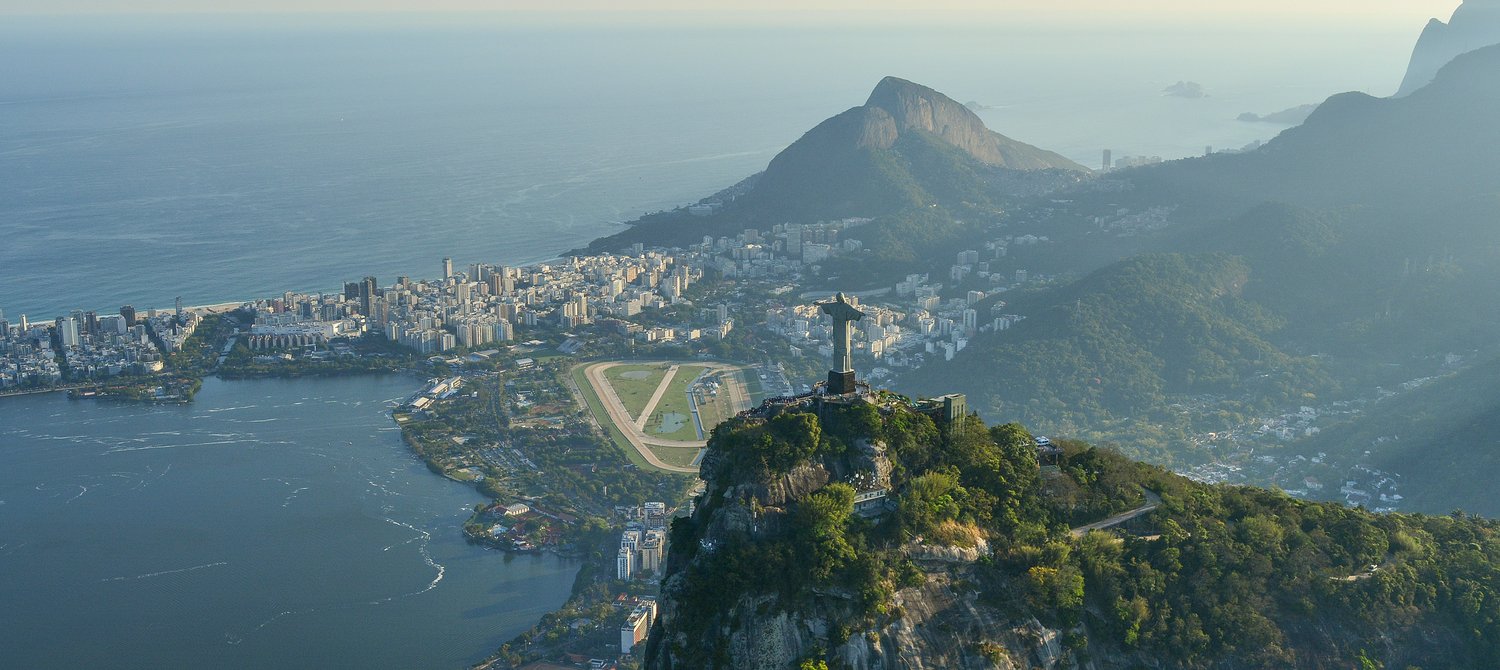
Anyone participating in Nature Climate Week this week will inevitably notice the beauty of Rio de Janeiro. The Marvelous City, as Rio is known by Brazilians, has breathtaking landscapes. Christ the Redeemer with open arms toward the city, the Two Brothers Mountain, and Copacabana beach are part of the popular imagery.
These landscapes are closely connected to the Atlantic Forest, the biome that shelters a megadiverse tropical forest, among five biodiversity conservation hotspots in the world. More than 90% of the biome is in Brazil, spread across seventeen Brazilian states (where almost 145 million people live).
However, once upon a time, the Atlantic Forest was 3.6 times larger than Germany and, nowadays, only about 24% of its original coverage remains.
One organization working to protect biodiversity in the Atlantic Forest is SOS Mata Atlântica, an organization dedicated to protecting and restoring remaining areas of the Atlantic Forest. Its operational model has inspired and continues to inspire other organizations and environmental conservation movements not only in this biome but throughout Brazil.
“It is necessary to fight deforestation through monitoring, remote embargoes, credit restrictions, enforcement of the Atlantic Forest Law. In addition, the implementation of the Forest Code is fundamental for restoration,” says Luís Fernando Guedes Pinto, executive director of SOS Mata Atlântica.
This work may contribute to the long-term conservation of the Atlantic Forest. Stopping the loss of forests and starting to gain them is a service to the economy, to people’s health and well-being, and is, at the same time, a measure of mitigation and adaptation to climate change. “This connects with global agendas, such as the UN Decade on Ecosystem Restoration. Our work in this area has helped us restore the equivalent of two Paris-sized cities of native forest,” Pinto said.
Six Biomes, One Climate Story
There’s a popular saying: Brazil has many Brazils. With 8.5 million square kilometers, Brazilian territory encompasses six distinct biomes, each with its own climate, fauna, flora, communities, cultural traditions, and local knowledge. Understanding this diversity is fundamental to understanding both the threats and the climate solutions that the country offers to the world.
- Amazon: Home to the world’s largest tropical rainforest, the Amazon plays a critical role in biodiversity and rainfall systems across South America.
- Cerrado: Often called Brazil’s “cradle of waters,” the Cerrado supplies major river systems and is central to the country’s agricultural economy.
- Atlantic Forest: Although significantly reduced from its original extent, it remains essential for water security and biodiversity in many of Brazil’s largest cities.
- Caatinga: A uniquely Brazilian semi-arid biome where communities continue to adapt to water scarcity and changing climate conditions.
- Pantanal: The world’s largest tropical wetland, increasingly affected by drought and wildfire.
- Pampa: Native grasslands that support biodiversity, agriculture, and cultural traditions in southern Brazil.
Together, these six biomes illustrate why Brazil occupies a unique place in global climate discussions. The country’s environmental, economic, and development challenges do not exist in one landscape, but across six distinct ecosystems. The solutions emerging from those ecosystems may help shape how other countries approach climate resilience in the decades ahead.