

We Cannot Abandon Cuba – Scalawag
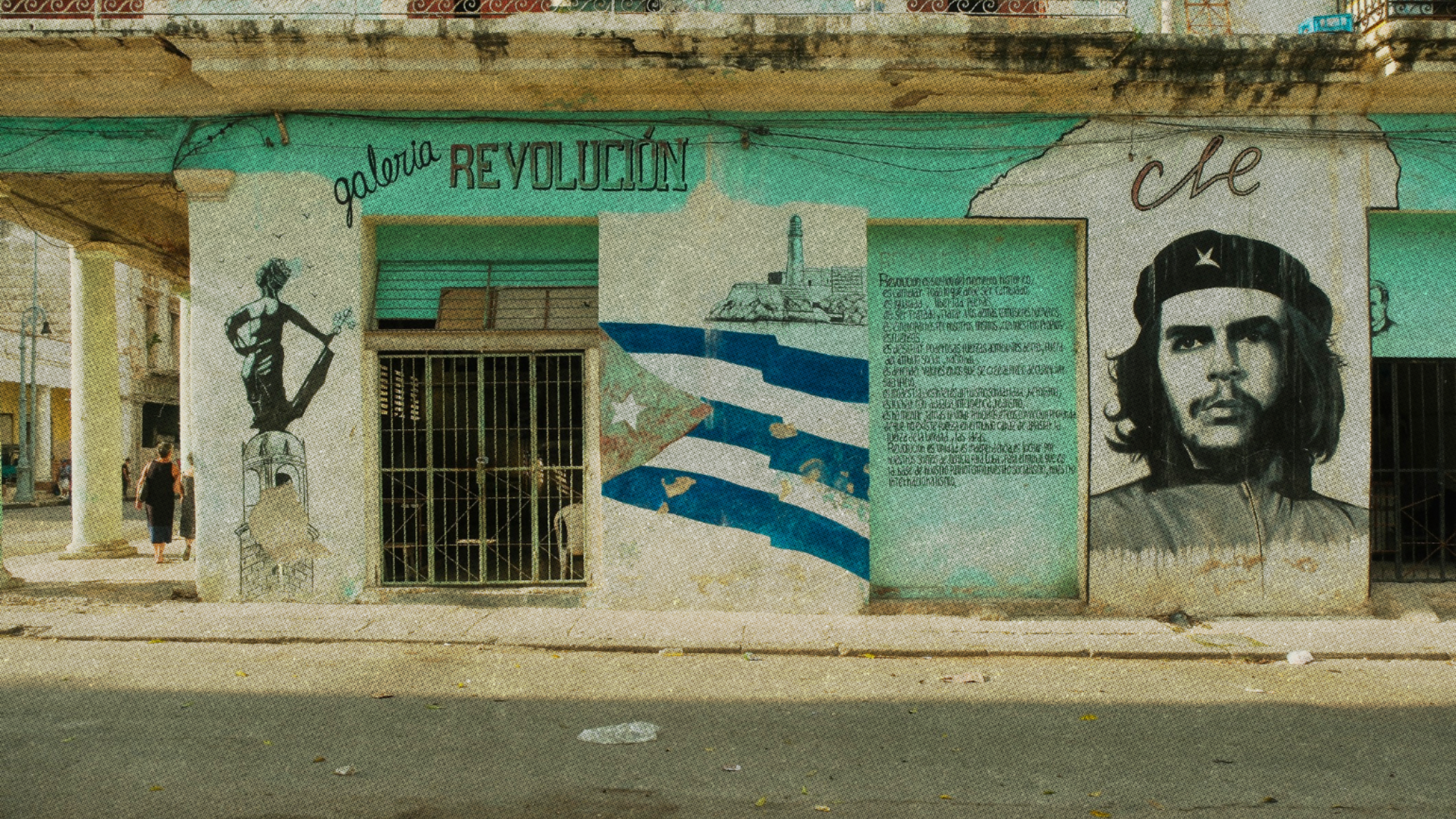
I’ve long-held Cuba in high esteem. The achievements of the small island nation broke through the propaganda filter that cloaks the imperial core. I knew of their renowned medical program, universal healthcare, and high literacy rates. I especially admired how Cuba provided asylum for anti-imperialist political activists like Assata Shakur, who escaped persecution from the United States empire for her commitment to the liberation of the African diaspora. Visiting the island rendered any negative perceptions of Cuba particularly unserious, namely the limited number of brands showcased on the nation’s grocery market shelves or the “hipster” associations with Che Guevara t-shirts.
However, my admiration for Cuba was marred by a profound misunderstanding of the internationally condemned blockade, illegally maintained by the U.S. empire and endorsed by the Zionist Occupation (sometimes referred to as “Israel”), which I falsely assumed to be a relic of some archaic bureaucracy from the Cold War era that the island could circumvent. The inability to accurately detail the function and purpose of this genocidal policy is a consequence of the imperial ignorance that many within the empire have failed to recognize. While we cannot change the circumstances of our birth and upbringing, we can actively challenge our perspectives through political education and demonstrations of solidarity.
The Sanctions Kill Campaign, which is a grassroots coalition against the continuation of genocidal sanctions and other imperialist policies forced upon dozens of nations, including Cuba and Palestine, defines blockades as:
“a weapon of Economic War, resulting in chronic shortages of basic necessities, economic dislocation, chaotic hyperinflation, artificial famines, disease, and poverty. In every country, the poorest and the weakest – infants, children, the chronically ill and the elderly—suffer the worst impact of sanctions… They are a crime against humanity used, like military intervention, to topple popular governments and movements.”
The Lancet Medical Journal reports that 51 percent of all deaths resulting from U.S. sanctions between 1970 and 2021 occurred in children under the age of five. Each year, the United Nations General Assembly unanimously condemns the U.S. blockade against Cuba. Israel and the United States have voted against this resolution for 33 consecutive years.
The landmark victory of the Cuban Revolution under Fidel Castro in 1959 liberated the nation from the U.S.-installed anticommunist dictatorship of Fulgencio Batista. Prior to the revolution, 85 percent of peasants worked land they did not own, while most of the Cuban people lived in abject poverty with a general literacy rate of 60-76 percent, and farm and rural areas suffered from deep neglect, with a literacy rate of around 40 percent. Through socialist reform, Cuba nationalized their industries, redistributed land to their workers, eradicated homelessness with subsidized housing, provided free education and healthcare, and improved the literacy rate to almost 100 percent. They developed a world-renowned medical program that provides free healthcare and medicine throughout the Global South. Cuba also demonstrated solidarity with nations like Angola, Mozambique, Grenada, Palestine, and Guinea-Bissau by joining their decolonization struggles against Western imperialist forces through armed resistance. The Cuban state has also provided thousands of full-ride scholarships for Palestinians to study at their universities.
In 2024, I created this documentary photo series in honor of my grandmother during my time as an Artist in Residence at the Democratizing Racial Justice Project. It celebrates the continued legacies of land stewardship in Afro-descendant communities across South Texas, Western Cuba, and La Costa Chica de México.
It is the success of the Cuban Revolution that prompted the U.S. empire to develop and maintain its genocidal blockade. Lester D. Mallory, who served as the Deputy Assistant Secretary under the Eisenhower administration, wrote a 1960 memo which declared that “… every possible means should be undertaken promptly to weaken the economic life of Cuba… a line of action which, while as adroit and inconspicuous as possible, makes the greatest inroads in denying money and supplies to Cuba, to decrease monetary and real wages, “to bring about hunger, desperation and overthrow of government.” Every administration since has continued this genocidal blockade. In 2018, the United Nations reported that 60+ years of this genocidal policy had stolen an estimated $130 billion from the island. Last year, Cuba reported to the UN that the blockade accounted for more than $7.5 billion in material losses and damages between March 2024 and February 2025 alone.
The Unflinching Solidarity of the Venceremos Brigade
Not long after the blockade was implemented, the U.S. empire faced opposition from organizations which sought to uphold Cuba’s independence and sovereignty. The Venceremos Brigade is a grassroots organization that has engaged in over 50 years of solidarity with the Cuban Revolution by sending delegations of brigadistas to resist the empire’s blockade by delivering material aid, engaging in political education, participating in solidarity work, and challenging travel restrictions. The Office of Foreign Assets Control (OFAC) is the agency within the U.S. empire that is responsible for imposing restrictions on citizens traveling to Cuba, which include: requiring travelers to secure one of twelve licenses for categories ranging from education to family visits, prohibiting tourist activities, confiscating items made from agricultural products (like maracas or shell bracelets) upon reentry, and threatening federal penalties for seeking medical treatment.
Last year, the Venceremos Brigade formed its inaugural African, Indigenous, and Palestinian delegation, and I felt honored to join as a brigadista. Though we only spent a few weeks in Cuba, I was able to experience true freedom for the first time in my life, for the revolution welcomed us in every form we had: our melanated skin, textured hair, keffiyehs, and varied accents never once drew scrutiny or judgment from the Cuban people. It was a cherished moment of escape from the rampant prejudice within the U.S. empire that facilitates the genocide, captivity, and humiliation of African, Indigenous, and Palestinian people.
Cuba’s museums celebrated the history of anti-colonial and anti-imperialist resistance. Universities and institutions openly shared academic research. Murals, statues, and monuments commissioned by the state stood alongside historic buildings and natural landscapes. Third places were plentiful and open to all. There was no shortage of benches to pause and rest upon. Roads were shared between pedestrians, cyclists, and vehicles, while passenger railways traveled from coast to coast. Children played outside in parks and neighborhood streets. I witnessed the beauty of the Cuban Revolution and finally experienced a society that recognized and elevated the needs and capacity of everyday people.
Even as the fuel shortage imposed by the genocidal blockade caused us to endure periods without electricity, air-conditioning, internet, or running water, we still maintained love and awe for what Cuba had accomplished under the weight of U.S. imperialism. A few brigadistas, myself included, had braced ourselves to receive hostility for the shame of possessing a U.S. passport. But we quickly learned this was a pointless act of self-flagellation. Whereas imperialist propaganda dehumanizes entire people by reducing them to the worst (and often exaggerated) aspects of their government, Cubans are able to distinguish the contradictions between the U.S. empire and the people domestically subjected to its repression. The political education and revolutionary character of the Cuban people helped us confront the imperialist propaganda that convinced us of being uniquely and unrelentingly despised, a mental preoccupation with guilt seemingly designed for us to withdraw from the world by conflating the bloody hands of the imperialist bourgeoisie with our own.

Ensuring the locks work both ways is a necessary strategy for the carceral state’s survival. Because eroding that border – making prison doors porous – makes the charade less believable and less tenable. It also reveals the death trap inside and its scale of horror.
Our days of solidarity, education, and exchange brought us to tearful goodbyes and expressions of heartfelt gratitude as we approached the end of our delegation. The Cuban Revolution renewed our dedication to international solidarity and showed us that the society we wanted to achieve was possible. We safeguarded this hope within ourselves as we departed from the island and prepared for reentry to the U.S. Our first challenge was bracing ourselves to be detained by Customs and Border Patrol, then breathing a collective sigh of relief once everyone was accounted for on the other side. But we knew our peace was short-lived. Fascism crawled from the insatiable maw of late-stage capitalism and persisted no matter which region of the country we returned to. Federal agents goose-step along the path that police brutality built. Every facet of privatized-public life—hospitals, groceries, schools, libraries—is festered with surveillance cameras and armed officers. The emaciated frame of social welfare perishes atop the decaying body of civil rights. Few can afford the rising costs of daily life, and the most vulnerable of us fall like detritus into the endless penitentiary.
And yet, these experiences are minuscule compared to the planetary death and destruction campaign waged by the U.S. empire, which has conducted innumerable war crimes in the last year-and-a-half alone. Children, refugees, villagers, seafarers, researchers, poets, journalists, farmers, civil servants, teachers, doctors, and humanitarian workers have been eviscerated by U.S. bombs across Palestine, Lebanon, Iran, Yemen, Somalia, Nigeria, Syria, Iraq, Venezuela, and the Caribbean Sea. Tens of millions of people around the world face increased risk of disease and famine after the Trump Administration’s shredding of USAID, which itself was an instrument of imperialist soft-power. The U.S. continues their illegal occupation of Guantánamo Bay, internationally condemned for the detention center where nearly 800 Muslim men and boys have been kidnapped and tortured since 2002; 15 men are still unjustly captured within its walls.
The US blockade against Cuba has worsened. Every facet of Cuban infrastructure— transportation, healthcare, food production, waste collection—is collapsing from the energy crisis manufactured by the U.S. empire.
Here, in the violent heart of empire, we all carry a responsibility to not only end the genocidal blockade forced upon Cuba, but all manifestations of capitalism, imperialism, and neocolonialism that strangle the revolutionary potential of people across the world. The Cuban Revolution embodies the hope of what humanity can achieve through socialism and international solidarity. In August, the Venceremos Brigade and National Network on Cuba will mobilize together in defiance of the escalating U.S. imperialist attacks on Cuba. I will be joining this 150-member Centenary of Fidel Brigade, whose namesake commemorates the 100th birthday of the historic revolutionary leader. We call on readers to support our work by following the No War on Cuba campaign and visiting our donation page to help us deliver material aid to the Cuban people.
¡Siempre con Cuba!