

War Overhead Creates ‘Dual Economy’ and Stagnates Russia’s Civilian Sectors
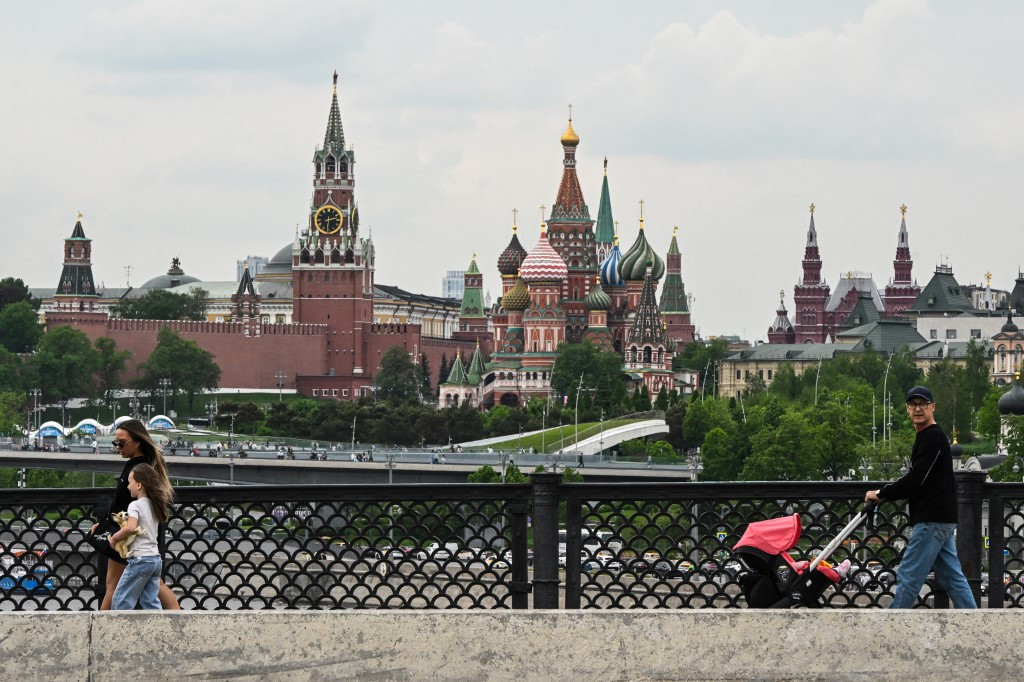
Russia’s domestic market has fractured into a highly unstable “dual economy,” as the massive state expenditures required to sustain the invasion of Ukraine trigger deep stagnation across non-military commercial sectors, Associated Press reported.
An initial surge of economic growth fueled by frantic wartime manufacturing has largely exhausted itself, exposing severe structural imbalances inside the country. To keep a ballooning federal budget deficit from spiraling out of control, the Kremlin has drastically increased taxes and expanded internal borrowing, suffocating civilian enterprises in the process.
JOIN US ON TELEGRAM
Follow our coverage of the war on the @Kyivpost_official.
The splintering of the domestic market
According to Nigel Gould-Davies, a Senior Fellow for Russia and Eurasia at the London-based International Institute for Strategic Studies (IISS), the intense pressure of the war has driven up the core costs of capital, labor, and basic commodities. This financial distortion has funneled cash and personnel almost exclusively into the military-industrial complex, leaving civilian manufacturing, retail, and public services to wither under high interest rates and regulatory burdens.
While the concurrent war between the United States and Iran has driven global crude values above $100 per barrel for the first time since 2022, providing Moscow with unexpected windfall energy revenues, these temporary injections have failed to cure Russia’s fundamental macroeconomic malaise.
Other Topics of Interest
Crimea Imposes Strict Gasoline Rationing as Land Corridor Collapse Sparks Fuel Crisis
The Russian occupation administration in Crimea has introduced strict fuel rationing across the peninsula, capping the sale of A-95 gasoline at 20 liters per day per person starting Saturday, May 30. The regional decree, announced by the Russian-installed head Sergei Aksyonov, mimics near-identical restrictions enforced earlier in occupied Sevastopol to curb widespread public panic.
“To maintain the war, the Kremlin will have to forcefully mobilize human and material resources,” Gould-Davies warned, noting that the economic strain will compel the Russian government to systematically dismantle “the last post-Soviet market freedoms, freedom of labor, and freedom of movement”.
Ballooning shortfalls and liquidity crises
The reality of this economic stagnation is reinforced by leaked internal data from the Russian government. A memorandum from Russian Finance Minister Anton Siluanov warned that defense spending is expected to exceed this year’s budget by at least 2 trillion rubles ($28 billion). Moscow has allocated 16.84 trillion rubles ($238 billion) to defense and security in its 2026 budget – accounting for nearly 40% of all government spending.
This military prioritization has triggered an unprecedented fiscal crisis. While the Kremlin initially projected a 3.8 trillion ruble ($53 billion) deficit for the entirety of 2026, the real deficit skyrocketed to 5.9 trillion rubles ($82 billion) during the first four months of the year alone.
This shortfall represents roughly 2.5% of Russia’s total GDP and marks the largest fiscal gap recorded since the launch of the full-scale invasion. To keep the state functioning, the Finance Ministry has requested an immediate freeze on 2.9 trillion rubles ($40 billion) in planned peacetime expenditures.
Beyond the state budget, the wider Russian corporate and financial ecosystem is showing severe signs of systemic decay. An internal report from Moscow’s pro-Kremlin Center for Macroeconomic Analysis and Short-Term Forecasting (CMACP) disclosed that toxic and non-performing assets within the Russian banking sector have exceeded the internationally recognized 10% crisis threshold for three consecutive months.
State-controlled banks are currently masking these defaults through forced debt restructurings to prevent widespread panic. Concurrently, nearly half of all Russian businesses report severe, systemic payment delays from commercial partners, creating an escalating chain of default risks that threatens to freeze domestic trade.
Frontline friction and ‘long-range sanctions’
This internal economic decay is directly impacting public morale. Facing an operational stalemate on the battlefield in Ukraine and widespread war weariness among the civilian population, President Vladimir Putin has desperately attempted to alter the domestic narrative.
The Kremlin has significantly amplified its long-range missile and drone strikes against Kyiv, hoping that spectacular aerial bombardments will artificially bolster Putin’s domestic ratings and convince a deeply pessimistic Russian public that Moscow retains the strategic upper hand.
However, this media campaign is increasingly undermined by Ukraine’s own counter-strategies. Over the past year, the Armed Forces of Ukraine have executed successful localized counter-offensives to reclaim occupied territories. More importantly, Kyiv has deployed its own “long-range sanctions” – coordinated deep-strike drone operations targeting high-value infrastructure inside the Russia.
These precision strikes have already disabled and cut Russian domestic oil refining capacity by an estimated 10%, forcing energy conglomerates to shut down active wells. By physically dismantling the refineries and weapon factories that bankroll and equip the military, Ukraine’s deep-strike units are delivering combined political and economic damage, pushing an already distorted, fragile Russian wartime economy closer to systemic bankruptcy.