

VP Koung Pushes Skills Development Under ARREST Agenda | News
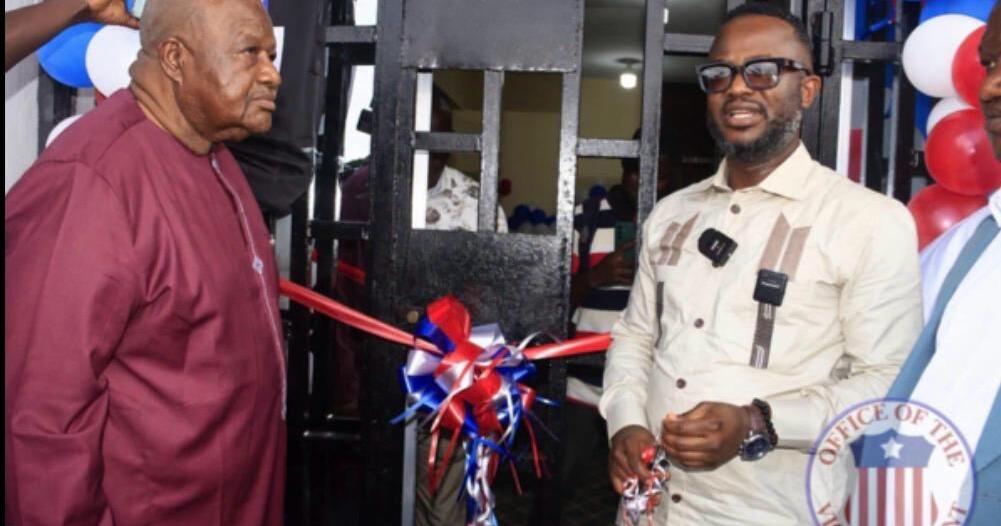
Vice President Jeremiah Kpan Koung has called for a stronger national focus on practical and technical skills training, warning that Liberia’s efforts to address youth unemployment must go beyond academic qualifications and place greater emphasis on skills that can lead directly to jobs and businesses.
Vice President Koung said Liberia needs to equip young people with marketable skills that can enable them to secure employment, establish businesses and become economically independent.
He made the call Wednesday, September 2, 2026, through Deputy Chief of Staff for Administration Dr. Macdonald M. Metzger, who delivered his remarks at the dedication of the newly renovated headquarters of the Agricultural and Industrial Training Bureau (AITB) at the Monrovia Vocational Training Center (MVTC) Compound in Paynesville.
Koung said technical and vocational education must be placed at the center of Liberia’s economic transformation, particularly as the government seeks to create jobs and expand productive sectors under its ARREST Agenda for Inclusive Development (AAID).
He argued that Liberia’s development needs cannot be met by focusing primarily on physical infrastructure such as roads, bridges, electricity and buildings while neglecting the skills and productive capacity of the population.
“Our people” must also be considered a form of national infrastructure, he said, stressing that a growing economy requires workers with the technical abilities to meet the demands of various sectors.
According to Koung, Liberia’s agricultural sector needs trained agricultural technicians and equipment operators, while manufacturing requires welders, electricians, mechanics, fabricators and machine operators.
The construction and energy sectors, he added, also require skilled artisans and competent technicians.
“Our young people need practical skills that can translate into tangible employment, entrepreneurship and livable wages,” Koung said.
He challenged the government and training institutions to rethink how skills development programs are designed, stressing that the objective should not simply be to increase the number of people receiving training or certificates.
“The government’s goal cannot simply be to train more people. We must train people for real opportunities,” he said.
Koung urged AITB and other vocational training institutions to identify the skills currently demanded by Liberia’s economy and anticipate the skills that will be required over the next five to 10 years.
He said such an approach would help ensure that young Liberians are prepared for actual employment opportunities rather than completing training programs without a clear pathway into the labor market.
The Vice President also called for greater emphasis on entrepreneurship, urging young Liberians to use their technical abilities to create businesses and employment opportunities rather than depending solely on government and private-sector jobs.
He said a practical skill can provide employment, help establish a business, promote independence and enable a young person to become an employer.
Koung therefore encouraged trainees not to pursue vocational education merely to obtain certificates.
“Learn to solve problems. Learn to operate technology. Learn to build, repair, produce and create,” he urged.
He said Liberia needs a generation of young people equipped not only to seek employment but also to identify and create economic opportunities for themselves and others.
The Vice President further linked practical skills development to the government’s broader economic agenda, particularly its efforts to strengthen agriculture, promote agribusiness, expand economic activity and create jobs.
He said Liberia must move beyond the export of raw materials and increasingly process its agricultural and natural resources locally to create value, businesses and employment.
However, he noted that local processing and value addition would require a workforce with the necessary technical expertise.
Koung challenged AITB’s leadership to ensure that the renovation of its headquarters translates into improved outcomes for trainees.
He said the institution should measure its success not only by the number of people enrolled in training programs, but by what happens to graduates after they leave.
He cited employment, entrepreneurship and participation in agriculture, manufacturing, construction and energy among the indicators that should demonstrate whether vocational training is producing meaningful results.
The Vice President said government cannot tackle the skills and employment challenge alone, calling for stronger collaboration between training institutions, the private sector, development partners and employers.
He urged businesses to communicate their skills needs to training institutions and provide internships and employment opportunities for graduates.
Development partners, he said, should continue supporting modern equipment, technology and training systems, while institutions such as AITB must regularly adjust their programs to meet changing labor-market demands.
Koung said every young person who acquires a marketable skill, secures employment or starts a business represents a tangible development outcome for Liberia.
He stressed that the government’s development agenda must ultimately be judged by what it delivers in the lives of ordinary Liberians.
“The question is no longer simply, ‘What are we planning?’ The question is: ‘What are we delivering for the Liberian people?’” he said.
As the renovated AITB headquarters was dedicated, Koung called for a broader vision of Liberia in which education leads to opportunity, skills lead to jobs and businesses, and agriculture becomes an engine of wealth creation.
He congratulated AITB’s leadership and staff and commended instructors, trainers and development partners for their contributions to skills development.
He also urged young Liberians to embrace technical and vocational education as a pathway to economic independence and urged them to use their skills to contribute to national development.
“Acquire the skill. Create the opportunity. Build the enterprise. And help build Liberia,” Koung said.
Credit: Source link