

US Launches Strikes on Iran in Retaliation for Downed Apache
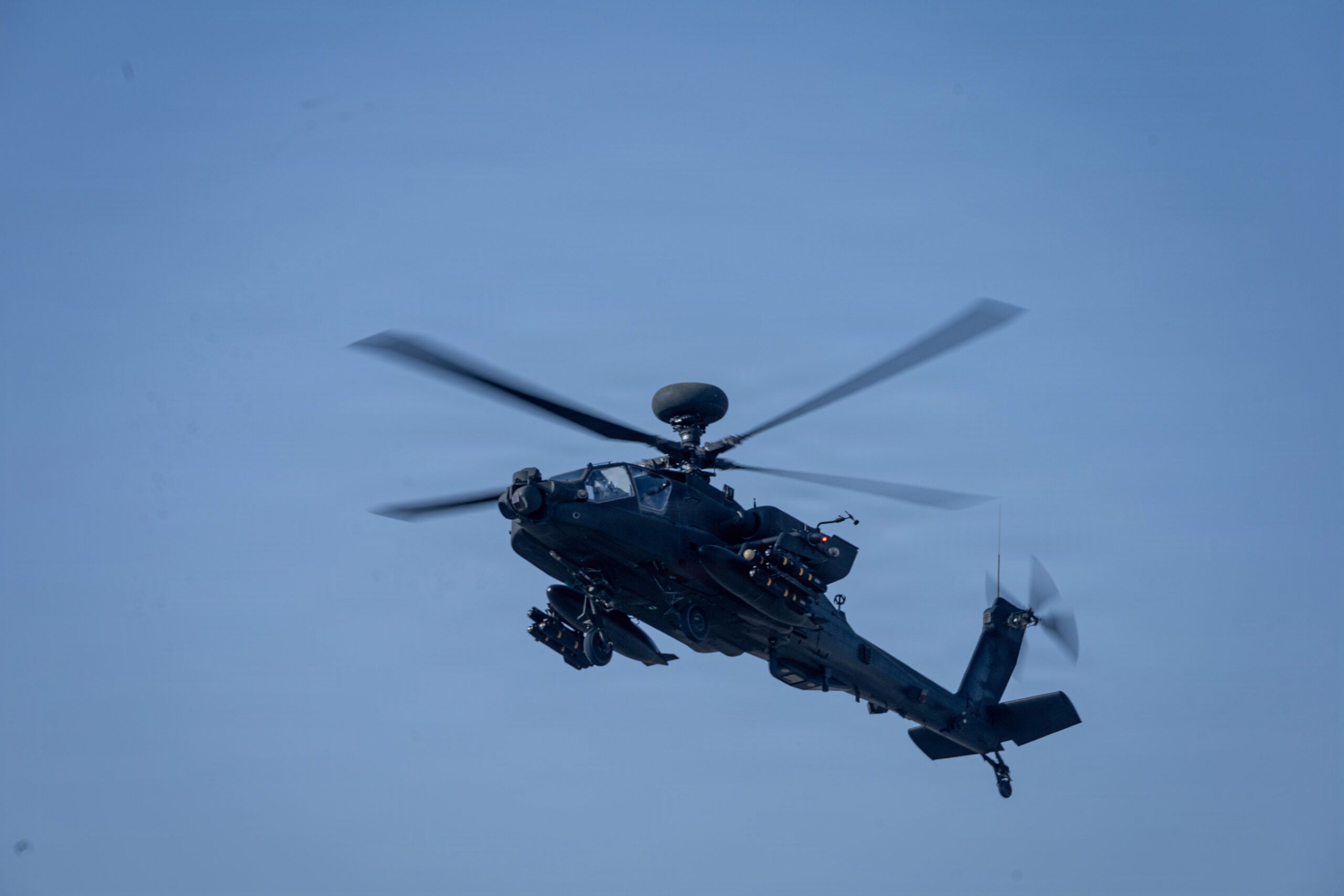
The U.S. military launched “self-defense” airstrikes against Iran on June 9 in response to the downing of a U.S. Army AH-64 Apache attack helicopter, which President Donald Trump said was shot down by Iran.
The airstrikes by Air Force and Navy aircraft began at 5 p.m. Eastern Time, which is after midnight in Iran, according to U.S. Central Command. Just under four hours later, the U.S. military said it had concluded its actions against Iran for now.
“CENTCOM forces struck Iranian air defense, ground control stations, and surveillance radar sites near the Strait of Hormuz with precision munitions from U.S. Air Force and Navy fighter jets,” the command said in a statement. “The operation was a proportional response to recent attacks on U.S. forces and international commercial ships transiting regional waters.
“U.S. forces remain vigilant and postured to defend against unjustified Iranian aggression,” CENTCOM added.
Iran’s Islamic Revolutionary Guard Corps said in a statement that its forces would carry out “intensive and direct” strikes on American forces in response.
The Apache was downed near the Strait of Hormuz the previous night in a dramatic incident in which the two pilots were rescued by an unmanned boat operated by the U.S. Navy. Air Force and Navy aircraft, including MQ-9 Reapers and fighters, provided protection from the skies overhead.
“I have just been informed by our Great Military that last night the Iranians shot down one of our highly sophisticated Apache Helicopters while patrolling over the Strait of Hormuz,” Trump wrote on Truth Social. “There were two pilots involved, both are safe and uninjured. Nevertheless, the United States must, of necessity, respond to this attack.”
CENTCOM said it launched the strikes later in the day at Trump’s direction.
Iran did not claim to have downed the helicopter and suggested that the Apache could have crashed because of an accident.
“Foreign forces in proximity to our territory are at constant risk on account of their own human errors, plain accidents, or potentially being caught in crossfire,” Iranian foreign minister Abbas Araghchi said on social media.
Al Arabiya, a news outlet based in Saudi Arabia, reported that Iran had informed international mediators that it had not taken action to down the helicopter.
CENTCOM said the Apache crash was under investigation. An Iranian drone is believed to have hit the Apache, U.S. officials said. One possibility, analysts and some officials say, is that the downing might have been unintentional and the result of a midair collision.
Adm. Brad Cooper, who heads CENTCOM, declined to discuss the episode after briefing lawmakers in a closed-door meeting.
“We’re just going to have to see,” he told reporters on Capitol Hill.
The Apache went down in the water as darkness fell. The pilots were rescued within approximately two hours by a Saronic Corsair, a 24-foot uncrewed small boat operated by CENTCOM’s Task Force 59, which uses drones to patrol the waters of the Middle East, in the early hours of June 9 local time.
The rescue of aircrew by an uncrewed surface vessel was described as a first-of-its kind operation by the U.S. military.
The Apache is the first American crewed aircraft that has been lost to Iran since an Air Force F-15E Strike Eagle was shot down by Iran on April 3. The two aviators from that plane were eventually rescued from inside Iran—the pilot within a few hours by search and rescue crews, and the weapons systems officer roughly days later after a dramatic Special Operations raid deep inside Iranian territory.
An A-10 Thunderbolt II was hit by Iranian fire while providing support to the rescue mission shortly after the incident, and its pilot flew towards friendly airspace before ejecting safely.
A KC-135 crashed in Iraq on March 12, killing all six crew members after colliding with another tanker. On March 2, a Kuwaiti F/A-18 shot down three U.S. F-15Es in a friendly fire incident. Around 30 unmanned MQ-9s have also been lost during the conflict.
The U.S. has used Apaches to destroy Iranian small boats in the Strait of Hormuz and patrol waters in the area to enforce a U.S. blockade of Iranian ports, which has been in place since mid-April. The U.S. military published imagery of Cooper riding in an Apache over the water last month.
Iran has fired at U.S. manned aircraft and drones operating over the waters surrounding Iran and has claimed to have downed multiple drones.
The U.S. military has acknowledged some incidents of Iranian fire around the waters near the Strait of Hormuz, including at American aircraft, as well as U.S. Navy vessels and commercial ships during the ceasefire, and has responded by attacking Iranian air defenses, drone stations, coastal radars, and other military facilities during the ceasefire that has been in place since early April.
CNN reported that Apache was a hit with a Shahed-type drone. Shaheds are one-way attack drones that function as slow-moving cruise missiles, approaching their target using preprogrammed coordinates. If the drone were a Shahed, that could support the theory that Iran did not intentionally shoot down the Apache.
Though Trump directed a military response, he expressed less concern about the episode in some media comments, telling The Wall Street Journal that the downing “wasn’t a big deal.”